Boost with lion’s mane for dogs: Cognitive Health Benefits
Discover lion’s mane for dogs: science-backed benefits for cognition, safe dosing, and tips to pick the right supplement.
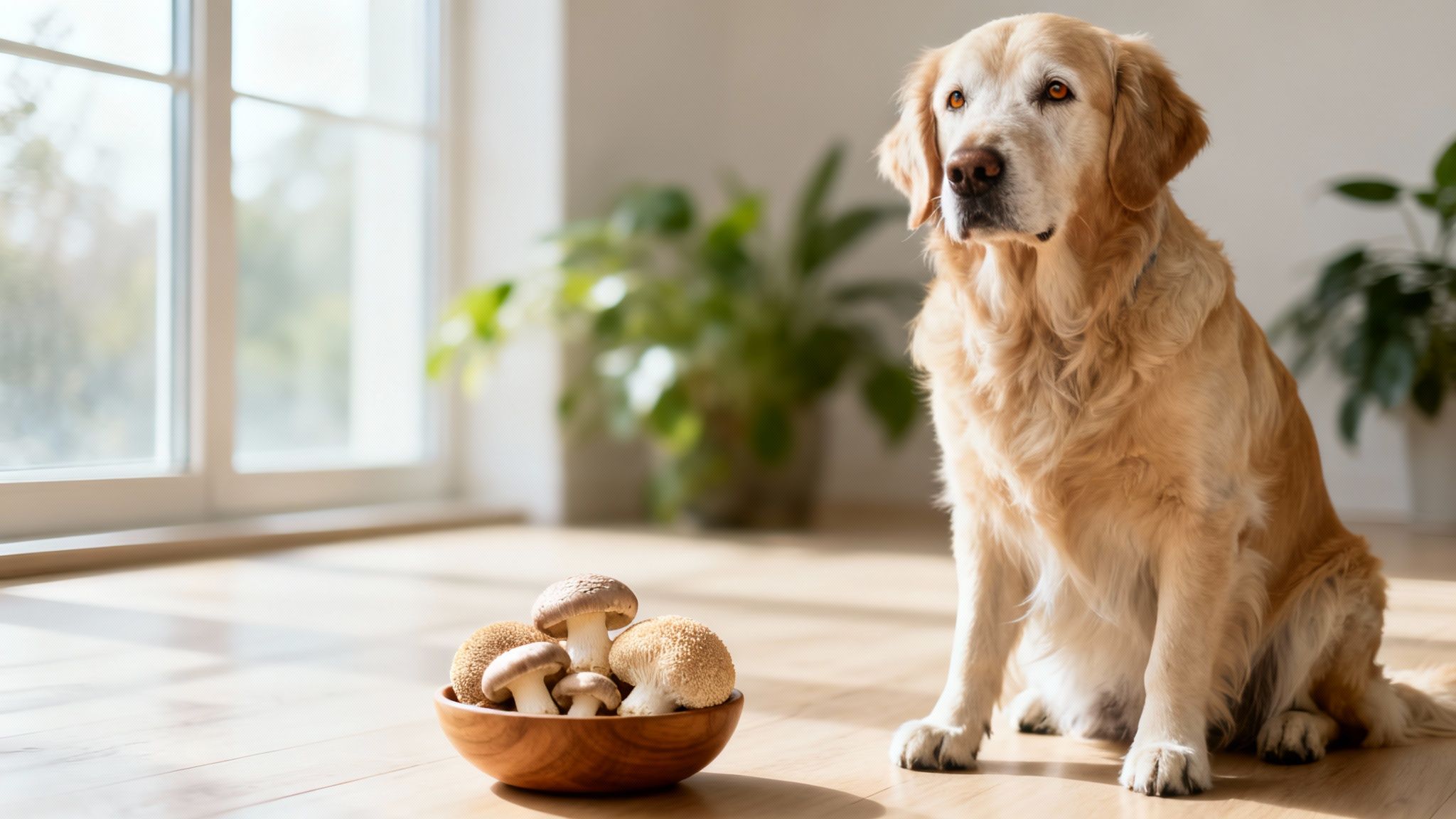
As a dog owner, you’re always looking for ways to keep your furry friend healthy and happy, especially as they get older. You may have heard the buzz around lion’s mane for dogs, a supplement that’s gaining serious traction for its potential to sharpen the mind, soothe anxiety, and boost overall vitality. This isn’t just another fleeting trend; it’s what’s known as a 'functional mushroom,' and it has a fascinating history.
What Is This Unique Mushroom
Forget the typical cap-and-stem mushrooms you see in the grocery store. Lion's mane, scientifically known as Hericium erinaceus, looks completely different. Imagine a shaggy, white pom-pom or, as the name suggests, a cascading mane. Its unique appearance is a great clue to its equally unique benefits.
This mushroom is way more than just an interesting-looking fungus; it’s considered a functional food. Think of it this way: a carrot gives your dog basic nutrition, which is great, but a superfood like blueberries delivers an extra punch of antioxidants. Lion’s mane works similarly, providing basic nutrients while also being celebrated for its special, health-boosting compounds.
A Bridge Between Tradition and Modern Science
For centuries, this mushroom has been a cornerstone of traditional East Asian medicine. In China and Japan, where it's called Hou Tou Gu or Yamabushitake, it has long been revered for promoting mental clarity and supporting nerve health. This long history is exactly why modern science is so interested in it. You can read more about its traditional use on dogsnaturallymagazine.com.
Today, researchers are digging into what makes lion's mane tick, and they’re finding that science often backs up what ancient practitioners knew all along, especially when it comes to brain and immune support. This has naturally led to its rise in popularity within the holistic pet wellness world.
In short, lion's mane acts as a natural supporter for your dog's mind and body. It bridges the gap between ancient wisdom and modern research, offering a well-rounded approach to wellness.
Understanding this background is the first step. We’re not talking about a fad but a natural ingredient with deep, historical roots. The real questions are: how does it work, and what can it actually do for your dog? Let’s cut through the hype and take a clear, science-backed look at how lion’s mane might just be a fantastic addition to your dog's daily routine.
How Lion's Mane Actually Works in Your Dog's Brain
So, how does this strange, shaggy mushroom actually help your dog's brain? The magic is in its biology. Lion’s mane contains two unique compounds you won't find in the mushrooms on your pizza: hericenones and erinacines.
Picture your dog’s nervous system as a massive grid of electrical wiring—these are the neurons firing off messages constantly. As your dog ages, the protective coating on these wires can start to fray, slowing down messages and causing "glitches." This is where lion's mane steps in.
The hericenones and erinacines are special because they're small enough to cross the blood-brain barrier, which is like a super-selective bouncer for the brain. Once inside, they get to work encouraging the body to produce two crucial proteins.
The Brain's Growth Factors
These two proteins are the real heroes of the story:
- Nerve Growth Factor (NGF): Think of NGF as a maintenance crew for existing nerve cells. It helps protect, repair, and keep those "wires" in top condition so communication stays fast and clear.
- Brain-Derived Neurotrophic Factor (BDNF): BDNF is more like the construction team. It helps build brand-new pathways and strengthens the connections between neurons, which is absolutely vital for learning and memory.
By boosting the natural production of NGF and BDNF, lion’s mane isn't just patching up old connections. It’s helping your dog's brain build a stronger, more adaptable network from the inside out.
This infographic breaks down how lion's mane can support your dog's brain, promote a sense of calm, and contribute to their overall vitality.
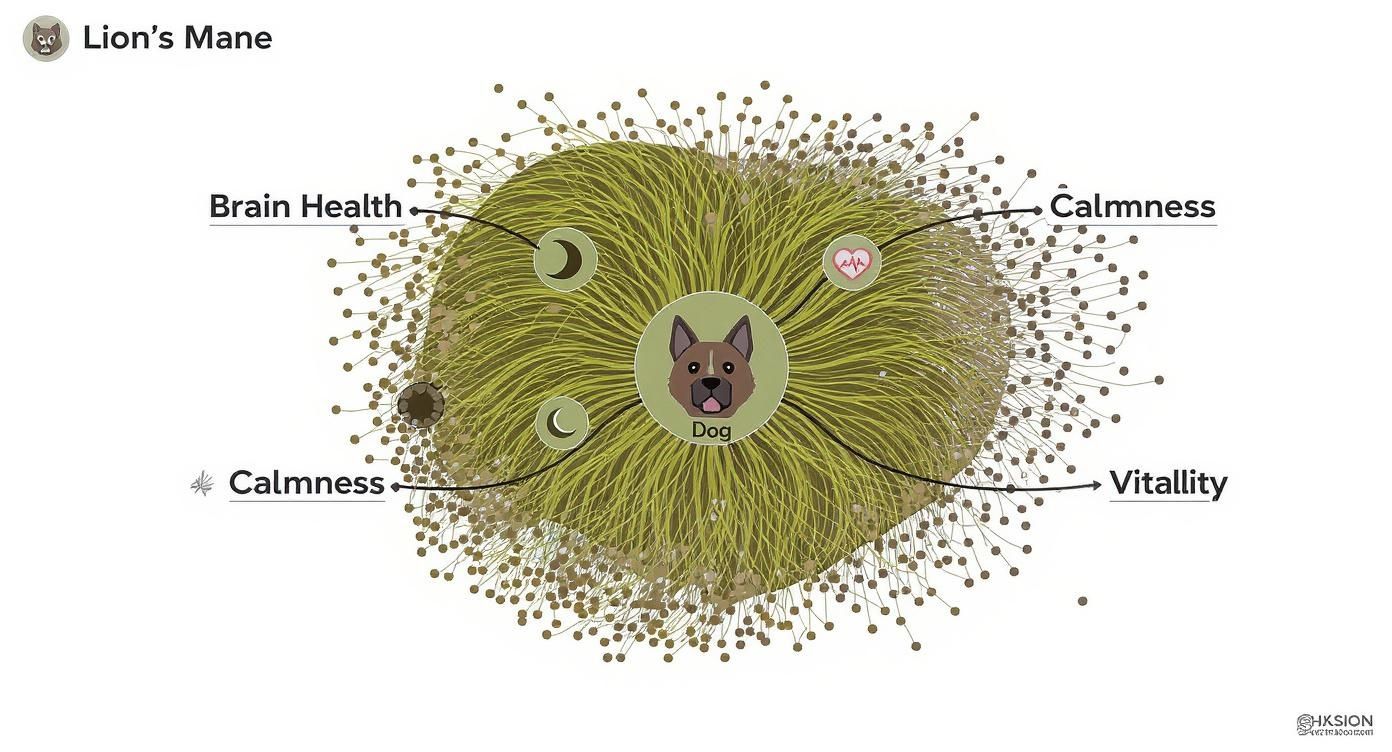
The key is that the benefits aren't isolated to just one thing; it's about creating a more balanced and resilient system for your dog's well-being.
From Mushroom to Mind
What does all this science look like for your dog at home? It's the journey from a scoop of mushroom powder in their bowl to real-world changes you can see.
For a senior dog who’s started to seem a little foggy or slow on the uptake, this neurological support can be a game-changer. The boost in NGF and BDNF helps shield their brain from the cognitive wear-and-tear of aging. That might mean they seem sharper during training, have an easier time navigating the house, or are just more "present" with the family.
The process is simple yet profound: the unique compounds in lion’s mane provide the raw materials your dog's body needs to naturally protect and rejuvenate its own nervous system. It's not about adding something artificial but about unlocking your dog's innate biological potential.
Ultimately, you’re giving your dog’s brain the tools it needs to do its own repair work. This natural approach is why lion's mane is gaining so much attention for long-term cognitive health, helping our best friends stay sharp and engaged as they age gracefully by our side.
So, What Can Lion's Mane Actually Do for My Dog?
Okay, the science is cool, but what really matters is how this stuff translates to real-world changes for your dog. It's one thing to talk about neurons and beta-glucans, but it's another to see your dog happier and healthier.
Let's break down the four biggest ways this mushroom can make a noticeable difference in your dog's day-to-day life, from keeping their mind sharp to settling their tummy.
1. Sharpening Your Senior Dog's Mind
One of the most talked-about benefits of lion's mane is its potential to support brain health, especially for our older pups. Just like people, dogs can get a bit fuzzy as they age. You might notice them seeming confused, forgetting commands they’ve known for years, or getting stuck behind the sofa.
This is where lion's mane really shines. It contains compounds that encourage something called Nerve Growth Factor (NGF). Think of NGF as the maintenance crew for your dog's brain cells, helping to repair and protect them. For your senior dog, this could mean they seem more "with it," respond to their name faster, or navigate the house with their old confidence.
And this isn't just wishful thinking. A 12-week study with 30 senior dogs found that 81% saw their cognitive function either improve or stabilize after taking a supplement with lion's mane. The researchers saw an average 39% drop in cognitive dysfunction scores, noting real improvements in things like orientation and even house training. You can dig into these promising findings on Petfood Industry.
2. Promoting a Calmer, More Balanced Mood
The brain isn't just for thinking; it's the control center for mood and stress. When the nervous system is out of whack, you can end up with a dog who's anxious, jumpy, or constantly on edge.
By supporting the central nervous system, lion's mane can help smooth out those frayed neurological wires. It helps foster a more balanced, calm demeanor, which is a game-changer for dogs sensitive to things like thunderstorms, strangers, or even just a change in their daily routine.
You might notice your dog is less prone to anxious pacing, settles down more easily after getting riled up, or handles car rides a little better. It’s all about giving their nervous system the support it needs to stay resilient.
The goal isn't to change your dog's personality. It's about giving them the neurological foundation to feel more secure and less overwhelmed by the world.
3. Giving Their Immune System a Boost
A healthy immune system is your dog's best defense. The special compounds in lion's mane, especially beta-glucans, are known to be "immunomodulatory." That's a fancy way of saying they help the immune system work smarter, not harder.
Instead of just cranking the immune response up to eleven, lion's mane helps it react appropriately to real threats while dialing down unnecessary inflammation. It's a smart, two-for-one approach.
What does this look like for your dog?
- A Healthier Pup: A well-tuned immune system is better at fighting off everyday bugs.
- Better Allergy Support: By helping to manage inflammation, it can be a great ally for dogs with seasonal sensitivities.
- More Pep in Their Step: It contributes to their overall vitality, keeping them healthy and ready for adventure.
This makes lion's mane a fantastic supplement for general wellness, not just for dogs who are already under the weather.
4. Supporting a Happy Gut
Last but not least, let's talk about the gut. The gut-brain axis is a powerful two-way street, and a healthy digestive system is key to overall well-being. Lion's mane acts as a prebiotic, which is basically food for the good bacteria living in your dog's gut.
When the good gut bacteria are thriving, everything works better. Nutrients are absorbed more efficiently, the immune system (a huge part of which is in the gut) is stronger, and even your dog's mood can be more stable. This can lead to firmer poop, less gas, and a happier tummy all around.
To pull this all together, here's a quick look at the benefits and the science that makes them happen.
Lion’s Mane Benefits and the Science Behind Them
As you can see, the benefits are interconnected. A healthier gut supports the immune system, and a balanced nervous system supports a happier, sharper mind. It’s a truly holistic approach to your dog's health.
How to Choose a High-Quality Supplement
Walking down the pet supplement aisle—or scrolling through endless options online—can be a lot. Every label shouts promises, but here's the truth: not all lion’s mane for dogs is created equal. To make sure you’re getting a safe and effective product, you have to become a savvy label reader.
Think of it like grocery shopping. You instinctively know the difference between a sugary fruit roll-up and a real, organic apple. The same logic applies here. I'm going to show you how to spot the "real apple" in a sea of confusing marketing claims.
Fruiting Body vs. Mycelium
This is probably the single most important thing to understand when you’re buying a lion’s mane supplement. Honestly, it’s the difference between getting the whole orange or just the peel.
Let's break it down simply.
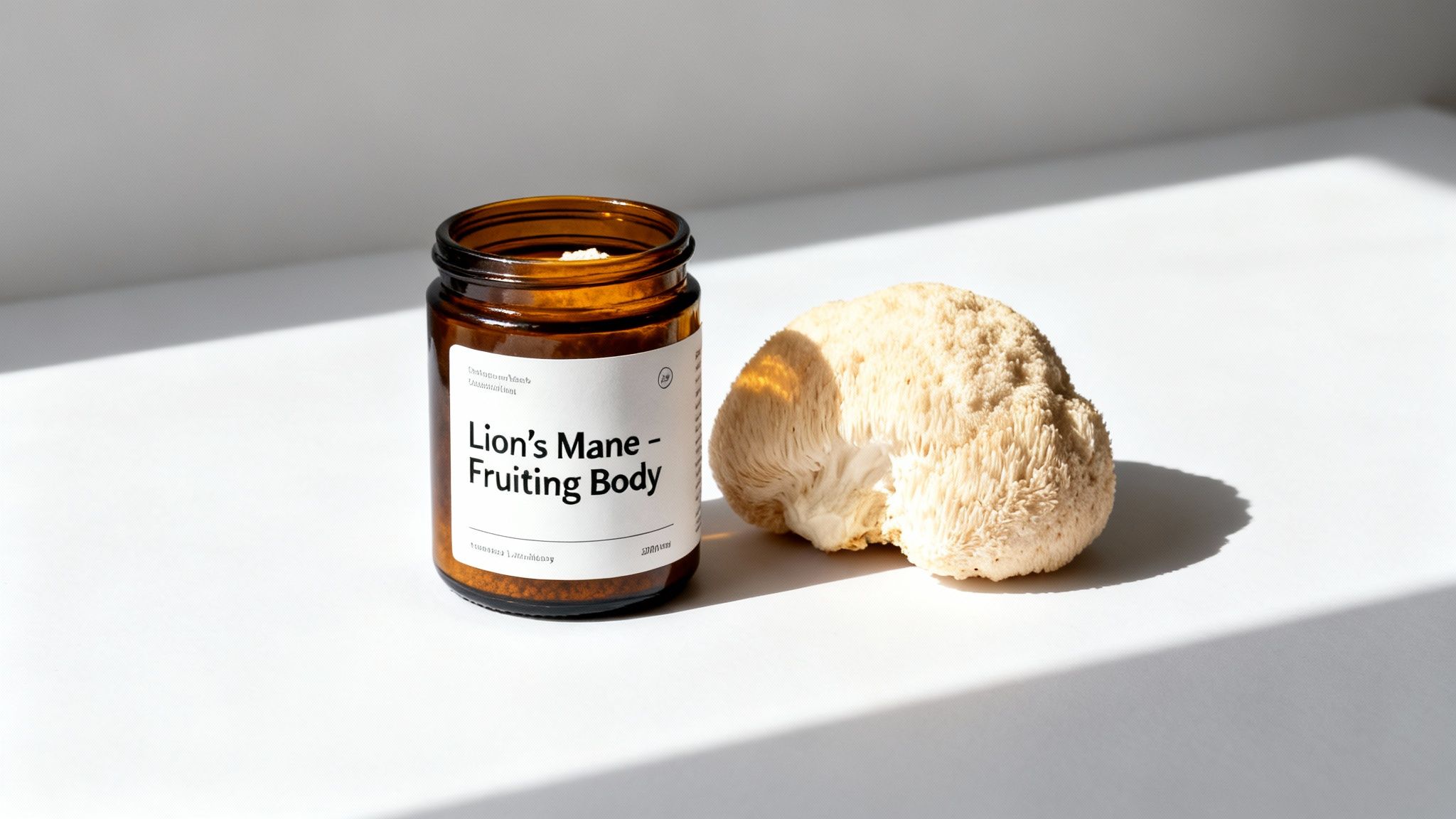
The fruiting body is the part of the mushroom you actually see—that shaggy, pom-pom-like structure. This is where the highest concentration of the good stuff, like beta-glucans, is found. It's the part that has been used for centuries in traditional medicine and is what most of the exciting scientific research is based on.
On the flip side, mycelium is the root system of the mushroom. Some manufacturers grow this mycelium on a grain substrate (like oats or rice), then grind the whole thing up and call it a day. The problem? You end up with a product that's mostly grain filler with very little of the actual mushroom’s power.
Choosing a supplement made from 100% organic fruiting body ensures you're giving your dog the most potent and pure part of the mushroom. No unnecessary fillers, just the benefits you're looking for.
Your Quality Checklist
When you pick up a product, scan the label for these key things. A good, transparent brand will have this info front and center. If you have to dig for it or can't find it at all, that's a pretty big red flag.
- Extraction Method: Look for the term "dual-extraction." This means the mushroom was treated with both hot water and alcohol (don't worry, it's removed in the final product) to pull out all the beneficial compounds. Some goodies are water-soluble, others are only alcohol-soluble. A dual extraction gets you both.
- Beta-Glucan Content: Beta-glucans are the active compounds doing a lot of the heavy lifting for your dog's immune system. Vague claims like "potent formula" are meaningless. A high-quality supplement will state the guaranteed percentage of beta-glucans on the label—aim for 25% or higher.
- Organic Certification: Mushrooms are total sponges. They soak up everything from their environment, including pesticides and heavy metals. Always, always choose a product that is Certified USDA Organic. This is your guarantee that it was grown cleanly.
- Third-Party Testing: This one is non-negotiable for safety. Reputable companies send their products to independent labs to test for contaminants like heavy metals, pesticides, and microbes. Look for a mention of third-party lab testing for purity and potency on the label or their website.
Decoding the Supplement Label
Okay, let's put this into practice. Imagine you're holding two bottles. Here’s how you can quickly spot the better option.
By using this checklist, you can cut right through the flashy marketing and focus on what really matters: the purity, potency, and safety of what you're giving your best friend. Choosing a high-quality product like FORMA ensures you’re providing real support for your dog's health, not just paying for powdered grain. It’s a little detective work that pays off big time for their well-being.
Finding the Right Dose and Using It Safely
So, you're ready to add lion’s mane to your dog's routine. That's great! But before you jump in, it's smart to do it thoughtfully. The absolute first step? Chat with your veterinarian. They have the full picture of your dog’s health and can give you a confident "go ahead" before you start.
Once your vet is on board, your next best friend is the product label. Not all supplements are created equal, and the manufacturer’s instructions are your starting point for getting the dose just right.
General Dosing Guidelines
While the label is always your primary guide, most brands will suggest a dose based on your dog’s weight. It just makes sense, right? A tiny Yorkie needs a lot less than a Bernese Mountain Dog. This scaling ensures the dose is appropriate for your dog's body size and how they process it.
As a general rule of thumb, here’s what you might see on a label, but again, always stick to what your specific product says:
- Small Dogs (under 25 lbs): Usually a pretty small amount, like 1/4 teaspoon of powder or a low-dose chew.
- Medium Dogs (25-50 lbs): A middle-of-the-road dose, often around 1/2 teaspoon.
- Large Dogs (over 50 lbs): A bigger scoop, sometimes a full teaspoon or even a bit more.
The best piece of advice I can give anyone starting a new supplement is to start low and go slow. Give your dog just half the recommended dose for the first week or so. This lets their system get used to the new ingredient and helps you sidestep any potential tummy troubles.
Practical Tips for Administration
Getting supplements into a dog can sometimes feel like a magic trick, but luckily, lion's mane is usually pretty easy. It typically comes as a fine powder with an earthy smell that mixes right into their food without a fuss.
If you have a particularly picky pup, try stirring the powder into something they absolutely love. A dollop of plain yogurt, a spoonful of pumpkin puree, or some smelly wet food usually does the trick. You could even get creative and roll it into a little meatball. The idea is to make it part of a treat, not a task.
Remember, consistency is where the magic happens. Find a way to work it into your daily schedule so your dog gets their lion's mane around the same time each day.
Understanding Safety and Side Effects
One of the best things about lion’s mane is its solid safety record. It's considered very safe for our canine companions, and side effects are uncommon and almost always minor.
If anything does pop up, it’s usually a bit of digestive upset, like looser stools, as your dog’s gut gets acquainted with the new mushroom. This typically resolves on its own pretty quickly.
The safety data from scientific studies is also really encouraging. In one toxicological study, rats were given doses over 5,000 mg/kg of body weight per day with no negative side effects, which shows there’s a very wide safety margin. For a deeper dive, you can learn more about the safety and timeline of lion's mane on seaweedfordogs.com.
If you do notice a little tummy grumbling, just pull back on the dose for a few days before trying again with a smaller amount.
Potential Drug Interactions to Consider
Even with its great safety profile, it's wise to be aware of a few potential interactions, especially if your dog is taking other medications. Lion's mane can have a mild effect on the immune system and blood clotting, so a little extra caution is needed in some cases.
Make sure you talk to your vet before starting lion’s mane if your dog is on:
- Blood thinners (like clopidogrel or warfarin)
- Immunosuppressants (like cyclosporine or prednisone)
- Diabetes medications, as it could potentially influence blood sugar levels
Your vet is your partner in this. They can help you weigh the benefits and keep a close eye on your dog to make sure everything is going smoothly. Working together is the best way to care for your four-legged family member.
Answering Your Questions About Lion’s Mane for Dogs
Even after digging into the science, it's totally normal to have a few more questions. Let's tackle some of the most common things dog owners ask when considering this amazing mushroom for their best friend.
How Long Does It Take to See a Difference?
Every dog is an individual, so there's no single timeline. That said, many pet parents tell me they notice small, positive shifts in their dog's energy, focus, or overall mood within about two to four weeks of daily use. Think of it as slowly building up support in their system.
For older dogs who are starting to seem a bit foggy or slow, you might need a little more patience. Give it a good one to two months to see more pronounced changes in their cognitive sharpness. The biggest takeaway here is that consistency is everything. The benefits accumulate over time.
Can I Just Give My Dog My Own Lion’s Mane Supplement?
I'd strongly advise against it. While the mushroom is the same, supplements for humans can be a minefield of ingredients that are dangerous for dogs, like the artificial sweetener xylitol, which is extremely toxic. Many liquid tinctures also use an alcohol base for extraction, and that's a definite no-go for your pup.
Products made just for pets are formulated with their safety in mind. They get the dosage right for your dog’s weight and make sure the formula is clean and free of harmful additives. It’s just not worth the risk.
Always, always choose a supplement made specifically for dogs. This takes the guesswork out of dosing and eliminates the risk of hidden ingredients that could harm your companion.
Is Lion’s Mane Okay for Puppies?
Lion's mane is generally very safe, but its real strengths shine in adult and senior dogs who need that extra cognitive, immune, or gut support. For a growing puppy, the absolute number one priority should be a high-quality, balanced diet that fuels their development.
Honestly, there just isn't much research on giving these kinds of functional mushrooms to young, growing dogs. Because of that, it's a conversation you absolutely need to have with your veterinarian before adding anything new to their bowl. They can help you make sure your pup gets everything they need—and nothing they don't.
Are There Certain Breeds That Shouldn't Take It?
Nope! There are no specific breeds known to react poorly to lion's mane. It's generally well-tolerated by dogs of all shapes and sizes, from tiny Chihuahuas to giant Great Danes.
What matters more than breed is the individual dog's health. If your dog has a pre-existing condition, especially an autoimmune disorder or a bleeding issue, you'll want to work closely with your vet. This is because lion's mane can gently influence the immune system and may have very mild blood-thinning effects, so professional guidance is key.
Wrapping It All Up: Lion's Mane and Your Dog
When you look at all the evidence, it's clear that lion’s mane mushroom is more than just a passing trend. It's a genuinely powerful way to support your dog’s well-being, both mentally and physically. We’ve covered how it can help sharpen an aging dog's mind, bring a little more calm to their day, and even give their immune and digestive systems a boost.
The most important thing to remember? Quality is everything. The real magic is in the 100% organic fruiting body of the mushroom, not the mycelium grown on grain. Making sure your supplement is made from the good stuff is the single biggest factor in whether you'll see a real difference.
Your Final Takeaway
Before you start anything new, have a chat with your vet. They know your dog's health history inside and out, and their input is key to making sure lion’s mane for dogs is a safe and smart choice for your furry friend. A quick conversation can make all the difference.
When you get right down to it, it’s about two simple things: choosing a high-quality product and getting your vet’s green light. Do that, and you can confidently add this amazing mushroom to your dog's wellness routine.
Adding a top-notch lion's mane supplement, like the one we use in our FORMA superfood chews, is a fantastic, proactive step. It’s a way to invest in your dog's long-term health and happiness, helping them stay sharp, calm, and vibrant through every stage of life you share together.

Karolis is the Founder of FORMA, a pet wellness brand focused on longevity and daily nutrition for dogs. Writes about supplements, canine health, and helping pets live longer, healthier lives
Join thousands of pet parents getting science-backed health insights and natural care advice