Why Is My Dog Scratching: why is my dog scratching? Causes, Remedies, Prevention
Discover why is my dog scratching and get vet-approved causes, quick home remedies, and prevention tips to soothe itching today.

If you're asking, "Why is my dog scratching so much?" you are definitely not alone. It's one of the most common concerns for dog owners, and the short answer is that your dog's skin is trying to tell you something. Scratching is the loudest alarm bell they have.
The culprit could be as simple as pesky fleas or seasonal allergies, but it might also be something less obvious, like dry skin, a food sensitivity, or even stress.
Your Guide to Understanding Your Dog's Itch
An itchy dog can drive everyone in the house a little crazy, but getting to the root of the problem is the only way to find real, lasting relief. I like to think of a dog's skin as its own little ecosystem. When something throws that delicate system out of balance—whether it's a bug, an allergen, or an internal reaction—the constant scratching is a clear signal that something is wrong.
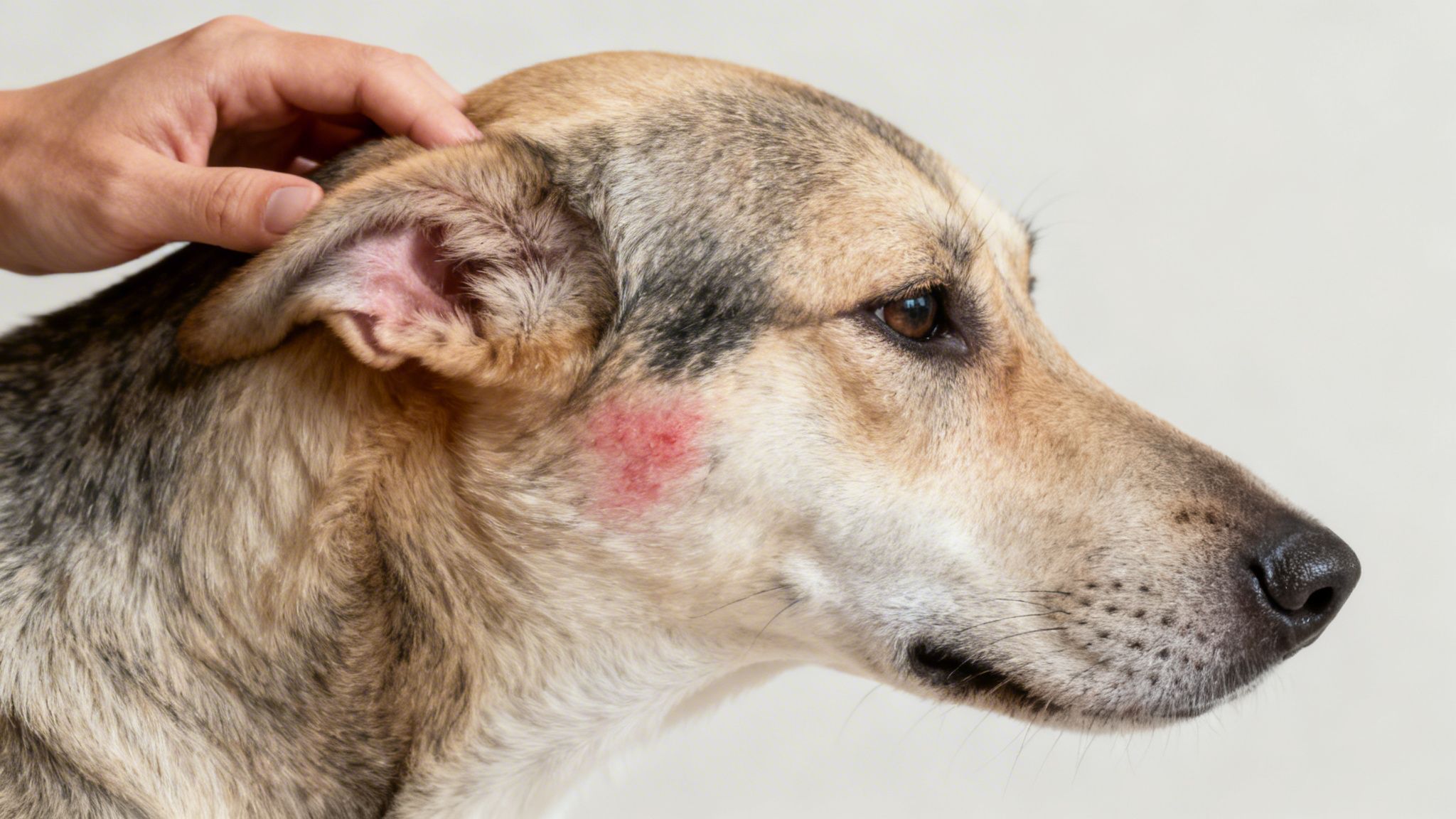
This guide is designed to give you a clear, actionable overview of the main reasons dogs get itchy. We’ll walk through everything from parasites to more complex issues like food intolerances. My goal here is to provide some immediate clarity and give you a starting point for the solutions we'll cover later.
Breaking Down The Common Causes
Let's start by looking at what might be going on. To make it easier, I've put together a quick summary table that breaks down the most common culprits, the classic signs to watch for, and what you can do right away.
It's also worth remembering that your dog's surroundings play a huge role. Things like dust mites, pollen, and dander can build up in your home and make skin issues much worse. Simple changes like removing trapped allergens through deep rug cleaning can sometimes make a surprising difference.
Key Insight: Scratching isn't just a bad habit—it's a symptom. Getting to the bottom of it is essential for your dog's comfort, as constant itching can quickly lead to painful skin infections and chronic inflammation.
Here's a quick guide to help you start playing detective. Use this to narrow down the possibilities and figure out your next steps.
Quick Guide to Common Causes of Dog Scratching
This table summarizes the most frequent reasons for dog itching, key symptoms to watch for, and the first steps you can take.
This chart is a great starting point, but remember it’s not a substitute for professional veterinary advice. It's meant to help you gather information so you can have a more productive conversation with your vet.
The 5 Biggest Culprits Behind Your Dog's Scratching
That constant thump-thump-thump of a back leg going to town, or the sight of your dog endlessly chewing their paws—it's more than just annoying background noise. It's your dog's most direct way of telling you something is wrong and they're uncomfortable.
Think of that persistent itch as a symptom, not the problem itself. Let's dig into the five most common reasons your dog might be so incredibly itchy. Getting to the root of the issue is the only way to bring them—and you—some lasting relief.
1. Allergies: From the Air and the Bowl
Just like us, our dogs can have immune systems that go into overdrive when they encounter certain substances. These allergic reactions are a huge cause of skin trouble, and they generally fall into two camps.
Environmental Allergies
This is often the answer when the scratching seems to pick up during certain seasons. Your dog is reacting to something in their environment.
- Common Triggers: We're talking about things like pollen from grass and trees, invisible dust mites living in your carpets, or even tiny mold spores.
- The Telltale Signs: You'll often see them obsessively licking their paws, battling recurring ear infections, or showing off a red, irritated belly and armpits.
Food Allergies
This isn't about an immediate reaction to a new treat. A food allergy or sensitivity builds up over time as their immune system decides it doesn't like a particular protein they've been eating for a while.
- Common Triggers: The most frequent offenders are actually the most common ingredients—proteins like beef, chicken, dairy, and even wheat.
- The Telltale Signs: This kind of allergy often shows up as chronic itching around their face, ears, paws, and rear end. Sometimes, you'll notice an upset stomach, too.
2. Parasites: Fleas, Ticks, and Mites
Before you dive down the rabbit hole of more complex issues, always check for tiny, uninvited guests. Parasites are a top cause of severe itching, and an infestation can happen surprisingly fast, even for dogs who spend most of their time indoors.
Fleas: The classic culprit. For a sensitive dog, a single flea bite can trigger a major allergic reaction called flea allergy dermatitis. This leads to frantic scratching and hair loss, especially right at the base of the tail. Look for "flea dirt"—tiny black specks that are actually flea droppings—in their fur.
Mites: These microscopic critters are responsible for mange. There are a few different types, but they all cause miserable, intense itching, red skin, and patchy hair loss. You'll need your vet to diagnose this with a quick skin scraping.
Ticks: We usually worry about the diseases ticks carry, but the bite itself can be very itchy and create a sore, irritated spot on the skin.
A Quick Word of Advice: You might not be able to see them, but that doesn't mean they aren't there. The absolute best defense against these pests is consistent, year-round prevention.
3. Just Plain Dry Skin
Sometimes the simplest answer is the right one. Your dog could be scratching for the same reason you reach for lotion in the winter: their skin is just dry and uncomfortable. Vets call this xerosis.
Low humidity, especially in colder months or dry climates, can literally suck the moisture out of your dog's skin, leaving it flaky, tight, and itchy. But it can also be an inside job—a diet lacking in essential fatty acids like Omega-3s can lead to a dull coat and parched skin. Even using a harsh shampoo can strip away the natural oils that keep their skin protected.
4. Nasty Skin Infections
All that scratching does more than just make noise. It creates tiny breaks and scrapes in the skin, which is like rolling out the welcome mat for bacteria and yeast. This kicks off a frustrating cycle: the infection makes the skin even itchier, which leads to more scratching, which makes the infection worse.
Bacterial Infections (Pyoderma): Look for red bumps that might look like pimples, little scabs, or crusty sores.
Yeast Infections: This often comes with a distinct musty odor and greasy-feeling skin, especially in skin folds, between their paw pads, and in their ears.
To really solve the problem, you have to treat both the infection and the original trigger that started all the itching.
5. Behavioral Itches
What if you've ruled everything else out? The scratching might not be a skin problem at all, but a brain problem. Just like people who bite their nails, dogs can develop compulsive habits as a way to cope with boredom, stress, or anxiety.
This can lead to something called a lick granuloma—a raw, thickened, angry-looking patch of skin caused by relentless, focused licking. It's often on a front leg and is a physical manifestation of an emotional need. If you think this might be what's going on, the solution might involve more exercise, puzzle toys for mental stimulation, or even a chat with a veterinary behaviorist.
And if you're dealing with an itchy dog, you're far from alone. One report found that nearly 9 in 10 dogs in the U.S. are considered itchy by their owners. The problem is so common that skin allergies have been the #1 reason for pet insurance claims for 13 consecutive years. You can see the full scope of the issue in Elanco's 2025 report on America's itchy dogs.
Knowing When to Call Your Veterinarian
Let's be clear: a dog is going to scratch. It's a completely normal part of their day. But there’s a world of difference between a casual itch and a frantic, non-stop scratching session. When it crosses that line, it's a sign that something is wrong.
Think of persistent scratching as your dog's "check engine" light. It's a clear warning that an underlying issue needs a professional's eye. Trying to guess at home can sometimes make things worse, turning a minor irritation into a painful infection or letting a bigger health problem go unchecked. Your vet is the best partner you have in solving this itchy puzzle.
Red Flags That Demand a Vet Visit
If your dog’s scratching is paired with any of the following signs, it’s time to pick up the phone. These are signals that simple home care isn't going to cut it.
- Non-Stop Scratching: The itching is relentless. It's waking them up at night, interrupting play, or clearly causing them distress.
- Visible Skin Damage: You’re seeing raw, red, and inflamed skin. Look for open sores, scabs, or those oozy, painful areas known as "hot spots."
- Significant Hair Loss: Are you noticing thinning fur or outright bald patches? This often happens in the exact spots they can’t stop licking or scratching.
- A Foul Odor: A musty, yeasty, or just plain unpleasant smell from their skin or ears is a classic sign of a bacterial or yeast infection.
- Behavioral Changes: Is the constant itching making your dog seem lethargic, grumpy, or uninterested in food? That's a huge clue that they're truly miserable.
This simple flowchart can help you start putting the pieces together.
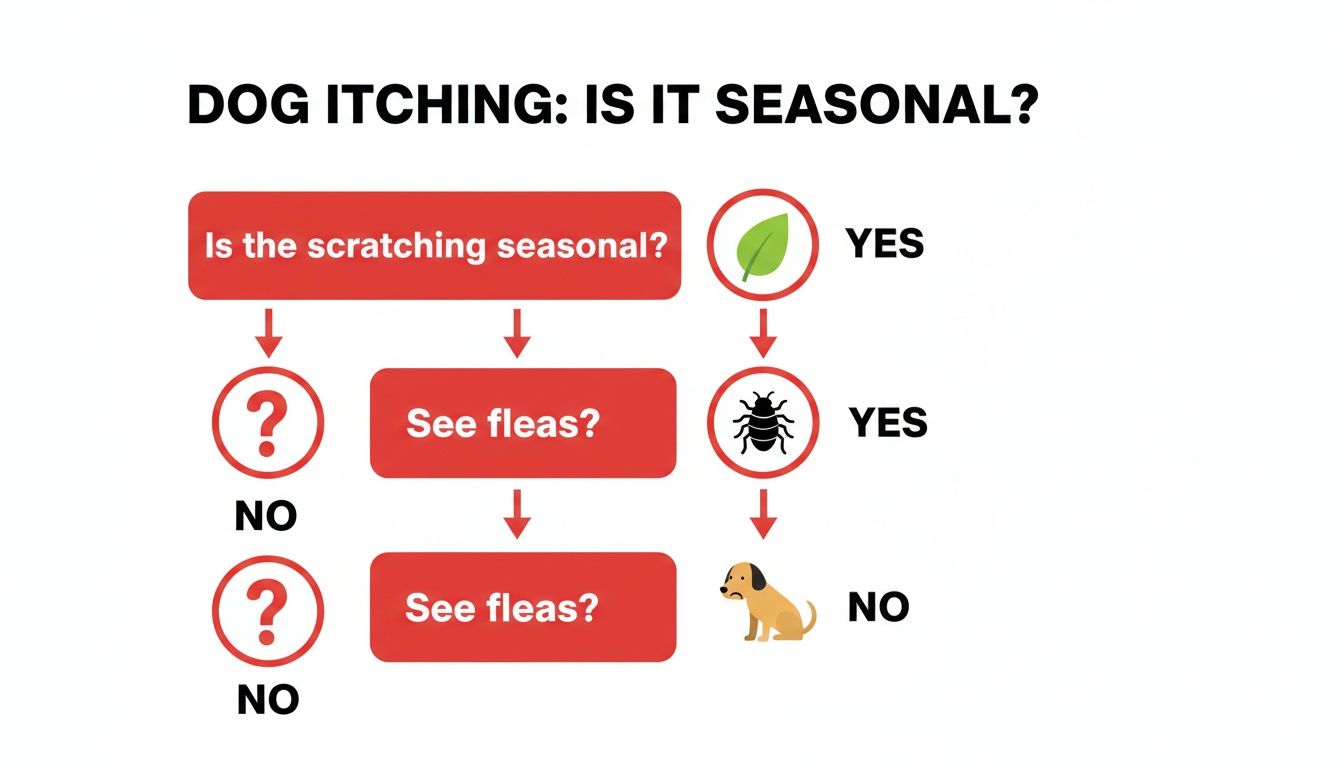
As you can see, figuring out when the itching happens and whether pests are involved are two of the most important first steps.
The Hidden Scale of Scratching
You might be surprised by how much your dog is actually scratching. We often only see a fraction of it. It’s the scratching and licking they do when we’re asleep or out of the room that tells the full story.
In fact, one fascinating study used deep learning analysis from Whistle devices to track this. It found that, on average, dogs triggered 13.9 to 15.8 pruritic alerts (bouts of scratching or licking) over a 10-month period. That's a lot of itching, and it often points to allergies or other skin conditions that owners might otherwise miss.
Even more telling? As the study went on, the odds of these scratching episodes ending in a vet visit became 1.6 times higher. This shows just how reliably persistent itching predicts a brewing medical issue. You can read the full findings on how tech reveals scratching behaviors for yourself.
The Bottom Line: If your dog's scratching goes on for more than a few days or you see any of the red flags we've covered, don't wait. Getting your vet involved early is the fastest and kindest way to get your pup the relief they need. It’s about treating the real cause, not just the symptom.
At-Home Remedies and Veterinary Treatments for Itch Relief
So, you've started to connect the dots on why your dog might be scratching. Now for the most important part: getting them some relief. The best way forward is usually a mix of immediate comfort you can provide at home and the expert guidance of your veterinarian.
Think of it this way: for a minor, passing itch, some simple home remedies can be a lifesaver. But for that relentless, keep-you-up-at-night scratching, you need to call in the professionals.
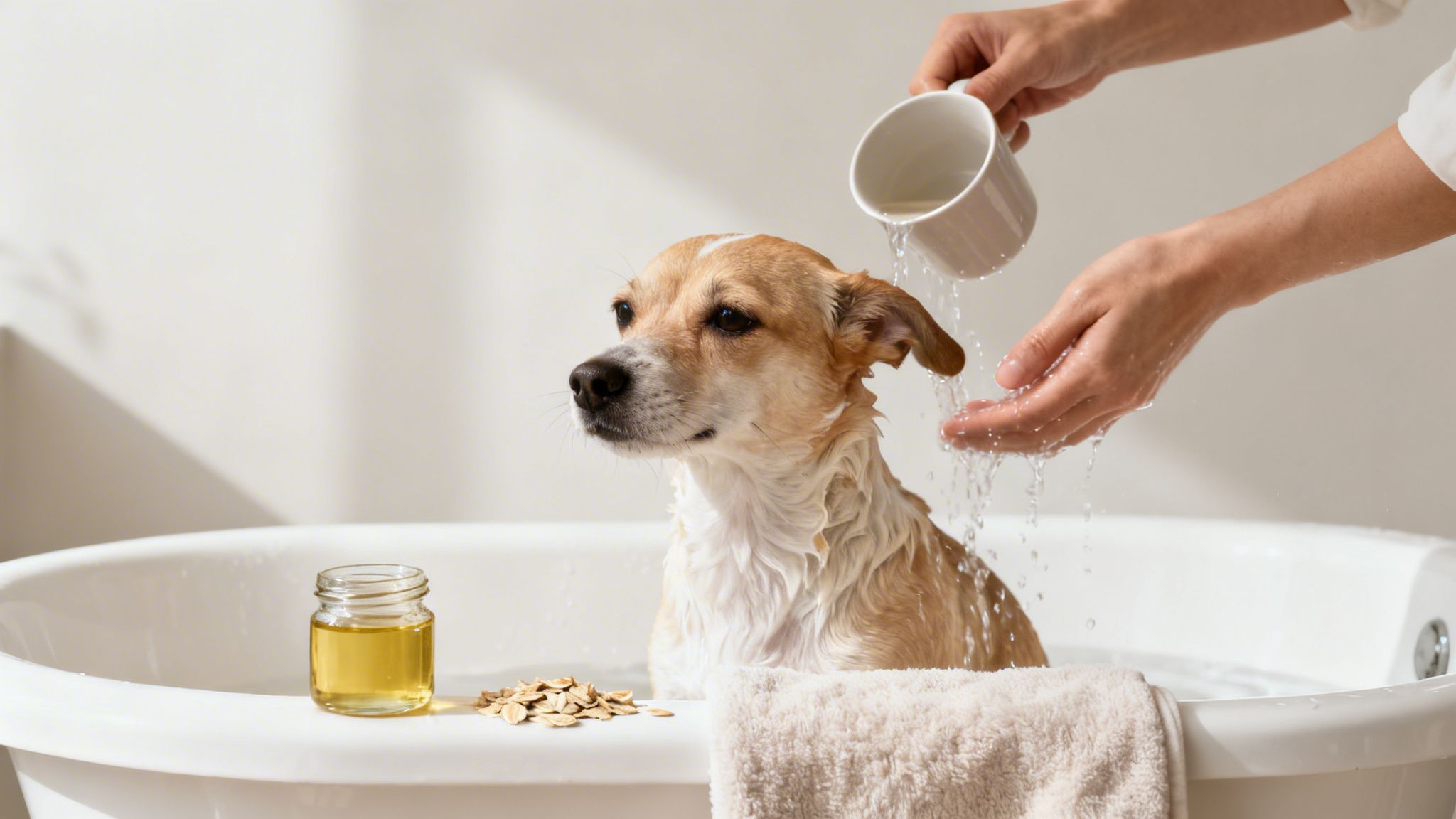
Your at-home care is like a first-aid kit for irritated skin. Your vet, on the other hand, has the specialized tools to diagnose and fix the root cause. Let's dig into the safe and effective options, starting with a few things you can try right away.
Simple At-Home Soothing Solutions
Before you jump to medications, a few vet-approved home remedies can offer real, temporary relief, especially if the culprit is just dry skin or a minor irritant. These gentle tricks can calm angry skin and make your dog a whole lot more comfortable.
Soothing Oatmeal Baths: This is an old-school remedy for a reason. Colloidal oatmeal has natural anti-inflammatory properties that work wonders on dry, itchy skin. You can grab a pre-made oatmeal shampoo or just grind up some plain, unflavored oatmeal into a fine powder. Add it to a tub of lukewarm water and let your dog soak for 10-15 minutes.
Topical Coconut Oil: For those little dry patches or emerging hot spots, a tiny bit of virgin, unrefined coconut oil can help. Massage it directly onto the spot to moisturize and support the skin's barrier. Just use it sparingly—a little goes a long way, and you don't want a greasy pup!
Environmental Adjustments: Sometimes the fix is surprisingly simple. Get in the habit of wiping your dog’s paws and belly with a damp cloth after every walk. This small step can remove a surprising amount of pollen and other allergens before they have a chance to cause trouble.
Remember, these are best for mild cases and are not a replacement for professional care if that itch just won’t quit.
When Your Vet Steps In
If home care isn't cutting it, or you're seeing clear signs of an infection or serious distress, your veterinarian is your number one resource. They have the right tools and treatments to get to the bottom of why your dog is scratching so much.
The first thing they'll do is play detective. A thorough physical exam is just the start; they might recommend a few tests to see what's really going on under the skin.
Common Diagnostic Steps:
- Skin Scrapes: Your vet will gently scrape the skin's surface to look for microscopic mites, like the ones that cause mange.
- Allergy Testing: If your vet suspects allergies, they might suggest blood tests or intradermal skin testing to pinpoint the specific environmental triggers.
- Fungal or Bacterial Cultures: A quick swab of the irritated skin can tell them if a yeast or bacterial infection is making things worse.
Once they have a diagnosis, your vet can build a targeted treatment plan. This could involve anything from medicated shampoos and prescription allergy meds (like antihistamines or stronger options) to antibiotics or antifungals for those nasty secondary infections.
Key Takeaway: You can't treat what you don't know. A proper diagnosis is everything. Using a soothing shampoo for a mite infestation will only delay real relief, and an antibiotic won't do a thing for a fungal infection. Your vet’s expertise makes sure your dog gets the right help for the right problem.
Comparing Your Options
It can be tough to know when to try something at home versus when to book that vet appointment. To make it a little clearer, here’s a quick comparison of the two approaches.
Comparing Itch Relief Options At Home vs. Vet Care
Ultimately, the best strategy often involves a bit of both. You might use a medicated shampoo from your vet while also wiping your dog's paws down after every walk. The key is to work with your veterinarian to create a plan that finally brings your dog some lasting comfort.
Building Healthy Skin from the Inside Out
Topical creams and medications can certainly provide some much-needed relief, but they often act like a bandage. They cover up the symptoms without getting to the real root of the problem. Lasting skin health isn't just about what you put on your dog; it’s about building a strong, resilient system from the inside out. This approach starts with the powerful connection between what your dog eats, their gut health, and how it all shows up on their skin.
Think of your dog’s gut as the mission control for their immune system. It’s home to a bustling community of trillions of bacteria that do everything from absorbing nutrients to keeping inflammation in check. When this delicate ecosystem is happy and balanced, the immune system works like a charm. But when things get thrown off-kilter by a poor diet or stress, it can trigger an inflammatory response that often erupts as relentless itching and irritation.
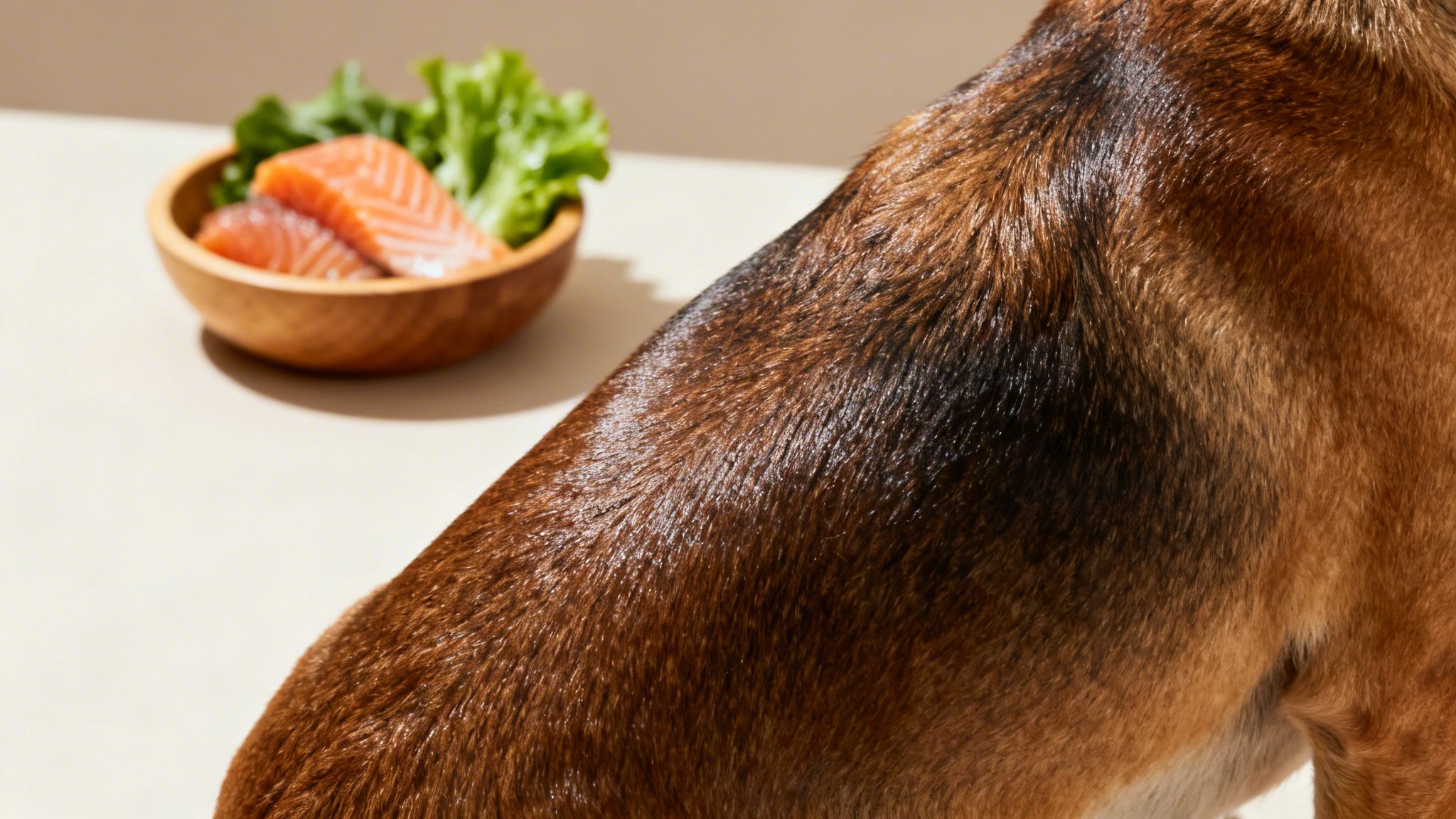
Key Nutrients for a Healthy Coat
To keep this internal ecosystem humming, a few specific nutrients are absolute must-haves. They are the essential building blocks for strong, calm skin, helping to maintain that protective skin barrier and manage the body's inflammatory cycles.
- Omega-3 Fatty Acids: Often found in fish oil, these are powerful anti-inflammatories. They get to work on a cellular level to soothe irritated skin, calm the itch, and give your dog's coat a beautiful shine.
- Probiotics: These are the "good guys"—the beneficial bacteria that help bring balance back to the gut. By shoring up gut health, probiotics strengthen the immune system's command center, preventing the overreactions that lead to allergic scratching.
- Antioxidants: Vitamins like E and C act like tiny bodyguards for your dog’s skin cells. They fight off damage from environmental stress and inflammation by neutralizing harmful free radicals, making the skin more resilient.
It's no secret that skin issues in dogs are a huge—and growing—concern. Canine atopic dermatitis, a primary reason for constant scratching, is driving a market that’s projected to hit USD 2.69 billion by 2032. This surge is happening because more and more owners are desperately seeking real solutions for their dogs' inflamed, itchy skin. For more details on this trend, you can explore the canine atopic dermatitis market analysis.
A Simpler Path to Proactive Wellness
Trying to source all these different nutrients and figure out the right doses can feel like a full-time job for a busy pet parent. That's where a simple, all-in-one solution can make a world of difference. A daily superfood chew, like FORMA, is designed to pack all these essential building blocks into one easy, tasty treat.
By combining human-grade ingredients that are proven to support a healthy skin and coat, a daily chew helps fortify your dog's health from within. It’s not just about stopping the itch today; it's about laying a solid foundation for long-term wellness.
The Holistic Advantage: Taking care of the gut-skin connection does more than just stop the scratching. A balanced gut is also key for promoting a calmer demeanor and supporting overall immune function, which contributes to your dog’s long-term health and happiness.
This approach really clicks with owners who want proactive, holistic care for their dogs. Instead of just reacting to flare-ups, you're providing daily support that strengthens their natural defenses. It's a simple habit that gets to the source of the problem by promoting gut balance, fostering a sense of calm, and building a vibrant, healthy coat that's much less likely to get irritated in the first place.
Your Top Questions About Dog Scratching, Answered
When your dog is scratching nonstop, your mind can race with questions. It's totally normal to feel a bit lost trying to figure out what’s going on. Let's tackle some of the most common questions I hear from dog owners to help you connect the dots and figure out your next move.
"Could my dog's food be making them scratch?"
Yes, absolutely. A food allergy or sensitivity is a very common cause of that relentless, year-round itch. But it's often not what people think. A true food allergy doesn't pop up the first time your dog tries something new; it actually develops over a long period of exposure to an ingredient, usually a protein.
The biggest culprits are often the most common ingredients in dog food: beef, chicken, dairy, and wheat. The immune system starts to see these proteins as a threat and launches an inflammatory attack. On the outside, that attack looks like itchy skin, constant ear infections, or non-stop paw licking.
Key Distinction: A food allergy is an immune reaction that shows up on the skin. A food intolerance is more of a digestive problem, causing things like gas or an upset stomach.
If you and your vet suspect food is the problem, the only way to know for sure is with an elimination diet. This isn't something to try on your own. Your vet will guide you through switching to a diet with a "novel" protein—something your dog has never had before, like venison or even kangaroo—for a few weeks to see if the itching finally stops.
"How do I know if it's fleas or just dry skin?"
This is a fantastic question. At first glance, the scratching can look identical, but once you know the signs, the two are worlds apart. It's a critical first step because you can't treat an invasion the same way you treat a condition.
Signs You're Dealing with Fleas:
- The "Hot Spot": A dog with a flea allergy will often chew and scratch frantically at their lower back, right above the tail.
- The Evidence: Grab a flea comb and run it through your dog's fur, paying close attention to their belly and tail area. You're looking for tiny, fast-moving brown bugs or "flea dirt"—little black specks that are actually flea droppings.
- The Bites: You might spot small, red bumps on the skin, especially on their stomach or the inside of their legs.
Signs It's Just Dry Skin (Xerosis):
- The Flakes: You'll probably see white, dandruff-like flakes in their coat or on their favorite sleeping spot.
- The Dull Coat: Their fur might look brittle and lack its usual healthy shine.
- The Itch: The scratching is usually more generalized all over the body, not frantic and focused on one specific area.
"Is it normal for my dog to scratch more at certain times of the year?"
Yes, this is incredibly common and a huge clue that you're likely dealing with environmental allergies, also known as atopy. Think of it like hay fever for dogs. Just like people, our dogs can have allergic reactions to things that are blooming and floating around in the air.
This seasonal pattern is one of the most helpful pieces of information you can give your vet. Here’s a typical timeline:
- Spring: Tree and grass pollens are the main offenders.
- Summer: Grass pollens hang around, and weed pollens join the party.
- Fall: Weeds like ragweed hit their peak.
- Winter: If the itching doesn't stop, the problem might be inside. Indoor allergens like dust mites and mold become more of an issue when we seal up our homes and turn on the heat.
With seasonal allergies, the itchiness is often concentrated on their paws, ears, belly, and armpits. A simple trick that helps a lot is to wipe your dog's paws and coat with a damp cloth every time they come inside. It physically removes those tiny allergens before they can cause trouble.
"Can anxiety really make my dog scratch so much?"
It sure can. After a vet has done a full workup and can't find a single physical reason for the itching, it’s time to look at behavior. For some dogs, scratching and licking becomes a way to cope with stress, kind of like how a nervous person might bite their nails.
This is called psychogenic alopecia, or a behavioral itch. It’s often triggered by major stressors in a dog's life:
- Boredom and a lack of mental stimulation
- Separation anxiety when you leave
- Big changes at home, like a new baby or pet
- Scary noises from thunderstorms or construction
You'll often see this kind of scratching focused on one spot that's easy to reach, like a front leg or paw. If it goes on long enough, that constant licking can create a raw, infected sore known as a lick granuloma. To stop the cycle, you have to get to the root of the anxiety with more exercise, engaging puzzle toys, or sometimes even help from a professional dog behaviorist.

Karolis is the Founder of FORMA, a pet wellness brand focused on longevity and daily nutrition for dogs. Writes about supplements, canine health, and helping pets live longer, healthier lives
Join thousands of pet parents getting science-backed health insights and natural care advice