Longevity Supplements for Dogs: A Guide to a Healthier, Longer Life
Explore how longevity supplements for dogs work, key ingredients, and tips to pick a formula that supports your pet's healthspan and vitality.
Longevity supplements for dogs aren't just another treat or vitamin. They are specially designed formulas that work at a cellular level to support your dog's long-term health, with the goal of extending their "healthspan"—the part of their life they spend happy, healthy, and active. These supplements are often packed with antioxidants, joint supporters, and cognitive enhancers to help push back against the natural aging process, keeping your dog feeling like a puppy for longer.
Giving Your Dog More Healthy and Active Years

We all want more time with our dogs. But what we really want is more good time—more years of zoomies in the park, excited greetings at the door, and cozy evenings on the couch. As our best friends get older, we start to see the small signs: a little stiffness getting up, a hesitation before a jump, or a few more hours spent snoozing.
This guide is all about extending your dog's healthspan. It’s not just about adding years to their life, but more importantly, adding life to their years. This shift towards proactive wellness is one of the most exciting changes happening in modern pet care.
The New Era of Proactive Pet Wellness
For a long time, pet health was mostly reactive. We’d wait for a problem to pop up and then go to the vet to fix it. Today, that mindset is changing. More and more, we're focusing on proactive wellness—a strategy that aims to maintain health and prevent issues before they ever start. It’s the difference between patching a leak and building a stronger roof in the first place.
Longevity supplements are a key part of this new philosophy. They give us a powerful way to support our dogs' bodies from the inside out, tackling the root causes of age-related decline right down at the cellular level.
Think of it like this: You wouldn't wait for your car's engine to seize up before you get an oil change. Proactive supplements work the same way, helping to maintain your dog's internal systems so they can run smoothly for as long as possible.
What Can Longevity Supplements Achieve?
By delivering targeted nutrients that might be missing from their regular food, these supplements can offer a whole host of benefits aimed at keeping your dog feeling fantastic. The goal is to reinforce the very systems that aging affects the most.
A high-quality formula can help:
- Maintain Joint Mobility: Ingredients that cushion cartilage and ease inflammation can keep your dog’s joints feeling fluid and comfortable, so they stay eager to play and walk.
- Support Sharp Cognitive Function: Nutrients that protect brain cells can help your dog stay mentally sharp, engaged, and quick to respond, even in their senior years.
- Boost Overall Energy and Vitality: By shielding cells from damage and supporting energy production, supplements can help your dog hold onto that youthful spark.
This guide will walk you through everything you need to know to choose the best longevity supplements for dogs. By the time you're done, you’ll feel confident in making smart decisions to support your best friend’s long, vibrant, and happy life.
The Science Behind Why Our Dogs Get Old
To really get a handle on how longevity supplements can help our dogs, we need to peek under the hood and see what's actually happening as they age. It’s not just one thing that makes a dog "old." It’s a slow cascade of changes happening at the cellular level, which eventually show up as the things we see—a slower gait, a little gray around the muzzle, or longer naps.
Picture your dog’s body as a brand-new, bustling city. In their youth, the roads are smooth, the workers are efficient, and everything runs like clockwork. But over the years, a bit of wear and tear starts to build up. It’s like tiny potholes forming, making it harder for the city’s systems to keep up.
Two of the biggest culprits behind this wear and tear are oxidative stress and chronic inflammation. They might sound like complex scientific terms, but they’re actually pretty straightforward ideas once you break them down.
Oxidative Stress: The Body's "Rusting" Process
Every single day, your dog's cells are busy making energy. It's a vital process, but it creates some messy byproducts called free radicals. Think of these like tiny, rogue sparks flying off a busy factory assembly line. Normally, the body has a built-in fire crew—antioxidants—that zips around and puts out these sparks before they can cause any trouble.
But as a dog gets older, things get out of balance. The factory starts producing more sparks (free radicals), while at the same time, the fire crew (antioxidants) starts to shrink. When you have more sparks than your crew can handle, they start to damage nearby cells, proteins, and even DNA.
This slow, accumulating damage is what we call oxidative stress.
A great way to think about oxidative stress is to imagine metal rusting. When metal is exposed to oxygen and moisture over time, it corrodes. In the same way, your dog's cells can "rust" from the inside out from the constant barrage of free radicals.
This cellular "rust" is a major force behind aging and is tied to the decline of just about every organ system, from their brain to their joints. That’s precisely why giving your dog’s body a steady stream of antioxidants is a key strategy for promoting a longer, healthier life.
Chronic Inflammation: A Fire Alarm That Won't Shut Off
Now, inflammation itself isn’t the enemy. When your dog gets a scrape or a bug bite, the body rushes inflammatory cells to the scene to fight off germs and start repairs. It’s a healthy, short-term response. It’s like a fire alarm that sounds, calls the firefighters, and then turns off when the danger is gone.
Chronic inflammation, however, is like a fire alarm that’s stuck in the "on" position. It’s a constant, low-level state of alert that keeps the immune system humming in the background, day in and day out. This never-ending "emergency" slowly wears the body down.
This simmering, background inflammation can play a role in all sorts of age-related problems, including:
- Achy Joints: Constant inflammation in the joints can slowly degrade cartilage, leading to stiffness and discomfort.
- Brain Fog: Inflammation in the brain can disrupt neural pathways, contributing to confusion or changes in behavior in our senior dogs.
- A Weaker Immune System: An immune system that’s always revved up can become less effective when it needs to fight off a real infection.
Once you understand these two fundamental processes—oxidative stress and chronic inflammation—it becomes clear that longevity supplements for dogs are much more than just a random mix of vitamins. They’re thoughtfully designed formulas that aim to reinforce the body's natural defenses against these specific drivers of aging. They provide the extra tools needed to help douse those cellular sparks and silence the faulty internal alarms, supporting your dog’s health from the inside for a happier, more vibrant life.
Powerful Ingredients in Canine Longevity Formulas
Now that we have a handle on the internal culprits of aging—like oxidative stress and chronic inflammation—let’s look at how the right ingredients in longevity supplements for dogs can step in and fight back. A top-notch formula isn’t just a random cocktail of vitamins; it’s a thoughtfully chosen team of compounds, each with a specific job.
Think of it like assembling a pit crew for a high-performance machine. You need mechanics for the moving parts, electricians for the wiring, and a cleanup crew to stop rust from setting in. In the same way, the best supplements bring together specific ingredients to support your dog's joints, brain, and overall cellular health.
Protecting Joints for a Lifetime of Play
For most dog owners, joint health is one of the first things that comes to mind when we think about aging, especially if we have a larger breed. Stiff, achy joints can steal a dog's joy, turning a happy sprint across the yard into a painful hobble. Two of the most proven ingredients for joint support are Glucosamine and Chondroitin.
Glucosamine: This is a natural building block of cartilage—that spongy, protective tissue that cushions the ends of bones. As dogs get older, their bodies don't produce as much of it, leaving that cartilage thinner and more prone to wear and tear. Supplementing with glucosamine essentially gives the body the raw materials it needs to help maintain that crucial cushion.
Chondroitin Sulfate: This compound is glucosamine's best partner. It helps cartilage hold onto water, which is key for its shock-absorbing ability. It also helps block certain enzymes that can break down cartilage over time. Together, they're a powerful duo for supporting joint structure and function.
This focus on joint health is a huge reason why the pet supplement market is booming. The global demand for products that keep our pets mobile is projected to grow from USD 2.71 billion in 2025 to USD 4.11 billion by 2030. That surge shows just how much owners are investing in proactive care to keep their dogs active and comfortable. You can explore more on these trends in this pet supplement market report.
The infographic below shows exactly how those internal aging processes lead to the symptoms we see in our dogs.
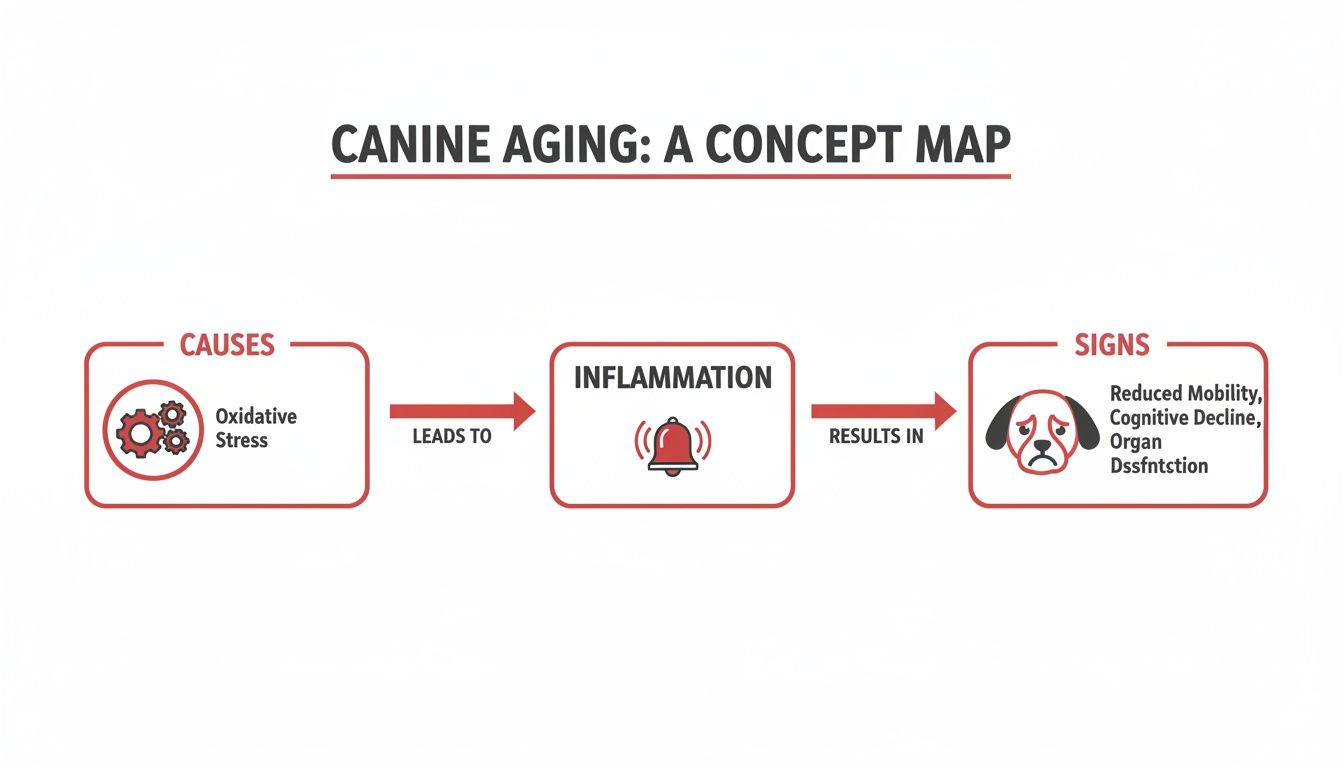
You can see a clear line from the cellular damage inside to the physical signs that impact our dogs’ day-to-day lives.
Fueling a Sharp Mind and Healthy Brain
A dog's mind can also show signs of aging. You might notice your senior dog seems a bit confused, isn't as responsive as they used to be, or has changes in their sleep schedule. Just like our own brains, a dog’s brain needs the right fuel to stay sharp.
This is where Omega-3 fatty acids, especially EPA (eicosapentaenoic acid) and DHA (docosahexaenoic acid), really shine. They are true superstars for brain health.
DHA is a primary structural component of the brain. Think of it as the material that keeps the brain's "wiring" and communication lines in top-notch condition. This directly supports memory, learning, and overall cognitive sharpness well into their golden years.
These healthy fats also pack a powerful anti-inflammatory punch, helping to cool down the low-grade inflammation that can affect the brain and nervous system over time.
Fighting Cellular Damage with Antioxidants
Finally, let's get back to that "rusting" process of oxidative stress. To combat this, a dog’s body needs a steady stream of antioxidants to neutralize the free radicals causing all the damage. While dogs produce some antioxidants on their own, their natural defenses can get overwhelmed as they age.
That’s where supplemental antioxidants come in to reinforce the body’s cleanup crew.
- Vitamin C: A classic antioxidant that helps protect cells directly and also helps recycle other antioxidants, like Vitamin E.
- Vitamin E: This fat-soluble vitamin is fantastic at protecting cell membranes—the outer walls of every cell—from oxidative damage.
- Selenium: This is a trace mineral, but it’s a critical component of some of the most powerful antioxidant enzymes the body produces itself.
By supplying a diverse team of antioxidants, a well-formulated longevity supplement helps protect your dog's entire body at the most fundamental level.
Essential Longevity Ingredients and Their Benefits for Dogs
To pull this all together, here’s a quick-reference table that breaks down what these key ingredients do and which part of the aging process they tackle head-on.
Choosing a supplement like FORMA that thoughtfully combines these types of ingredients gives you a multi-front strategy to support your dog's health. It acknowledges that aging isn't just one thing—it’s interconnected. This approach helps maintain their mobility, sharpen their mind, and protect their body from the inside out for a longer, happier life.
How to Choose a Safe and Effective Supplement
Walking down the supplement aisle—or scrolling online—can feel pretty overwhelming, can't it? When it comes to longevity supplements for dogs, the options seem endless. So, how do you sort through the noise and find a formula that’s actually worth your money?
It all comes down to knowing what to look for. Think about it: you wouldn't just grab any supplement for yourself without checking the label. The same care should go into choosing one for your dog. You’re looking for pure ingredients, dosages that actually work, and solid proof that what’s on the label is what’s in the bottle.
This push for better quality is a big reason why the global market for veterinary supplements is booming. It was valued at USD 3.96 billion in 2025 and is expected to climb to an incredible USD 9.50 billion by 2035. That growth is fueled by people just like you, who are invested in their dogs' long-term health. You can find more on these market trends here.
More choices are great, but it also means you need to be a smart shopper.
Decode the Label Like an Expert
Your best tool is the product label itself—it’s a roadmap to quality. The first thing to check is the Guaranteed Analysis, which tells you the minimum amount of each active ingredient. After that, read the full ingredient list. A good formula will always list its active ingredients first.
Keep an eye out for vague terms like "proprietary blend." It's not always a bad sign, but some companies use it as a way to hide that they're skimping on the important—and often more expensive—ingredients. When in doubt, look for transparency.
Look for Third-Party Certifications
The pet supplement industry isn't regulated as tightly as pharmaceuticals, which makes independent verification a huge deal. It’s your best bet for knowing a company is holding itself to a higher standard.
The gold standard is the NASC Quality Seal from the National Animal Supplement Council. That little seal is a big deal. It means the manufacturer has passed a tough third-party audit, follows strict quality control rules, and even has a system for tracking its products after they're sold. It’s your shortcut to peace of mind.
Seeing that seal tells you the company is serious about quality and isn't cutting corners.
Prioritize Bioavailability Over Just Quantity
Here’s something a lot of people miss: it’s not just about what’s in the supplement, but how much of it your dog’s body can actually use. This is a concept called bioavailability. A product might boast about a high dose of a certain nutrient, but if it's in a form the body can't absorb, it's essentially useless.
For instance, minerals come in different forms. Chelated minerals, like zinc proteinate, are much easier for a dog's body to absorb compared to inorganic forms like zinc oxide. The best brands invest in these higher-quality, more bioavailable ingredients to make sure their formulas deliver real results.
What to Look For and What to Avoid
To wrap it all up, here’s a quick checklist to take with you. Think of these as the green flags that signal a great product and the red flags that tell you to walk away.
Green Flags (What to Look For):
- Clear Ingredient List: Shows you the exact amounts of every active ingredient.
- NASC Quality Seal: Your proof of safety, quality, and label accuracy.
- Bioavailable Ingredients: Uses nutrient forms your dog can actually absorb.
- Made in the USA: This often means the product was made under stricter manufacturing standards.
- Positive Reviews and Transparency: The company is open about how and where its ingredients come from.
Red Flags (What to Avoid):
- Artificial Additives: Steer clear of unnecessary colors, flavors, or preservatives.
- Cheap Fillers: Ingredients like corn, wheat, or soy that add bulk but no real health value.
- Vague "Proprietary Blends": This often hides the true amounts of the good stuff.
- Exaggerated Claims: If a product promises a "miracle cure," it’s a major warning sign.
By keeping this checklist in mind, you can confidently choose a high-quality longevity supplement—like FORMA—that is safe, effective, and a genuine investment in your dog's health.
How to Safely Add Supplements to Your Dog's Routine

Choosing the right supplement is half the battle; knowing how to introduce it is just as important. A slow and steady approach is always best. It helps your dog’s body adjust without causing any tummy troubles, making it a good experience for both of you.
Don’t just jump in with the full recommended dose. For the first few days, start with just a fraction of it—maybe a quarter or half of what the package suggests. This gives their digestive system a chance to get used to the new ingredients.
If all goes well and your dog seems fine, you can slowly up the amount every few days. The goal is to work your way up to the full recommended dose over about a week. This “start low and go slow” method is the gold standard for adding any new longevity supplements for dogs to their diet.
Your Vet Should Be Your First Call
Before a single drop or crumb of a new supplement hits your dog’s bowl, your first move should always be a call to your veterinarian. This isn't just a friendly tip; it’s a non-negotiable step for any responsible pet owner.
Your vet knows your dog’s entire health story, from puppyhood antics to any current conditions or sensitivities. They can spot potential red flags and, crucially, make sure the supplement's ingredients won’t clash with any medications your dog is already taking.
This simple check-in is your most important safety net. It makes you and your vet a team, working together to make the smartest choices for your dog’s health.
Remember, the goal of a good supplement is to support your dog’s health, not make it more complicated. A quick chat with your vet sets you both up for success.
Playing the Long Game: What to Expect
It’s crucial to have the right mindset from the start. Longevity supplements aren’t a magic pill or an overnight cure. They work from the inside out, building up your dog’s health at a cellular level, and that takes time. Think of it as a long-term investment in their well-being.
This proactive approach is catching on. The pet dietary supplement market in the United States is expected to climb from USD 1,323.8 million in 2025 to a whopping USD 2,660.0 million by 2035. This boom is fueled by owners who want science-backed ways to support their dogs for a lifetime. You can find more details about the booming U.S. pet supplement market on futuremarketinsights.com.
To get the most out of any supplement, consistency is everything. Here’s what to focus on:
- Make It a Daily Habit: Give the supplement at the same time every day, just like a meal. Routine makes it easy to remember.
- Be Patient: You won't see dramatic changes overnight. It often takes several weeks, sometimes even a couple of months, for the ingredients to build up and produce noticeable benefits.
- Watch for Small Wins: Keep an eye on the little things. You might notice more pep in their step, a healthier coat, or just a bit more playfulness.
By introducing supplements carefully and sticking with them, you’re giving your best friend a powerful tool for a long, happy, and vibrant life.
Got Questions About Dog Longevity Supplements? We’ve Got Answers.
Stepping into the world of canine supplements can feel a little overwhelming. If you’re looking to give your best friend a leg up on aging, it's totally normal to have questions. This section is here to clear things up, tackling the most common things dog owners ask so you can feel confident in supporting your buddy's health for the long haul.
Think of this as your go-to guide for making smart, informed choices for your dog's future.
At What Age Should I Start Giving My Dog Longevity Supplements?
This is a fantastic question because it gets right to the heart of being proactive. So many of us wait until we see obvious signs of aging, but starting early can make a huge difference. It's less about treating a problem and more about investing in their future health and keeping that puppy-like spark alive.
The right time really depends on your dog. For instance, big breeds that are prone to joint issues, like Labs or German Shepherds, can really benefit from starting joint support around 5 years old. For more general wellness formulas packed with antioxidants and omega-3s, you can even start in early adulthood. This helps build a strong foundation and fight off the cellular "rust" that happens over time.
The golden rule? Every dog is different. The best plan is always one you make with your vet. They can help you map out a timeline that’s a perfect fit for your dog’s breed, size, lifestyle, and unique health history.
Working with your vet ensures you’re giving support exactly when and where it’s needed most, setting the stage for a long, happy, and active life together.
Can These Supplements Interfere With My Dog's Medications?
Yes, and this is a big one. It's a critical safety check that every dog owner needs to take seriously. While a good supplement is designed to be safe, some ingredients can absolutely interact with prescription medications. This can mess with how well a drug works or even cause nasty side effects.
Here are a few common examples to be aware of:
- Omega-3 Fatty Acids: These have a mild blood-thinning effect, which could be risky if your dog is on anti-inflammatory drugs (NSAIDs) or other blood thinners.
- Certain Herbs: Ingredients like turmeric (curcumin) can also affect blood clotting and might not play well with certain medications.
- High Doses of Vitamins: In some cases, high levels of specific vitamins can interfere with how a drug is absorbed or used by the body.
This is exactly why you must have a chat with your veterinarian before adding any new supplement to the mix. Your vet knows your dog's health inside and out and can look at the supplement’s ingredient list to spot any potential conflicts. That conversation is your most important safety net.
What Are the Potential Side Effects I Should Watch For?
The good news is that top-notch supplements made with quality ingredients are usually very safe and easy on your dog's system. But, just like introducing any new food, some dogs might have a few mild and temporary side effects as their body gets used to it.
By far, the most common thing you might see is a little digestive upset. This could look like:
- Loose stool or diarrhea
- A bit more gas than usual
- Mild stomach gurgling
The best way to avoid this is to "start low and go slow." Give just a quarter or half of the recommended dose for the first few days and build up to the full amount over a week. This gives their gut time to adjust. Of course, if you see anything more serious like persistent vomiting, severe diarrhea, or signs of an allergic reaction (like hives, intense scratching, or swelling), stop the supplement right away and call your vet.
Should I Choose an All-In-One Formula or Individual Supplements?
This really comes down to what your dog needs and what your goals are. There's no single right answer; both approaches have their pros and cons.
All-In-One Formulas:
For most dogs, these are a fantastic choice for broad, everyday support. A comprehensive blend like FORMA makes life easy by covering all the major bases at once—joints, brain, gut, and cellular health. It simplifies your routine and gives you peace of mind that you're tackling the common effects of aging from multiple angles.
Individual Supplements:
This approach is all about targeting a specific problem. If your vet has diagnosed a particular issue, they might recommend a higher, more therapeutic dose of a single ingredient. For example, a dog with significant arthritis might need a standalone, high-potency glucosamine supplement to get the job done.
Often, the best strategy is a bit of both. An all-in-one formula can be the foundation of your dog's wellness plan, and you can add individual supplements on top as needed for that extra, targeted boost.

Karolis is the Founder of FORMA, a pet wellness brand focused on longevity and daily nutrition for dogs. Writes about supplements, canine health, and helping pets live longer, healthier lives
Join thousands of pet parents getting science-backed health insights and natural care advice