Melatonin Dog Treats A Guide to Calming Your Canine
Are melatonin dog treats the right choice for your anxious dog? Our guide explains how they work for stress and sleep, plus safe dosing and vet-approved tips.
If you've ever wished you could tell your anxious dog, "It's okay, you're safe," during a booming thunderstorm or a chaotic fireworks display, you're not alone. Many dog owners are turning to melatonin dog treats as a way to offer that sense of calm when words just aren't enough.
These treats are essentially a small, supplemental dose of the very hormone your dog's brain naturally produces to regulate their sleep-wake cycles. Think of them less as a heavy sedative and more like a gentle, helping hand for your dog's nervous system.
What Exactly Are Melatonin Dog Treats?
When your dog is frantically pacing or whining, their internal "fight or flight" system is in overdrive. Melatonin works by gently nudging their body toward a state of rest and relaxation.
It's helpful to picture it not as a powerful sleep medication that knocks them out, but more like a dimmer switch for their brain. By giving your dog a treat with melatonin, you're just reinforcing the natural signal that tells their body it's time to wind down, making it easier for them to cope with stressful situations.
A Growing Trend in Pet Wellness
So, why are so many pet parents adding melatonin to their toolkit? The rise in popularity is all about a shift toward gentle, accessible solutions for common behavioral issues like anxiety.
This isn't just a niche trend. The numbers show a significant demand, with melatonin-based products commanding a remarkable 27% revenue share in the global pet calming market. This data, highlighted in a report from Precedence Research, points to a clear preference for supportive, non-pharmaceutical options.
The goal isn’t to sedate your dog, but to support their own natural ability to relax. Melatonin encourages a state of calm, which in turn helps your dog manage stress on their own terms.
This simple idea is the foundation for understanding how these treats can be used safely and effectively. Before we dive deeper, here’s a quick overview of what you need to know.
Melatonin Dog Treats At a Glance
The table below breaks down the must-know facts for any dog owner considering melatonin treats.
This summary gives you the basics, but there's a lot more to learn about choosing the right product, finding the correct dose, and understanding when it's the best choice for your furry friend.
How Melatonin Works to Calm Your Dog
To really get how a simple treat can help soothe a nervous dog, we need to talk about a powerful hormone their body already makes: melatonin. At its core, melatonin is the manager of your dog's internal clock, also known as their circadian rhythm.
Think of it like an internal 24-hour schedule that tells your dog when it’s time to be sleepy and when it’s time to be alert. This schedule is incredibly sensitive to light. As the sun goes down and darkness sets in, a tiny gland in your dog’s brain—the pineal gland—kicks into gear. It releases melatonin into the bloodstream, sending a system-wide signal that it’s time to wind down and rest.
This is the same natural process that helps your dog settle in for the night. But stress from fireworks, a car ride, or even just a change in routine can throw this whole system out of whack, leaving your dog anxious and on high alert.
The Role of Supplemental Melatonin
When you give your dog a melatonin treat, you're not introducing a harsh sedative or some foreign chemical. You’re simply giving them an extra bit of a hormone their body already knows how to use.
This supplemental boost helps nudge their internal clock back on track. For a dog who's shaking during a thunderstorm, the melatonin can help override the body's frantic "fight or flight" response by reinforcing its natural "rest and digest" signals. It’s a gentle push back toward a state of calm.
Melatonin doesn't "drug" your dog into a stupor. Instead, it works with their own biology to encourage relaxation, helping their brain and body agree that it's safe to calm down.
This is a really important point. The goal isn't to knock them out, but to support their body's ability to manage stress on its own. That's what makes melatonin dog treats such a useful tool for predictable, situational anxiety.
The Brain and Body Connection
So, what’s actually happening inside your dog’s head? As melatonin levels rise, it triggers a chain reaction in their central nervous system.
The hormone binds to specific receptors in the brain, which helps dial down the activity of neurons that keep them awake and anxious. This can also have a ripple effect on other mood-related neurotransmitters, like dopamine.
This entire process is what leads to the calm behavior you can see:
- Reduced Pacing: That restless, frantic energy starts to fade as their body gets the message to conserve energy.
- Less Panting: Anxious panting usually slows as their heart rate and breathing return to a resting state.
- Decreased Vocalization: The urge to whine or bark from stress often melts away.
Imagine your dog's nervous system has a volume knob. Stress cranks it all the way up to ten. Melatonin helps gently turn that dial back down to a much more comfortable two or three.
Melatonin Is More Than a Sleep Aid
While most of us know melatonin as a sleep supplement, it does more than just make dogs drowsy. It’s also an antioxidant, which means it helps protect cells from the damage caused by stress.
On top of that, melatonin interacts with the immune system and can even help regulate body temperature and blood pressure—all things that are part of the body's complex reaction to stress. By helping to steady these systems, melatonin provides a more holistic sense of calm.
This is why it can be especially helpful for senior dogs. Many older pups experience "sundowning," a kind of nighttime restlessness often tied to cognitive changes. Their natural melatonin production may be lower than it used to be, and a supplement can help get their sleep-wake cycle back on track. It’s a way to support a specific biological need, leading to better rest for both them and you.
When Should You Give Your Dog Melatonin Treats?
So, you understand what melatonin is, but when is it actually the right tool for the job? The best way to think about melatonin dog treats is to see them as a specific solution for predictable, short-term stressful events, not as an everyday supplement. They work best when you can see the stress coming.
These treats are perfect for what we call situational stressors—those one-off moments when you know your dog is going to need a little help. Think of the dog who shakes like a leaf when a thunderstorm is brewing, or the one who won't stop panting and pacing during the Fourth of July fireworks. In situations like these, giving a melatonin treat about 30-60 minutes ahead of time can really take the edge off and help them ride it out more calmly.
Soothing Anxiety from Loud Noises and Travel
Loud, sudden noises are a classic anxiety trigger for dogs. The low rumble of thunder or the sharp crack of fireworks can easily kick their "fight or flight" response into high gear, leaving them in a state of panic. Melatonin works by gently dialing down that anxious response.
Travel is another common stressor where these treats can be a game-changer. Whether it’s a quick car trip to the vet or a long-haul flight, the strange motion and new surroundings can be overwhelming. A melatonin treat can help your dog settle down for the journey, making the whole experience less of a nightmare for them (and for you).
A few common scenarios where melatonin treats can help include:
- Thunderstorms: Give a treat as soon as you see a storm rolling in.
- Fireworks: Offer one about an hour before the show is set to start.
- Car Rides: A pre-drive treat can help ease travel jitters.
- Vet Visits: This can make exams a little less scary for a nervous dog.
It's crucial to remember that melatonin is for managing specific events. It’s not a fix for long-term, generalized anxiety.
Helping Senior Dogs Get Better Sleep
As our dogs get older, their bodies and minds go through a lot of changes. A very common problem for senior pups is a messed-up sleep-wake cycle. This is often tied to canine cognitive dysfunction (CCD), a condition that’s a bit like Alzheimer's in people.
Dogs with CCD can get restless and confused, especially at night. You might see them pacing the halls, wandering around aimlessly, or whining after dark. This "sundowning" behavior can be tough on everyone in the house.
Because an older dog’s natural melatonin levels can drop with age, a supplement can be especially helpful.
For an aging dog who struggles with restlessness at night, a melatonin treat can help reset their internal clock. This promotes the deep, restorative sleep they need to stay healthy and comfortable.
This simple step can make a huge difference in their quality of life, letting them rest peacefully through the night.
The Rise of Calming Aids for Pets
The growing popularity of melatonin dog treats is part of a much bigger trend in pet care. More and more, we're looking for gentle, natural ways to help our dogs feel their best. It's a shift that mirrors what’s happening in human wellness, where natural aids for sleep and anxiety are now common.
The market for pet calming products is exploding—it's projected to climb from USD 17.45 billion in 2025 to nearly USD 29.88 billion by 2034. Melatonin products are a massive piece of that puzzle, fueled by pet owners who want real solutions for their anxious or aging dogs. In fact, some studies have shown that melatonin can reduce storm-related panic behaviors by up to 55%—solid proof that it works. You can dive deeper into these trends in the full pet calming products market report. This data just goes to show how many people are finding this approach genuinely helpful.
Finding the Right Dose and Understanding Risks
Getting the dosage right is, without a doubt, the most important part of using melatonin dog treats. Unlike prescription drugs, melatonin is a supplement. This means it isn't regulated by the FDA, so there's no official, one-size-fits-all dose for every dog out there.
This lack of a universal standard is exactly why talking to your vet is non-negotiable. Think of them as your guide—they know the ins and outs of your dog's specific health and can help you navigate this new territory safely.
Why Your Vet Must Be Your First Call
Your veterinarian will be the one to recommend a safe starting dose, and they'll do it by looking at the whole picture. They consider your dog's body weight, age, breed, and overall health. A tiny Yorkie will need a much different amount than a Great Dane, and a senior dog with a few health quirks requires a far more cautious approach than a young, robust pup.
Starting with a vet-approved dose is the only way to be sure you're helping, not harming. They'll give you a conservative starting point so you can see how your dog responds.
Never guess at a dose or use human melatonin products. A quick chat with your veterinarian is the first and most critical step to using melatonin treats responsibly and effectively.
The goal is always to find the lowest effective dose—just enough to create that calm, relaxed state without making your dog overly sleepy.
General Dosing Guidelines by Weight
While your vet’s advice is the final word, it’s useful to have a ballpark idea of the dosages people talk about. The following numbers are purely for context and should never, ever replace a professional recommendation.
Below is a table showing some common starting points. Your vet will fine-tune these based on your dog's unique profile.
General Melatonin Dosing Guidelines for Dogs
Again, these are just general guidelines. Your vet might suggest starting with even half these amounts, especially for an older dog or one with other health issues, just to see how they handle it.
This flowchart can also help you visualize when melatonin might be a good fit.
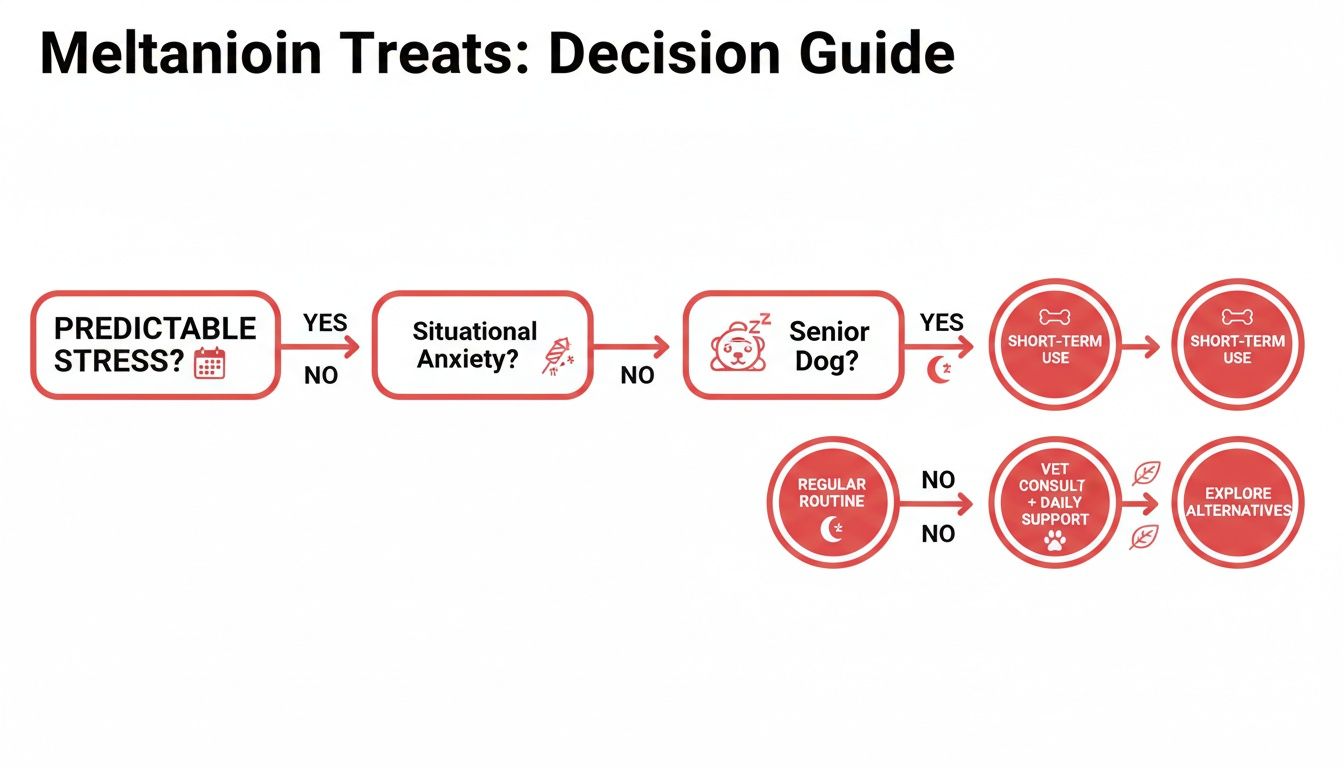
As you can see, melatonin tends to work best for specific, predictable events—like firework nights or a long car ride—rather than for managing general, day-to-day anxiety.
Potential Side Effects and Contraindications
When used correctly, melatonin is considered quite safe for most dogs. Still, side effects can happen, and knowing what to look for helps you keep a close eye on your pup.
Common (and usually mild) side effects can include:
- Lethargy or Drowsiness: Your dog might seem a bit extra sleepy. This often means the dose is a little too high.
- Upset Stomach: Some dogs can get mild digestive issues, like diarrhea or an upset tummy.
- Changes in Heart Rate: Melatonin can sometimes cause a slight change in a dog’s heart rate.
- Confusion: A dog might act a bit disoriented, particularly if the dose is on the higher side.
It's also crucial to know that melatonin isn't the right choice for every dog. In certain cases, you should avoid it completely unless your vet gives you the green light.
Do not use melatonin for:
- Pregnant or breeding dogs: We just don't know enough about how melatonin affects fertility or developing puppies.
- Very young puppies: A puppy's body is still growing and changing, so it's best to avoid giving them hormonal supplements.
Checking for Medication Interactions
Finally, one of the biggest reasons to loop your vet in is to check for potential interactions. If your dog is on any other medications or supplements, adding melatonin to the mix could cause problems.
For example, melatonin can sometimes interfere with corticosteroids, blood pressure medications, and even some other anxiety drugs. Your vet knows your dog’s full medical history and can spot any potential conflicts. This simple step ensures that adding melatonin dog treats is a safe, helpful choice for everyone involved.
How to Choose Quality Melatonin Dog Treats
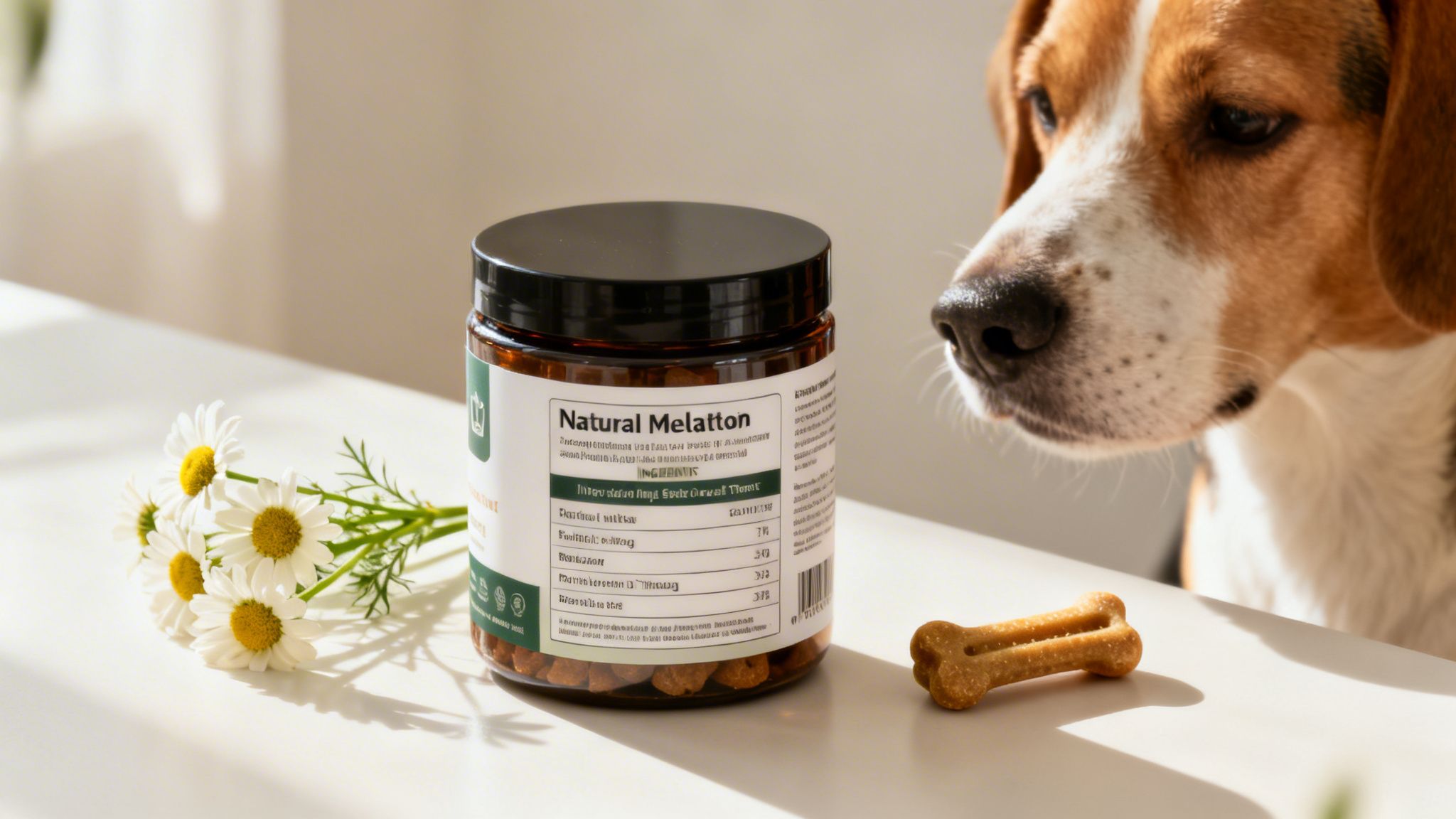
Walking down the pet supplement aisle can feel overwhelming. With so many brands all claiming to be the best, how do you actually find a high-quality melatonin dog treat? The secret isn’t in the flashy marketing—it’s in knowing how to read the label.
Think of the ingredient list as the product's entire resume. You're looking for one that's clear, honest, and impressive. Vague labels are a big red flag.
Decode the Ingredient List
First things first, check the active ingredients. A trustworthy brand will tell you the exact amount of melatonin in each chew, usually in milligrams (mg). This detail is critical because it's what allows you and your vet to figure out the right dose for your dog.
Next, take a look at the inactive ingredients. The best treats use real, whole-food ingredients like oat flour or sweet potato. Be cautious if you see treats packed with fillers like corn, wheat, and soy, or mysterious terms like "meat by-products." These can sometimes cause allergies or an upset stomach, especially in sensitive pups.
A premium product should support your dog’s overall wellness. The ingredient list ought to be short, easy to understand, and free of artificial colors, flavors, or strange preservatives. Your dog deserves real food, not a chemical cocktail.
Ultimately, the best melatonin dog treats have a clean, simple formula you can feel genuinely good about giving to your companion.
The Most Important Ingredient to Avoid
There is one ingredient that is an absolute deal-breaker: xylitol. This sugar substitute is often found in human products (including some melatonin gummies!), but it is extremely toxic to dogs and must be avoided at all costs.
Even a tiny amount of xylitol can cause a dog's blood sugar to plummet dangerously (a condition called hypoglycemia), potentially leading to seizures and severe liver failure. Always double-check—and then triple-check—that any supplement you give your dog is 100% xylitol-free.
Look for Synergistic Calming Ingredients
Often, the most effective melatonin treats don't just rely on melatonin by itself. They work better when paired with other natural, science-backed calming agents that create a more well-rounded sense of relaxation.
Here are a few powerful companions to look for on the ingredient list:
- L-Theanine: An amino acid found in green tea that helps take the edge off without making your dog sleepy. It works by boosting calming neurotransmitters in the brain.
- Chamomile: This gentle herb has been trusted for centuries to soothe anxiety and promote restful sleep. It’s a great partner for melatonin when it comes to easing nervousness.
- Tryptophan: This amino acid is a building block for serotonin, the "feel-good" brain chemical that helps regulate mood and stress.
- Passionflower: Another classic herb known for its ability to reduce anxiety and quiet a racing mind.
When these ingredients are thoughtfully combined, they work together to provide more comprehensive support than a single-ingredient formula ever could.
For daily, foundational calmness, a broader supplement like FORMA can be a fantastic addition. Its all-in-one formula supports gut health and overall resilience, which can make your dog less prone to stress in the first place. This approach can work beautifully alongside situational aids like melatonin, creating a complete wellness plan for a happy, relaxed dog. Choosing a quality product is an investment in your dog's long-term health and peace of mind.
Exploring Other Natural Calming Solutions
While melatonin dog treats are a fantastic tool for managing specific, predictable stressors, they’re really just one piece of the puzzle. A truly calm and resilient dog often benefits from a more complete approach.
Think of melatonin as a life raft you toss out during a sudden storm—it's incredibly helpful in that moment. But you also want to build a stronger ship that can handle rough seas in the first place. That’s where a combination of behavioral strategies and other natural solutions comes in.
Building a calm foundation starts with your dog’s environment and daily routines. A holistic plan supports their mental well-being from all angles, which can make them less reactive to triggers over time.
Creating a Safe and Secure Environment
Often, the most powerful calming strategy doesn't come in a treat or bottle. It's about creating a designated "safe space" right in your home. This could be a cozy crate with a soft bed, a quiet corner with their favorite blanket, or even a small, den-like area where they can retreat when feeling overwhelmed. The key is to make this spot a positive, stress-free zone that belongs only to them.
Beyond a physical space, you can use other tools to create a constant sense of security.
- Pheromone Diffusers: These plug-in devices release a synthetic version of the calming pheromones a mother dog produces for her puppies. It’s a simple way to create a more reassuring atmosphere throughout your home.
- Compression Vests: You've probably heard of products like the ThunderShirt. They apply gentle, constant pressure to a dog's torso, which can have a remarkably calming effect—much like swaddling an infant.
These environmental aids help lower your dog's baseline anxiety, making those big, scary events feel a little less intense when they do happen.
Behavioral Training and Alternative Supplements
Positive reinforcement training is the cornerstone of managing anxiety for the long haul. Working with a qualified trainer can help you teach your dog better coping skills and build their confidence, showing them that scary things like fireworks or the vacuum cleaner aren't really a threat.
It's also worth exploring other natural supplements that work differently than melatonin. Herbs like chamomile and passionflower have been used for ages for their gentle calming properties. Another great one is the amino acid L-theanine, which can promote a sense of relaxation without causing drowsiness by influencing calming neurotransmitters in the brain.
A truly effective calming strategy is layered. It combines immediate support for stressful events with foundational wellness that builds resilience over time, reducing the frequency and intensity of anxious reactions.
For daily, foundational support, a comprehensive chew that supports gut health and overall resilience can make a huge difference. A product like FORMA provides all-in-one support for calmness and immunity, helping your dog become less susceptible to stress from the get-go. This kind of approach works perfectly alongside situational aids like melatonin dog treats, ensuring your companion is supported from the inside out, every single day.
Your Questions About Melatonin for Dogs, Answered
As we wrap up, let's tackle some of the most common questions I hear from pet owners about using melatonin dog treats. Getting clear, straightforward answers can help you make the best decisions for your dog's health and happiness.
Can I Give My Dog Human Melatonin Gummies?
Absolutely not. You should never give your dog melatonin supplements made for humans, especially gummies. Many of these products contain an artificial sweetener called xylitol, which is incredibly dangerous and toxic to dogs.
Even a tiny amount of xylitol can trigger a rapid, life-threatening drop in blood sugar, leading to seizures and even liver failure. The only safe approach is to use a product specifically made for dogs and to read the ingredient list carefully, making sure it is 100% xylitol-free.
A good rule of thumb is that what's safe for you isn't automatically safe for your dog. Their biology is different, so always stick to products formulated just for them to avoid accidental poisoning.
How Long Do Melatonin Dog Treats Take to Work?
You can usually expect melatonin to kick in within about 30 to 60 minutes. This timing makes it a great tool for stressful situations you can see coming.
For example, if you know a thunderstorm is rolling in or you’re planning a car trip, giving the treat about an hour beforehand is a good strategy. The calming effects typically last for several hours, though every dog is different, and the duration can depend on their size, metabolism, and the dose they received.
Is It Safe to Give My Dog a Melatonin Treat Every Day?
This is a really important conversation to have with your veterinarian. While melatonin is generally considered safe for occasional or short-term situations, we don't have a lot of research on the long-term effects of giving it to dogs every single day.
The main concern is that daily use might mess with your dog's own natural hormone production and internal clock. Your vet is the only one who can truly weigh the benefits against the potential risks for your individual dog and their health needs, and they can help you decide if a daily regimen is a safe and appropriate choice.

Karolis is the Founder of FORMA, a pet wellness brand focused on longevity and daily nutrition for dogs. Writes about supplements, canine health, and helping pets live longer, healthier lives
Join thousands of pet parents getting science-backed health insights and natural care advice