A Pet Owner’s Guide to Mushroom Supplements for Dogs
Thinking about mushroom supplements for dogs? This guide explores the benefits, types, and safety of Reishi, Lion's Mane, and more for canine wellness.
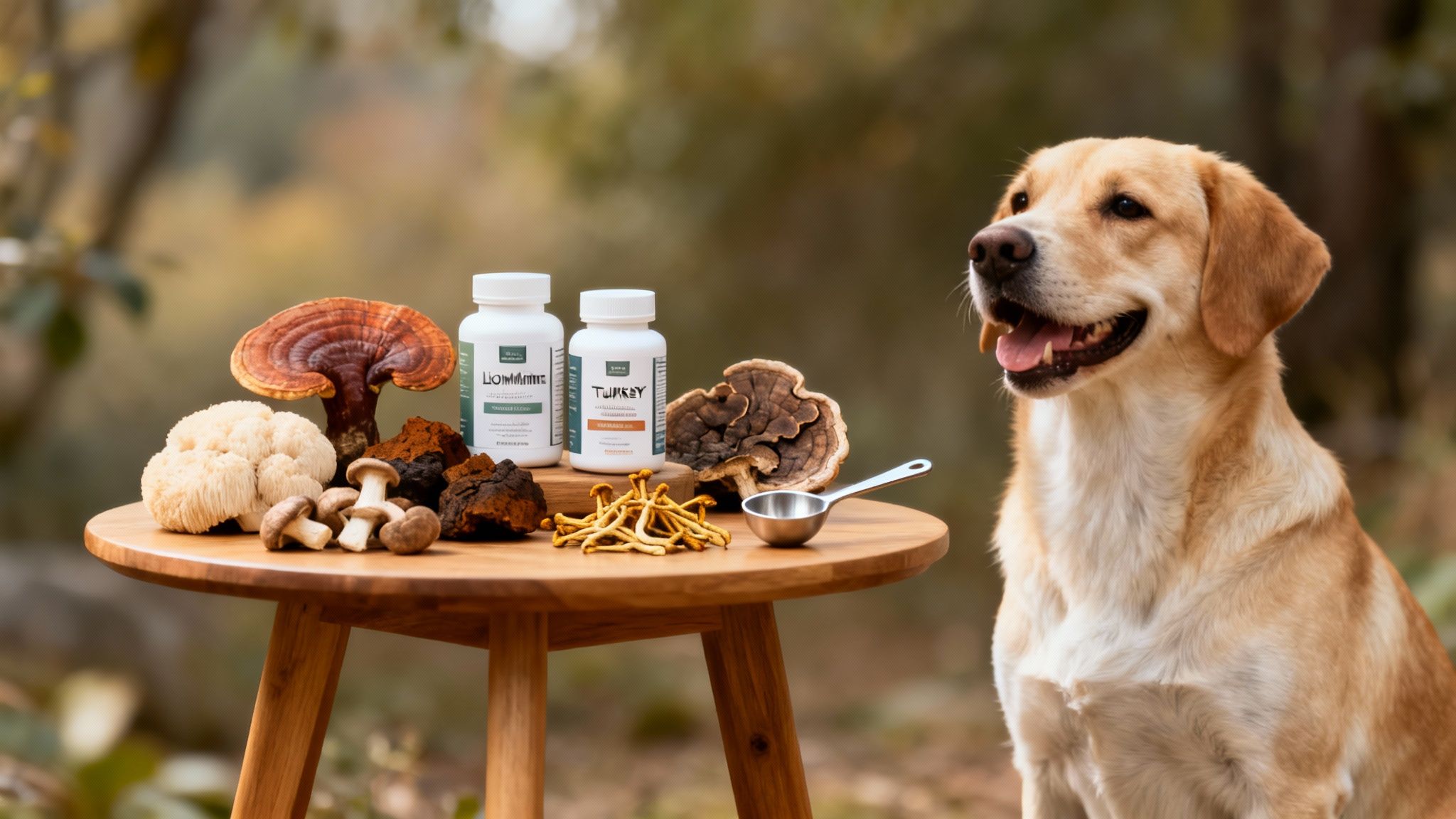
Mushroom supplements for dogs are health-focused products made from specific types of fungi, often called medicinal or functional mushrooms. They aren't the same as the mushrooms you'd cook with. Instead, think of them as a concentrated tool for proactive wellness, packed with unique compounds that can support your dog’s immune system, gut health, and even their mood.
Why Pet Owners Are Turning to Mushroom Supplements
Lately, there’s been a big shift in how we think about our dogs' health. Many of us are moving away from simply reacting to illness and are now actively looking for ways to build a solid foundation for a long, healthy life. This is exactly where mushroom supplements for dogs have stepped into the spotlight, going from a niche product to a popular wellness tool.
We’re not talking about the portobellos you'd find in the produce aisle. The focus here is on functional mushrooms like Reishi, Lion's Mane, and Turkey Tail—varieties that have been staples in traditional human health practices for centuries. Think of each one as a specialized superfood for your dog, bringing its own unique set of benefits to the table.
A Growing Trend in Pet Wellness
This move toward natural supplements isn’t just a fad; it’s rooted in a genuine desire for clean, high-quality ingredients for our pets. The numbers back this up, too. The global market for pet mushroom supplements was valued at around $420 million and is expected to more than double by 2033. The dog segment alone makes up over 60% of that market. This boom is fueled by owners searching for natural ways to manage common dog health concerns. You can read more about these market trends and what's driving them.
So, what’s motivating this shift? A few key things stand out:
- Proactive Health Support: People want to bolster their dog's immune system and keep their minds sharp before any issues pop up.
- A Holistic Approach: Many owners are looking for natural options to complement traditional vet care, supporting their dog's entire body.
- Clean Labels: We’re all reading labels more carefully these days, demanding simple, understandable ingredients without weird fillers or additives.
Functional mushrooms really align with this modern approach to pet wellness. They offer a way to tap into nature's pharmacy to help our dogs lead longer, healthier, and happier lives.
By adding a mushroom supplement to their dog’s daily routine, owners are making a direct investment in their best friend's future. It’s all about providing targeted, natural support that helps our four-legged family members thrive through every stage of life.
Exploring The Most Popular Mushrooms For Dogs
Diving into the world of mushroom supplements can feel like exploring a vast, ancient forest. Each mushroom offers its own unique set of benefits for your dog's health. Think of this section as your personal field guide, introducing you to the most popular and powerful fungi out there.
We'll walk through the specific perks of each type, from the immune-boosting power of Turkey Tail to the cognitive support of Lion's Mane. By the end, you'll have a clear picture of which mushrooms might be the perfect fit for your dog's individual needs, helping you make a confident choice on their wellness journey.
This focus on natural, holistic, and proactive care is part of a larger movement in pet wellness. More and more, owners are looking for ways to support their dogs from the inside out.
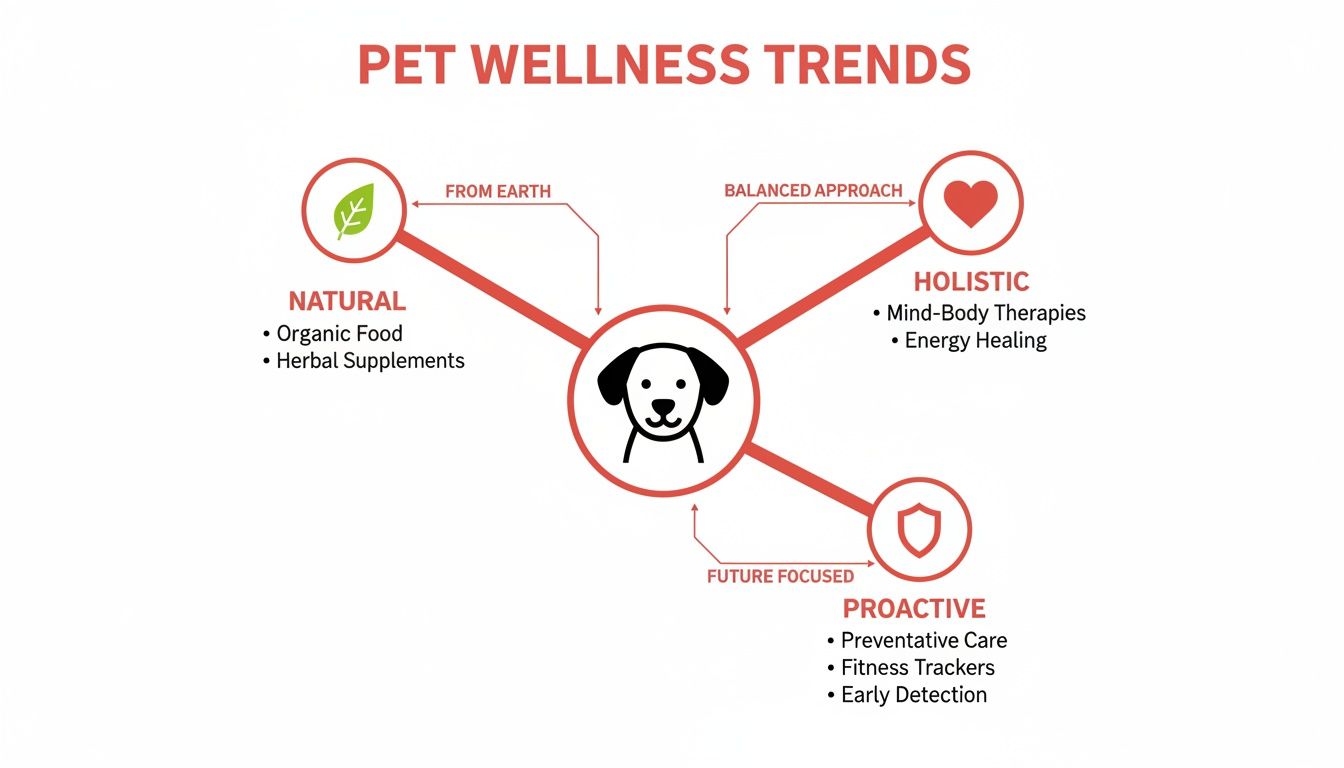
To help you get started, here's a quick reference table that breaks down the key players and what they're best known for.
Quick Guide to Medicinal Mushrooms and Their Benefits for Dogs
This table is a great starting point, but let's take a closer look at what makes each of these mushrooms so special.
Turkey Tail: The Immune System Guardian
Turkey Tail mushroom, named for its colorful, fan-like shape, is one of the most researched medicinal mushrooms on the planet. Its claim to fame? Being a powerful ally for the immune system.
Think of your dog's immune system as a team of highly trained security guards. Turkey Tail is packed with compounds called beta-glucans that essentially train and equip these guards, making them better at spotting and dealing with potential threats. This isn't just about fighting off sickness; it’s about maintaining a balanced, healthy immune response every single day.
A strong immune system is the foundation of overall health, making Turkey Tail a top choice for:
- Senior Dogs: Giving their natural defenses an extra boost as they age.
- Active Dogs: Helping them stay resilient against daily environmental stressors.
- Dogs Needing General Wellness Support: Offering a daily boost to keep their immune system in top shape.
Lion's Mane: The Brain Food
Just like its name suggests, Lion's Mane has a shaggy, unique appearance that looks a lot like, well, a lion's mane. This incredible fungus is best known for its amazing benefits for brain health and nerve support.
It’s helpful to think of Lion’s Mane as literal 'brain food' for your dog. It contains special compounds called hericenones and erinacines that are believed to encourage nerve growth and protect brain cells. For older dogs, this can be a game-changer, helping them stay mentally sharp, engaged, and present.
This is especially important as our dogs get older and may face cognitive decline. In fact, a notable 12-week veterinary study found that 81% of senior dogs given mushroom supplements showed either improvement or stabilization in their cognitive function. Even more impressive, those dogs saw an average 39% reduction in their cognitive dysfunction scores. You can learn more about how mushrooms support aging pets in this detailed research overview.
Reishi: The Calming Adaptogen
Known in traditional medicine as the "mushroom of immortality," Reishi is a true multitasking marvel. It’s most celebrated for its ability to promote a sense of calm and help manage the body's response to allergens.
Reishi is an adaptogen, a natural substance that helps the body adapt to stress. Picture a seesaw that’s been knocked off-balance; Reishi helps gently guide it back to the center. For a dog that gets worked up over thunderstorms, car rides, or being left alone, Reishi can foster a sense of calm without causing drowsiness.
Reishi helps the body maintain equilibrium. It doesn't force a state of calm but rather supports the body's natural ability to manage stress and return to a peaceful state.
On top of that, Reishi is often used to help dogs with seasonal allergies. It supports a healthy histamine response, which can help soothe itchy skin and other common allergy annoyances. This dual-action support makes Reishi an incredibly versatile tool to have in your dog's wellness kit.
Cordyceps: The Energy Booster
Cordyceps has a fascinating backstory, originally found growing on caterpillars high in the mountains of China. Today, it’s cultivated ethically and is prized for its ability to boost energy, stamina, and respiratory health.
If you have a canine athlete, a senior who is starting to slow down, or a pup who just needs a little more pep in their step, Cordyceps is a fantastic choice. It's thought to help the body use oxygen more efficiently—kind of like giving your dog's cellular engines a professional tune-up.
This can lead to:
- Improved Stamina: Helping your active dog go the extra mile during fetch or training.
- Better Endurance: Supporting older dogs who might get tired more easily on their daily walks.
- Respiratory Support: Aiding in healthy, clear lung function.
It’s a wonderful, natural way to support your dog’s vitality without the jitters you’d get from stimulants.
Chaga: The Antioxidant Powerhouse
Chaga doesn't look like your typical mushroom. It grows on birch trees and looks more like a lump of burnt charcoal. But on the inside, it’s a treasure trove of powerful compounds.
Chaga is famous for its ridiculously high levels of antioxidants. Think of antioxidants as tiny bodyguards for your dog's cells. They protect the body from damage caused by free radicals—unstable molecules that contribute to aging and illness.
By neutralizing these free radicals, Chaga helps reduce oxidative stress throughout the body. This protective action supports long-term health, promotes graceful aging, and keeps your dog's cells strong. It's a foundational supplement that helps defend your dog’s body from the daily grind.
How to Choose a High-Quality Mushroom Supplement
Walking down the pet aisle or browsing online, you'll see a dizzying number of mushroom supplements for dogs. With so many options, how do you know which ones are actually worth your money? It’s a crucial question, because not all products are created equal. Getting this right means giving your dog the best possible support, so let’s break down what truly separates the good stuff from the rest.
Knowing what to look for is more important than ever. The functional mushroom market is huge—valued at over $31 billion—and it's expected to almost double by 2032 as more people seek natural health solutions for themselves and their pets. While this boom brings innovation, it also means the market is crowded with products of wildly varying quality. You can dive deeper into these trends by checking out the booming functional mushroom market on qredible.com.
Look for Fruiting Body Extracts
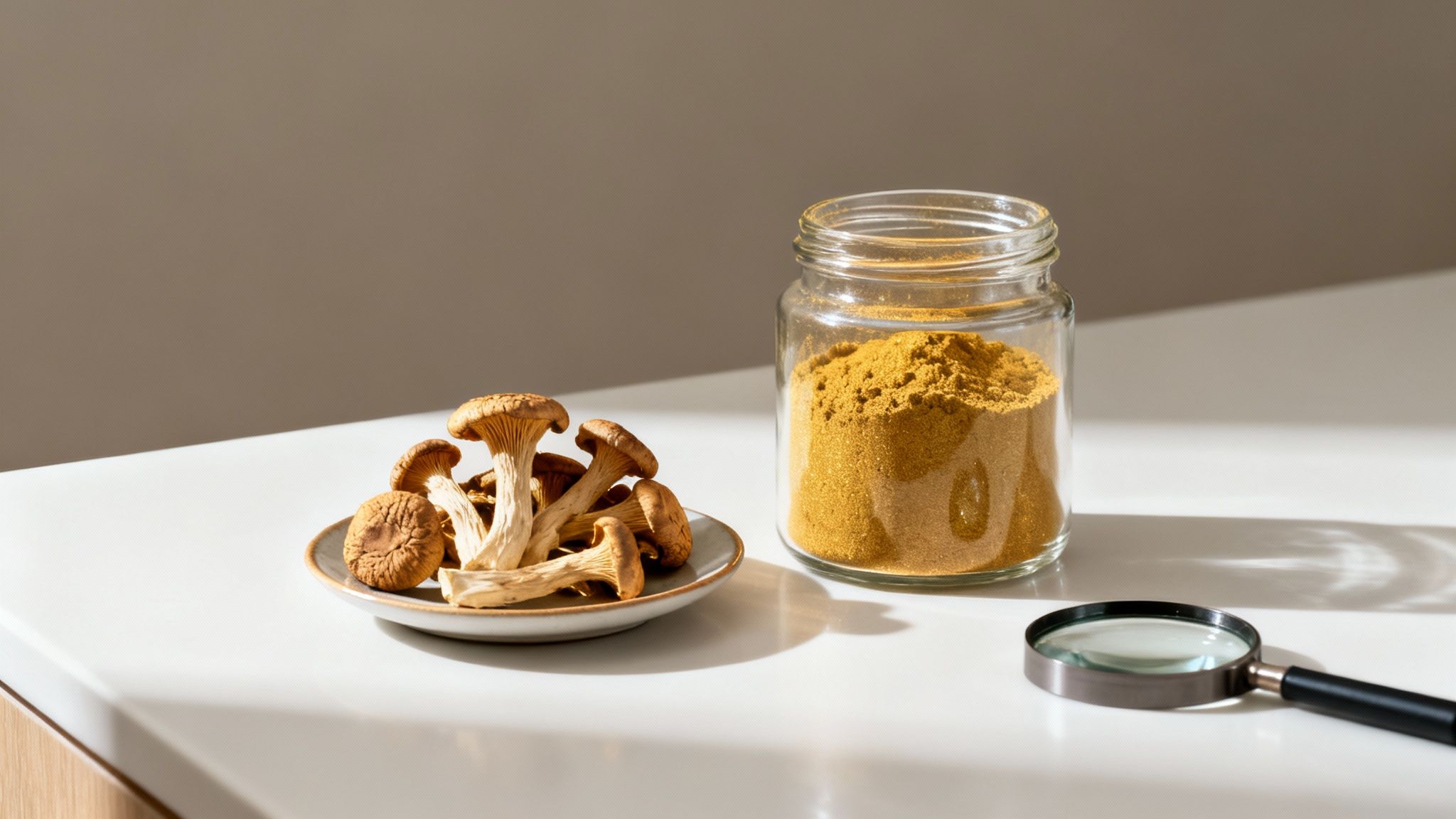
The single most important factor in a mushroom supplement is which part of the mushroom is used. You'll see two terms pop up on labels: fruiting body and mycelium.
- Fruiting Body: This is the part you’d recognize as a mushroom—the cap and stem that grow above ground. It's where the highest concentration of beneficial compounds, like beta-glucans, is found.
- Mycelium: This is the mushroom's root system, a network of threads that grows underground or, more commonly for supplements, in a block of grain.
Here's the catch: many cheaper supplements are made from "mycelium on grain." This means the mycelium is grown on a substrate like rice or oats, and then the entire block is ground up. The final product is mostly starchy grain filler, which massively dilutes the actual active mushroom compounds.
Think of it like buying orange juice. A supplement made from 100% fruiting body is like pure, fresh-squeezed juice—potent and packed with nutrients. A supplement from mycelium on grain is like a sugary "orange drink" that’s mostly water and filler with just a splash of real juice.
Always flip the bottle over and check the label. You want to see that it’s made from the mushroom's fruiting body to get the most potent and effective product.
Prioritize Third-Party Testing and Transparency
The pet supplement industry isn't as tightly regulated as human pharmaceuticals, so great companies take it upon themselves to prove their products are safe and effective. The best way they do this is with third-party testing.
This is when a brand sends its product to an independent, unbiased lab to verify two critical things:
- Potency: Does the supplement actually contain the active compounds (like beta-glucans) the label claims it does?
- Purity: Is it free from nasty contaminants like heavy metals, pesticides, or microbes?
A trustworthy company will be proud of these results and make them easy for you to find, often by posting a Certificate of Analysis (CoA) on its website. If a company is secretive about its testing, that’s a major red flag.
Decode the Supplement Facts Panel
Forget the flashy marketing on the front of the package. The real story is on the back, in the supplement facts panel and ingredient list. This is where you become a savvy pet parent.
Here’s a quick checklist for what to look for on the label:
- Clear Ingredient Sourcing: The label should proudly state it uses "organic fruiting body" extracts. No ambiguity.
- Beta-Glucan Content: The best brands don't just mention mushrooms; they guarantee the percentage of beta-glucans. These are the key active compounds that do most of the heavy lifting for immune support. Look for a specific, high percentage.
- No Unnecessary Fillers: Scan the ingredient list for fillers like grain, starch, artificial flavors, or preservatives. A clean, simple list is almost always a sign of a better product.
- Extraction Method: To unlock the good stuff, mushrooms need to be broken down. Hot water extraction is the gold standard for making the beneficial compounds bioavailable for your dog. If a company mentions its extraction method, it shows they care about quality.
By learning to read the fine print, you can see past the hype and make a truly informed choice. When you choose a brand that is transparent, uses high-quality ingredients, and proves it with independent testing, you can feel confident you’re giving your dog a safe and truly beneficial supplement.
How to Give Your Dog Mushroom Supplements Safely
Adding anything new to your dog's diet, even something as natural as a mushroom supplement, needs a bit of care and attention. Think of it as a partnership—between you, your vet, and your dog. A slow, observant approach is the best way to make sure they have a great experience.
Before you even pop the seal on a new container of mushroom supplements for dogs, your first stop should be a chat with your veterinarian. They know your dog's full health history and any medications they're on, which makes them the absolute best person to help you decide if a supplement is the right move.
The Golden Rule: Start Low and Go Slow
When it comes to dosing, the mantra is simple: start low and go slow. It’s just like introducing a new food to a picky eater or a dog with a sensitive tummy. You wouldn't dish out a full bowl right away; you’d start with a tiny taste to see how they react.
Most reputable supplements will have dosing instructions right on the label, usually based on your dog's weight. That’s your roadmap. But, a really smart move is to begin with just a quarter or maybe half of the recommended dose for the first few days.
This gentle start gives your dog's body a chance to get used to the new ingredient. It also gives you time to watch for any changes, like a mild upset stomach, which can sometimes happen if you rush things.
The secret to a smooth introduction is starting small and slowly building up to the full dose over a week or so. This methodical approach gives your dog the best chance to reap all the benefits without any bumps in the road.
General Dosing Starting Points
While you should always follow the product label, it helps to have a general idea of what to expect. These are some common starting points for mushroom powders, but remember that potency can vary a lot between brands.
- Small Dogs (under 25 lbs): A typical start might be around 125-250 mg per day.
- Medium Dogs (25-50 lbs): You'll often see initial doses in the 250-500 mg range daily.
- Large Dogs (over 50 lbs): These pups might start with 500-1000 mg or more each day.
These are just ballpark figures. Always, always defer to the specific instructions on the supplement you choose, because the concentration of active compounds can be very different from one product to the next.
Practical Tips for Easy Feeding
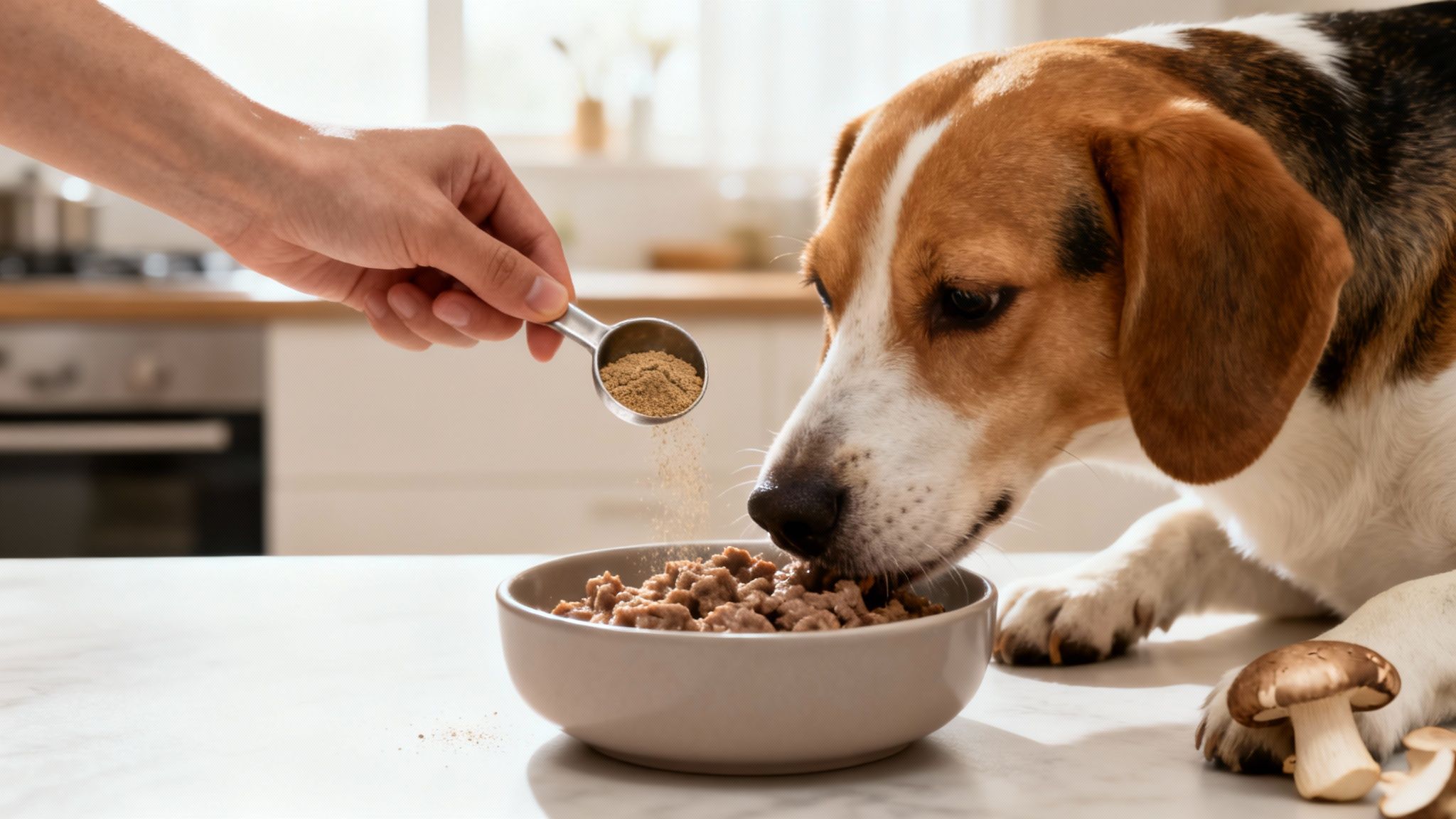
Getting your dog to take their supplement doesn't have to be a daily wrestling match. Luckily, most mushroom supplements come in a powder form that’s super easy to mix right into their meals. No fuss, no stress.
Here are a few simple ways to serve it up:
- Mix into Wet or Fresh Food: This is the easiest trick in the book. The powder disappears right into the food, and your dog will never know it’s there.
- Stir into Bone Broth: A splash of warm bone broth is a fantastic mixer. It makes the supplement tastier and adds a little extra hydration and joint support.
- Combine with Yogurt or Pumpkin: A spoonful of plain, unsweetened yogurt or pure pumpkin purée can turn supplement time into a special treat.
- Create a "Gravy": Just add a little water to the powder to make a simple gravy and pour it over their kibble.
The real key here is consistency. Find what works for your dog and make it part of your daily routine. When supplement time is just another tasty part of their meal, everyone is happier.
What to Watch For: Potential Side Effects
Functional mushrooms have a great safety track record, but it's always smart to know what to look for when adding something new to your dog’s diet. Most dogs take to mushroom supplements for dogs without a hitch. The good news? Serious reactions are incredibly rare, and any issues that do pop up are usually minor and short-lived.
The most common thing you might see is a bit of digestive upset. Think of it like switching their food too quickly—a new supplement can sometimes cause a little grumbling as their system gets used to it.
This is exactly why the "start low and go slow" method is your best friend. Easing into it gives your dog's gut time to adapt, which dramatically cuts down the chances of an upset tummy and makes for a much smoother start.
Mild Reactions to Keep an Eye On
When you first start, just pay a little extra attention to your dog's digestion and behavior. These signs aren't usually a red flag, but they are your dog's way of telling you to slow down.
Here are a few mild, temporary signs to watch for:
- Loose Stools or Diarrhea: This is the most likely reaction and typically clears up on its own as your dog’s gut adjusts.
- Gas or a Gurgling Stomach: You might hear some extra tummy noises as their gut microbes get acquainted with the new ingredients.
- Vomiting: It's less common, but can happen if you start with too high a dose or give it on an empty stomach.
- Lethargy: Occasionally, a dog might seem a little more tired than usual as their body gets used to processing the new compounds.
If you spot any of these, the best move is to dial back the dose or even hit pause for a day or two. Once they're back to their old self, you can try again with a much smaller amount.
Important: Drug and Health Interactions
This part is non-negotiable: you absolutely must talk to your vet. Certain mushrooms have potent effects that can interfere with medications or complicate existing health issues. Only your vet can give you advice that's truly tailored to your dog's specific needs.
Your Dog's Safety Comes First: Never introduce a new supplement without getting the green light from your veterinarian, especially if your dog is on medication or has a pre-existing condition. This is a cornerstone of responsible pet care.
Here are a few of the most important interactions to discuss with your vet:
- Blood-Thinning Properties: Some mushrooms, particularly Reishi and Cordyceps, can have mild blood-thinning effects. This is critical to know if your dog is on a medication like Clopidogrel or has surgery scheduled.
- Blood Sugar Regulation: Certain mushrooms may influence blood sugar levels. For a diabetic dog on insulin, this is a big deal and would require much closer monitoring to keep them stable.
- Immune-Modulating Effects: Mushrooms like Turkey Tail are famous for revving up the immune system. But for a dog with an autoimmune disorder, this could potentially make things worse. This is a situation that demands a vet's expert opinion.
Being open and honest with your vet about your interest in using mushroom supplements for dogs is the best way to keep them safe. They can cross-reference everything your dog is taking and help you make a smart, informed decision.
Common Questions About Mushroom Supplements for Dogs
As you've dug into the world of mushroom supplements, you've probably got a few questions buzzing in your mind. That's a good thing! It shows you're taking your dog's health seriously. This last section is all about giving you clear, practical answers to the questions we hear most often from dog parents.
Think of this as your go-to guide for those final "what ifs" and "how-to's." We'll cover everything from timing to safety, so you can feel confident in your choices.
How Long Until I See Results?
This is the big one, isn't it? And the honest answer is: it depends. Mushroom supplements aren't a silver bullet; they work slowly and steadily with your dog’s body to build up health from the inside out. We're aiming for foundational improvement, not an overnight miracle.
You might spot some small changes—a bit more pep in their step, a shinier coat, or a calmer demeanor—within a few weeks. For bigger goals, like supporting an older dog's immune system or cognitive function, you'll want to give it at least one to three months of daily use to really gauge the effects.
The key is consistency. Just like a healthy diet, the benefits of mushroom supplements compound over time. Be patient and stick with it.
Can I Give My Dog Mushrooms from My Yard?
Let's make this one crystal clear: absolutely not. While it might feel more "natural" to forage for mushrooms, it's incredibly dangerous. Many wild mushrooms are poisonous to dogs and can lead to severe sickness, liver failure, or even death.
Telling the good mushrooms from the bad ones is a job for a professional mycologist—poisonous look-alikes are everywhere. The risk just isn't worth taking.
- Serious Toxicity: Even a tiny bite of the wrong mushroom can have tragic results.
- Expert ID Required: It's notoriously difficult to distinguish safe mushrooms from their toxic twins.
- Hidden Contaminants: Wild mushrooms are like sponges, soaking up any heavy metals or pesticides in the soil and air.
Always, always stick to professionally made mushroom supplements for dogs. These products are made with the right mushroom species, grown in clean, controlled conditions, and tested to make sure they're pure and safe.
Are Mushroom Supplements Safe for Puppies?
For the most part, mushroom supplements are best saved for adult and senior dogs. A puppy's immune and digestive systems are still under construction, and their nutritional needs are very precise during their big growth spurt. Throwing extra supplements into the mix can sometimes do more harm than good.
The best thing for a puppy is a high-quality puppy food, lots of good socialization, and regular vet check-ups. Unless your vet specifically suggests a supplement for a particular health issue, it’s wise to wait until your dog is fully grown.
If you feel your puppy could benefit, this is a must-discuss topic with your veterinarian. They can look at your pup's individual situation and help you decide if it makes sense. For most youngsters, it's best to let their bodies develop naturally before adding in supplements later in life.

Karolis is the Founder of FORMA, a pet wellness brand focused on longevity and daily nutrition for dogs. Writes about supplements, canine health, and helping pets live longer, healthier lives
Join thousands of pet parents getting science-backed health insights and natural care advice