A Guide to Natural Dog Calming Treats That Actually Work
Discover how natural dog calming treats can soothe your anxious pup. Learn about the science-backed ingredients and how to choose the right supplement.

It’s tough to watch your best friend tremble during a thunderstorm or pace nervously every time you grab your keys. We’ve all been there. This is where natural dog calming treats come into the picture. Think of them less as a snack and more as a functional supplement, packed with specific ingredients to gently support your dog's emotional balance and bring them a sense of peace without making them drowsy.
Why Your Dog Might Need Calming Treats
Seeing your dog distressed—trembling, whining, or even being destructive—is heartbreaking. It’s important to remember these aren't the actions of a "bad dog"; they're genuine cries for help. Anxiety is surprisingly common in dogs, and it can be sparked by all sorts of things that make them feel insecure.
Imagine your dog’s nervous system is like a highly sensitive alarm. In a well-adjusted pup, that alarm only goes off when there's a real threat. But for an anxious dog, that same alarm is on a hair-trigger, set off by everyday things other dogs might not even notice.
Common Triggers for Canine Anxiety
Figuring out what sets off your dog's stress is the first real step toward helping them. Every dog is an individual, of course, but a few usual suspects tend to pop up again and again:
- Separation Anxiety: This is that classic panic your dog feels when they're left alone. It often shows up as destructive chewing, non-stop barking, or having accidents right after you've left.
- Loud Noises: With hearing far more sensitive than ours, it's no wonder that thunderstorms, fireworks, or even the vacuum cleaner can be absolutely terrifying for some dogs.
- Environmental Changes: Big shifts like moving to a new house, rearranging the furniture, or bringing a new baby or pet home can completely throw a dog's routine and sense of security out of whack.
- Social Situations: Meeting new people or unfamiliar dogs can be incredibly intimidating, especially for rescue dogs who might have a history of bad experiences or weren't socialized properly as puppies.
A Gentle Approach to Finding Balance
This is exactly where natural calming treats can make a difference. They aren't sedatives designed to knock your dog out. A much better way to think of them is like a comforting hug in a tasty, bite-sized form. They use natural ingredients to help gently rebalance your dog's system.
The goal is simple: to take the edge off their anxiety so they can feel more secure and handle stressful situations better.
The idea isn't to change your dog's personality. It's to gently dial down that internal "alarm system." A calmer dog is in a much better headspace for training, feels safer in their own home, and can lead a happier, more peaceful life.
These treats work by giving your dog's body the natural building blocks for calmness. For instance, some ingredients help support the production of neurotransmitters like serotonin—often called the "feel-good" chemical—which helps stabilize their mood naturally.
Using these supplements is about giving your dog foundational support. It helps them build the resilience to face stressors, turning a frantic reaction into something they can manage. By understanding why they're anxious and how a natural solution works, you can make a great choice to improve their quality of life. You're giving your best friend a gentle, non-drowsy way to feel safe and sound, no matter what’s going on around them.
The Science Behind Natural Calming Ingredients
Not all natural dog calming treats are created equal. The real magic isn't some fuzzy, feel-good concept—it's all about specific, science-backed ingredients working together to soothe your dog's nervous system. These natural compounds gently support their brain chemistry, helping them feel more secure and less reactive when life gets stressful.
Think of an anxious dog's brain like a radio station stuck between channels, full of static and noise. Certain natural ingredients act like a fine-tuner, clearing up the signal and bringing in a calm, steady broadcast. This all happens at a chemical level, influencing the neurotransmitters that control mood and stress.
This diagram shows just a few of the common triggers that can send a dog's nervous system into overdrive.

As you can see, things like being left alone, fireworks, or meeting new people can easily overwhelm a dog. This is where the right calming ingredients can make a real difference.
Let's break down the most effective natural ingredients you'll find in high-quality calming treats and what each one actually does for your dog.
Key Natural Calming Ingredients and Their Benefits
These ingredients don't just mask the problem; they get to the root of it by supporting the very systems that regulate your dog’s emotional state.
Amino Acids: The Brain’s Building Blocks for Calm
Two of the heaviest hitters in the world of calming ingredients are L-theanine and L-tryptophan. These amino acids are fantastic because they work with your dog’s existing brain chemistry.
L-theanine, found naturally in green tea, is a real standout. It helps the brain produce more of the good stuff—like GABA, serotonin, and dopamine—which leads to a feeling of relaxation without making your dog drowsy. Think of GABA as the brain's "off-switch." When a dog is anxious, that switch is stuck in the "on" position. GABA helps flip it off, quieting the mental noise.
You've probably heard of L-tryptophan from Thanksgiving dinner. It's the compound in turkey that makes you feel relaxed and sleepy. For dogs, it works as a direct precursor to serotonin, the body's primary mood stabilizer. Giving your dog L-tryptophan is like giving their body the raw materials it needs to build a more positive, stable emotional state.
Calming Botanicals: Nature's Soothers
People have used herbs to relax for centuries, and it turns out they work wonders for our dogs, too.
- Chamomile: This is the gentle giant of calming herbs. It contains a compound that binds to brain receptors to dial down anxiety. It's perfect for taking the edge off.
- Valerian Root: This one is a bit more potent and is fantastic for more serious anxiety, like a true fear of thunderstorms. It works similarly to L-theanine by boosting GABA levels to quiet the nervous system.
- Passionflower: Another great GABA-booster, passionflower is especially helpful for dogs who just can't seem to settle down and are constantly restless.
Key Takeaway: The goal of these ingredients isn't to sedate your dog into a zombie. It's to foster a state of calm alertness, where your dog feels relaxed but is still present, engaged, and able to function normally.
The Gut-Brain Connection: A Happy Gut Means a Calmer Dog
One of the most exciting frontiers in canine wellness is the gut-brain axis. We now know that a healthy gut has a massive impact on a dog's mood. That’s why you’ll see probiotics in top-tier calming formulas.
A huge portion of the body's serotonin is actually produced in the gut, not the brain. By supporting a balanced gut microbiome, probiotics help ensure your dog's body can produce the neurotransmitters it needs to feel good. It’s about building emotional resilience from the inside out.
This growing understanding has fueled a massive shift in how we care for our pets. The demand for natural solutions is booming, with natural ingredients now capturing over 45.2% of the market. Owners are wisely ditching synthetic options for trusted botanicals like chamomile and valerian root, a move supported by research showing these ingredients can lower stress hormones. If you'd like to dive deeper, you can explore the full pet calming products market analysis.
By combining these different elements—amino acids, botanicals, and gut support—the best natural dog calming treats offer a holistic approach. They tackle anxiety from multiple angles, giving your dog comprehensive support for their emotional well-being.
How to Choose the Right Calming Treats
Walking down the pet supplement aisle can feel overwhelming. With dozens of bottles and bags all promising a calmer, happier pup, how do you know which one actually works? Choosing the right natural dog calming treats isn't about falling for flashy marketing—it's about learning to read the label like a pro.
Think of it like shopping for your own food. You wouldn't pick up something packed with ingredients you can't pronounce if you wanted a healthy snack. The same goes for your dog. Your mission is to find a treat loaded with high-quality, effective compounds, not one full of cheap fillers. Let's break down exactly what to look for.
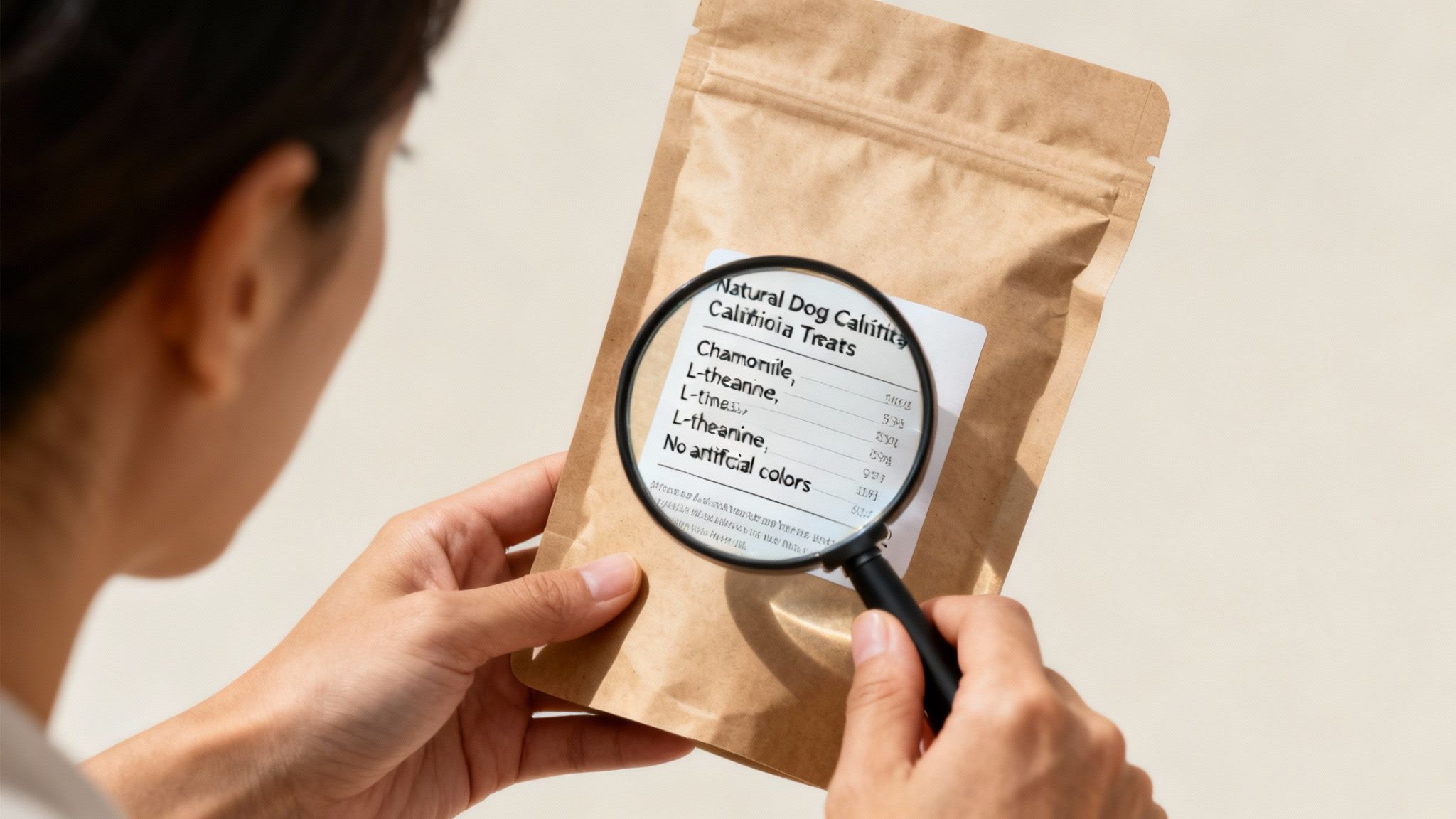
Decode the Ingredient Label
The ingredient list tells you the real story behind the product, cutting through all the hype. Good brands are proud of what's inside and list everything clearly.
Here’s what you should be looking for:
- Active Ingredients Up Top: The good stuff—like L-theanine, chamomile, or hemp—should be listed near the beginning. If the first few ingredients are fillers like corn or wheat, you’re basically buying a glorified cookie, not a helpful supplement.
- Specific, Clear Names: Vague terms like “meat by-products” are a red flag. You want to see specific, whole-food ingredients like “chicken liver” or “sweet potato.” It’s a huge indicator of a higher quality product.
- Human-Grade Ingredients: This is a big one. It means the ingredients are good enough for people to eat, so you know your dog isn't getting low-grade feed ingredients. It’s a great sign of quality and safety.
Once you know how to scan for these details, you can spot the quality products on the shelf in seconds.
Prioritize Purity and Safety
Beyond just the ingredient list, you need to know that the company takes safety seriously. A brand’s manufacturing process speaks volumes about how much they care about your dog's health.
Key Insight: A truly great calming treat doesn't just have the right ingredients; it ensures those ingredients are pure and potent. This is where third-party lab testing becomes absolutely essential.
A third-party lab is an independent group that tests the product to make sure the company's claims are true. This little step confirms two critical things:
- Potency: Is the amount of active ingredients listed on the label actually in the treat?
- Purity: Is the product free from nasty stuff like heavy metals, pesticides, or mold?
Brands that invest in this kind of quality control are proud of it. They’ll often post a Certificate of Analysis (COA) right on their website, giving you complete transparency and peace of mind.
Identify and Avoid Red Flags
Knowing what to avoid is just as important as knowing what to look for. A lot of mass-produced treats are full of artificial junk that can actually do more harm than good.
Be sure to steer clear of treats containing:
- Artificial Preservatives: Keep an eye out for chemicals like BHA, BHT, and ethoxyquin. They're used to make products last longer on the shelf but have been linked to health issues.
- Artificial Colors and Flavors: Dyes like Red 40 or Blue 2, along with generic "bacon flavor," do nothing for your dog. They’re only there to make the treat look and smell better to you.
- Excess Sugars and Fillers: Ingredients like corn syrup can lead to inflammation and an upset stomach, which can sometimes make anxiety even worse.
A genuinely natural calming treat should taste good because of its quality ingredients, not because of synthetic shortcuts.
Look for Multi-Benefit Formulas
Finally, why settle for a treat that only does one thing? The best supplements today take a whole-body approach to wellness, because everything in a dog’s system is connected.
For instance, you might find a treat that blends calming herbs like chamomile with probiotics to support the gut-brain connection. Others might include antioxidants to boost the immune system right alongside L-theanine for relaxation.
This kind of smart formula tackles your dog's well-being from multiple angles. You're not just putting a band-aid on a single symptom; you're investing in their long-term health and helping them build a solid foundation for a calm, happy life.
How to Use Calming Treats the Right Way
So, you've picked out the perfect natural dog calming treats. Great! Now comes the most important part: using them correctly. Think of these as more than just a tasty snack; they're a tool to help your dog feel better. Getting the routine right is the key to unlocking their full potential.
First things first, always read the package. The dosage instructions are there for a reason—they’re carefully worked out based on your dog's weight to deliver just the right amount of the good stuff. Too little won't do much, and too much could leave your pup feeling sleepy or with an upset tummy.
Getting the Timing and Routine Down
When it comes to calming treats, timing is everything. For those predictable moments of stress—like a trip to the vet, a long car ride, or the rumble of an approaching thunderstorm—you'll want to get ahead of the anxiety.
Give your dog their treat about 30 to 60 minutes before the event kicks off. This gives those natural ingredients, like chamomile or L-theanine, enough time to get to work. Your dog can then walk into the stressful situation already feeling a bit more relaxed, which makes a world of difference.
What if your dog has more of a general, day-to-day anxiety? Maybe they're just naturally a bit high-strung or hate it when you leave. In that case, consistency is your best friend. A daily calming treat, given at the same time each day (with breakfast is a popular choice), can build up a steady level of support in their system.
A consistent routine helps turn calming treats from a quick fix into a long-term wellness plan. It’s about building a foundation of calm, not just putting out fires.
This daily approach is catching on. The global market for pet calming products is expected to reach a massive USD 32.82 billion by 2035. Treats are a huge piece of that pie, making up 36.7-42% of sales simply because they're so easy to use. And the proof is in the pudding: 82% of owners see a difference in their dogs, and the 65% repeat purchase rate shows they keep coming back for more. You can dive deeper into the growth of the pet calming market on futuremarketinsights.com if you're curious.
An Important Part of Your Calming Toolkit
While natural calming treats can be a game-changer, they aren't a magic wand. They work best as part of a bigger picture. Think of them as one powerful tool in your toolbox, working alongside other positive strategies like behavioral training.
Here’s a helpful way to look at it: the treats help lower your dog's anxiety just enough so they can actually listen and learn from you. A dog that isn't overwhelmed by fear is in a much better headspace to build positive new associations.
Here are a few ideas for combining treats with training:
- Separation Anxiety: Before you head out, give a calming treat along with a really engaging puzzle toy. This starts to build a new association: you leaving means they get something calming and fun to do.
- Fear of Strangers: When a friend comes over, give your dog a calming treat. Then, have your guest gently toss another treat from a distance, avoiding direct eye contact. No pressure, just good things.
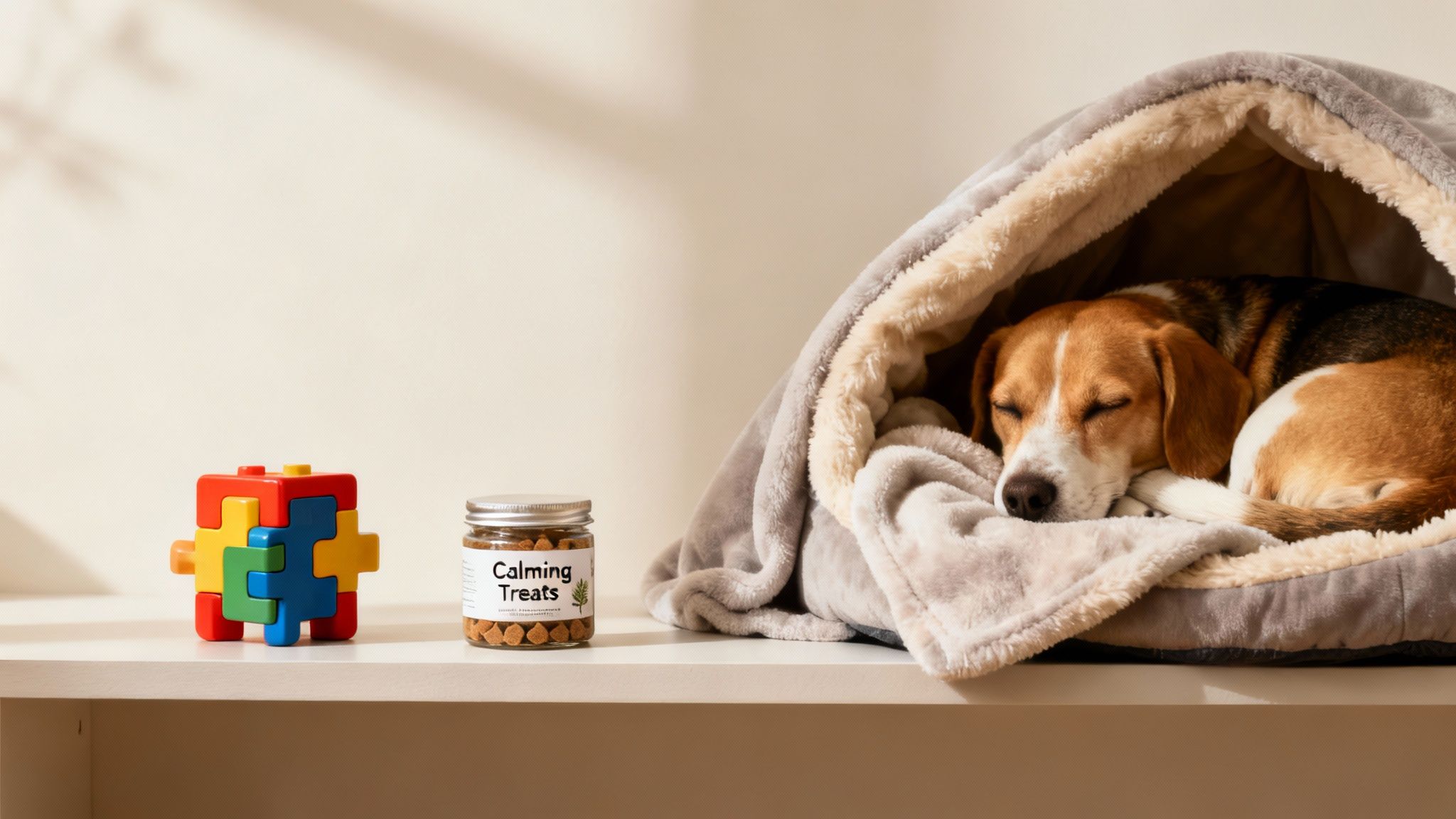
- Noise Phobia: As a storm rolls in, lead your dog to their cozy "safe spot"—a comfy bed, a favorite blanket, maybe in a quiet room. Give them a calming treat to help them settle in and relax.
By pairing the physical calming effect of the treat with a positive, reassuring experience, you’re helping to rewire your dog’s brain. You’re not just managing anxiety in the moment; you’re teaching them that scary things don't have to be so scary after all. That’s how you build real, lasting confidence.
A Holistic Approach to Your Dog's Calmness
While great natural dog calming treats can be a game-changer, they work best when they aren't the only thing you're doing. Think of them as a key piece of the puzzle, not the whole picture. True, lasting calm for your dog comes from a more rounded approach that takes care of their physical and mental well-being. The treats lay a fantastic foundation, making all your other efforts even more effective.
When you pair these practices with a quality supplement like FORMA, you're not just putting a band-aid on the symptoms. You're building a more resilient, happier life for your best friend. By looking at the big picture, you create an environment where your dog doesn't just get by—they truly thrive.
The Power of Physical Exercise
You've heard it a million times: a tired dog is a happy dog. It's an old saying for a reason—it's absolutely true. Daily exercise is probably the single most powerful, non-negotiable tool for managing canine anxiety.
Think about it. If a dog has all this pent-up energy with nowhere to go, it has to come out somehow. That's when you see anxiety, destructive chewing, or just plain restlessness. A good run in the park, a brisk walk, or a game of fetch does more than just burn off that energy; it also releases endorphins, which are basically nature's own mood boosters.
Consistency is everything. A predictable daily routine gives your dog a healthy outlet they can count on, which is incredibly comforting for an anxious mind.
Engaging Your Dog's Mind
Mental workouts are just as important as physical ones. A bored dog is an anxious dog waiting to happen. They’ll often invent their own jobs, like becoming the neighborhood watch commander who barks at every squirrel or redecorating your living room with chewed-up couch cushions.
Enrichment activities are the perfect cure for this. They challenge your dog to think, solve problems, and channel that mental energy into something positive. It's tiring for them in the best possible way and leaves them feeling deeply satisfied.
Here are a few easy ways to get started:
- Puzzle Toys: These make your dog work for their treats, keeping them focused and happily occupied.
- Training Games: Even just five to ten minutes a day of fun training sessions can boost confidence and strengthen your bond.
- Scent Work: Hide some treats around the house and let them use their superpower—their nose—to find them. It’s a fun game that taps right into their natural instincts.
These activities don't have to be complex, but they make a world of difference to your dog's overall happiness.
A dog's brain is wired to work. When you give them puzzles to solve and tasks to complete, you're fulfilling a deep-seated need. That sense of purpose is a powerful antidote to anxiety fueled by boredom.
Creating a Safe Haven
Every dog deserves a spot that is 100% theirs—a little sanctuary where they can go to escape when the world gets a bit too loud or overwhelming. This "safe space" is a cornerstone of a calm and happy home.
It could be a crate with a super comfy bed inside, a cozy corner in the living room, or a dog bed tucked away in a quiet office. The golden rule is that this is a place where your dog is never, ever bothered. It becomes their den, a spot they connect with nothing but peace and safety.
Make it extra special by leaving a favorite toy or a long-lasting chew there. During stressful times like thunderstorms or fireworks, this gives them a secure place to retreat. It puts them back in control of their environment, which can make a huge dent in their anxiety levels.
Got Questions About Calming Treats? We've Got Answers.
When you're looking into natural dog calming treats, it’s completely normal to have questions. You want to be sure you're making the right call for your dog's happiness and health. This section is here to give you clear, straight-up answers to the questions we hear most often from dog owners just like you.
Think of this as your go-to guide for using these supplements safely and effectively. We'll cut through the confusion about how they work, how often you can give them, and what you should expect. The goal is to help you feel confident as you support your dog on their journey to a calmer state of mind.
How Long Do Calming Treats Take to Work?
One of the first things people ask is, "How quickly will I see a difference?" The short answer is: it depends on the situation. For those predictable, short-term stressful events, the effects are usually pretty fast.
Most natural dog calming treats will start to kick in within 30 to 60 minutes. This makes them ideal for situational anxiety. If you see a thunderstorm rolling in, you're getting ready for a car ride, or a vet appointment is on the books, giving your dog a treat ahead of time is the best move. This gives the active ingredients a chance to get into their system and start promoting a sense of ease before the stress really sets in.
But for dogs dealing with more of a constant, generalized anxiety, the approach is a bit different. Giving the treats daily, as part of a consistent routine, can lead to more stable, long-term results over several weeks. This daily support helps build up a foundation in their system, making them less likely to overreact to everyday triggers.
Are These Treats Safe for Daily Use?
Safety is, of course, priority number one. The good news is that high-quality calming treats made with natural, non-sedating ingredients are generally safe for daily use, as long as you stick to the dosage recommended on the package.
The real key here is to choose a product from a brand you trust—one that’s open and honest about its ingredients and how its products are made. You want to look for treats that don't contain any artificial fillers, preservatives, or unnecessary sugars.
It’s always a smart idea to chat with your veterinarian before starting any new supplement. This is especially important if your dog has existing health issues or is on other medications. Your vet knows your dog's history and can give you advice that's tailored specifically to them.
This simple step ensures the calming treat fits into their overall wellness plan without causing any problems.
Will Calming Treats Make My Dog Drowsy?
This is a really common and important question. Many of us hear "calming" and immediately think "sedating," but that’s not how these high-quality natural treats are supposed to work.
Unlike heavy-duty prescription sedatives, natural dog calming treats are designed to encourage relaxation without knocking your dog out. The goal is to help them achieve a state of calm alertness. Ingredients like L-theanine and chamomile work by soothing the nervous system, which lets your dog feel less anxious while still being their active, engaged, and playful self.
Think of it this way: the treats are meant to turn down the volume on their anxiety, not turn off their personality. Your dog will still be up for a game of fetch or a training session—they’ll just have less of that frantic, fearful energy.
It’s no wonder so many dog owners are turning to these solutions. Dogs are the biggest consumers of calming aids, making up a huge 48.6% share of the pet market. This is largely because over 50 million US dogs struggle with anxiety from common triggers like separation and fireworks. As more families focus on preventive care, this trend is only growing. You can dive deeper into the pet calming products market on market.us.
Can I Combine Treats with Other Calming Methods?
Absolutely! In fact, that's the very best way to use them. Natural dog calming treats are most effective when they’re part of a bigger, more complete calming strategy.
Think of the treats as just one of the tools in your toolbox. They help take the edge off your dog’s stress, which can make other methods, like behavioral training, much more successful. A dog that isn’t completely overwhelmed by fear is in a much better headspace to learn and build new, positive habits.
Here are a few ways you can combine them:
- For Separation Anxiety: Give a treat about 30 minutes before you head out, and leave them with an interesting puzzle toy to keep their mind busy.
- For Thunderstorms: Offer a treat as the storm starts to brew and guide your dog to their "safe space," like a crate with a cozy blanket.
- For Fear of Strangers: Use a treat before a guest comes over. Then, have your guest gently toss some more high-value treats from a distance to build a positive association.
When you pair a calming supplement with positive reinforcement and a supportive environment, you aren't just managing anxiety in the moment—you're helping your dog build real, lasting confidence for a happier, more peaceful life.

Karolis is the Founder of FORMA, a pet wellness brand focused on longevity and daily nutrition for dogs. Writes about supplements, canine health, and helping pets live longer, healthier lives
Join thousands of pet parents getting science-backed health insights and natural care advice