Natural Supplements for Dogs: A Trusted Guide to Wellness
Discover natural supplements for dogs and learn how to choose safe options for joint health, anxiety, and digestion to boost your dog's wellness.

Natural supplements for dogs are quickly becoming a go-to for savvy pet owners. It's not just about fixing problems anymore; it's about getting ahead of them. We're using powerhouse ingredients like glucosamine, probiotics, and omega-3s to support everything from creaky joints to a nervous tummy.
This is all part of a bigger shift in how we think about our dogs' health. We want to give them the best shot at a long, happy, and comfortable life, and that means being proactive.
Why More Owners Are Choosing Natural Supplements

Let's be honest: our dogs are family. And just like with our human family, we're starting to apply the same forward-thinking approach to their health. The old "wait and see" method just doesn't cut it anymore.
We're not just looking to treat issues as they pop up. We want to build a solid foundation of wellness from day one to help prevent those problems from ever starting. It's a simple, powerful change in mindset.
The Rise of Proactive Pet Wellness
Think about it this way: instead of waiting for your senior dog to start limping, you start giving them joint support in their active adult years. Or, rather than dealing with the fallout of an upset stomach, you use probiotics to keep their gut healthy and balanced all the time.
This strategy is all about boosting your dog's quality of life, no matter their age. By using high-quality, targeted nutrition, we can help their bodies stay strong, leading to better mobility, a calmer mind, and a more robust immune system for the long haul.
"The goal has shifted from just helping our dogs live longer to extending their 'healthspan'—the number of years they spend feeling great. Natural supplements are one of the best tools we have to make that happen."
The data backs this up. In the US alone, 70 million dog-owning households spend an average of $1,500 on their pets each year. Spending on supplements specifically shot up by 20% after the pandemic. And it's working: studies show probiotics help in 80% of digestive cases, while calming supplements can reduce anxiety symptoms by up to 40%. You can dive deeper into these pet supplement market trends to see the full picture.
A Focus on Science-Backed Solutions
This isn't about jumping on the latest health fad. It’s about pet parents demanding products that are both safe and effective. Today, owners are looking for a few key things:
- Ingredients That Work: They want to see clinically studied ingredients that have been proven to actually help dogs.
- Clean and Simple Labels: No one wants a laundry list of artificial fillers, weird dyes, or unnecessary preservatives.
- Solutions for Specific Problems: They need products that address a particular need, whether it's calming an anxious rescue or supporting the joints of a highly active pup.
At the end of the day, choosing a good natural supplement is a real investment in your dog's future. It's one of the best ways to help them stay the happy, playful companion you love for years to come.
Key Health Areas Supported By Canine Supplements
Natural supplements for dogs aren't a cure-all. Instead, they're designed to tackle specific problems, offering targeted support where your dog needs it most. Once you understand the key areas they can help with, it becomes much easier to match your dog's symptoms to the right solution.
And it’s clear that dog owners are looking for these kinds of targeted solutions. The pet supplement market is booming, hitting USD 1.2 billion in 2023, with dogs leading the pack. This surge is largely driven by people like us seeking natural ways to manage common issues—from joint pain that affects 20% of adult dogs to everyday digestive troubles and anxiety. You can read more about the rise of the canine supplement market on technavio.com.
So, let's break down the four main pillars of canine wellness where supplements can really make a difference.
Joint and Mobility Support
Think of your dog's joints like the hinges on a well-loved gate. With years of running, jumping, and playing, they can start to wear down, causing stiffness and pain. Joint supplements are like the WD-40 and repair kit for those hinges.
They often contain ingredients like glucosamine and chondroitin, which are crucial for rebuilding cartilage—the natural cushion in their joints. This kind of support is a game-changer for senior dogs, highly active breeds, or any pup who’s just starting to slow down. The whole point is to keep them moving freely and happily for as long as possible.
Gut Health and Digestion
A healthy gut is the cornerstone of your dog's overall health. Picture their digestive system as a complex garden. Probiotics are the friendly gardeners, nurturing the soil and making sure the good plants (beneficial bacteria) thrive while keeping the weeds (harmful bacteria) in check.
When that internal ecosystem is in balance, your dog can pull more nutrients from their food, suffer fewer stomach upsets, and even build a stronger immune system. You'll often see prebiotics included, too; they're essentially the fertilizer that helps those good bacteria flourish.
A well-supported gut microbiome doesn't just improve digestion; it's directly linked to better immunity and even a calmer mood. It’s the foundation upon which good health is built.
Calming and Anxiety Relief
So many dogs struggle with stress, whether it's from fireworks, being left alone, or a change in their routine. Calming supplements don't just sedate them; they work by supporting the body's own ability to relax.
They use natural ingredients like chamomile or L-theanine to gently soothe the nervous system. This helps foster a sense of calm without making your dog groggy, giving them the tools to cope with stressful moments and find a more peaceful state of mind.
Immune Health and Vitality
Your dog’s immune system is its personal, round-the-clock security detail, always on guard against illness. Immune-boosting supplements are like giving that team the best equipment to do its job effectively.
These formulas typically include a mix of powerful ingredients:
- Antioxidants: These are the body's rust-proofers, neutralizing harmful free radicals that cause cellular damage.
- Omega-3 Fatty Acids: Famous for their anti-inflammatory effects, they help keep the immune response balanced and in check.
- Mushrooms: Certain medicinal mushrooms are known to help the body produce more of its own protective cells.
By reinforcing their natural defenses, these supplements play a huge role in maintaining your dog's long-term health and energy. It's all about proactive support, making sure their body is ready to face whatever comes its way.
A Closer Look at the Most Effective Natural Ingredients
Choosing the right supplement for your dog starts with understanding what’s actually in the bottle. Think of the best formulas as a skilled team of specialists, where each ingredient has a specific job to do. Let's pull back the curtain on the powerhouse components that make these supplements work.
This isn't just a niche interest anymore; it's a major movement. The global pet supplements market is on track to reach a staggering USD 2.65 billion by 2025, and North America is leading the charge with a 37% share of that market. This boom is fueled by owners like us who are actively looking for proven, natural solutions for common issues. You can dig into the numbers yourself in these pet supplement market projections.
So, what are we all looking for? Generally, we want to support four key pillars of our dogs' health.
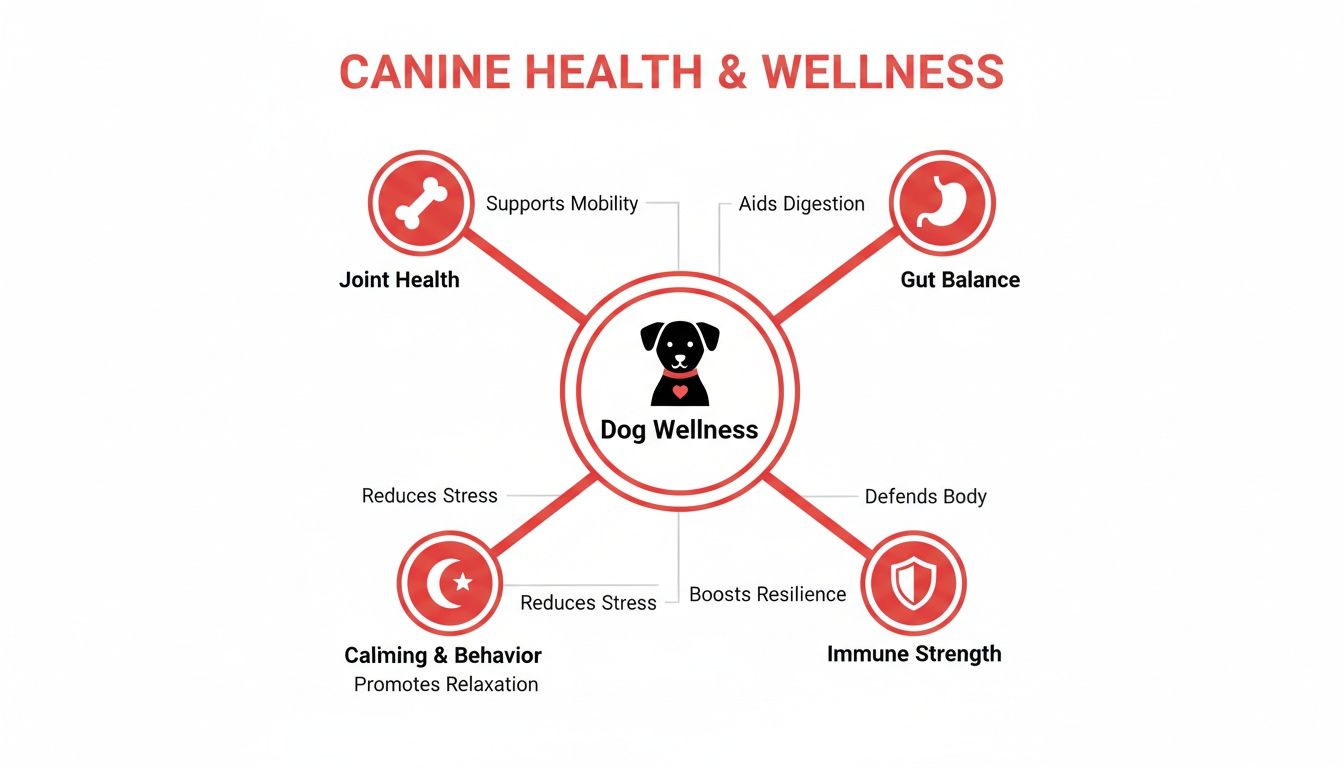
As you can see, a truly healthy dog isn't just about one thing. It's about supporting their joints, gut, mind, and immune system all at once.
To make it easier to see how these ingredients stack up, here’s a quick-reference guide to the most popular natural options out there.
Comparing Popular Natural Supplements For Dogs
This table breaks down the top ingredients, their primary role, and which dogs stand to benefit the most from them.
While this is a great starting point, let's dive a little deeper into what makes each of these ingredients so effective.
For Joint Health and Mobility
Glucosamine and Chondroitin are the undisputed all-stars of joint support. Think of glucosamine as the crew that repairs the "potholes" in your dog's cartilage—the spongy cushion in their joints. Chondroitin then acts like a hydration pack, drawing water into that cartilage to keep it plump and shock-absorbent.
Together, they're not just masking pain. They’re providing the actual building blocks the body needs to maintain healthy, functional joints. This is a game-changer for seniors, big dogs, and any pup who loves to run and play hard.
For a Balanced Gut and Digestion
A happy gut is the cornerstone of a healthy dog. Probiotics are the "good guys"—the beneficial bacteria that keep the peace in your dog's digestive system. They ensure everything runs smoothly, from breaking down food to absorbing vital nutrients.
When the gut microbiome is in balance, you'll see the results: firmer stools, less gas, and even a stronger immune system. Many top-tier formulas also include prebiotics, which are basically the preferred food for these good bacteria, helping them flourish.
A healthy gut environment is directly linked to better immunity, clearer skin, and even a more stable mood. It truly is the foundation of canine wellness.
For Skin, Coat, and Reduced Inflammation
Omega-3 fatty acids, especially EPA and DHA, are incredible multitaskers. Your dog can't make these essential fats on their own, so they have to come from their diet or a supplement. They are famous for their powerful anti-inflammatory properties.
This makes them a go-to for dogs with itchy skin, seasonal allergies, or stiff, achy joints. By strengthening the skin barrier, they lead to a noticeably shinier coat and less shedding. Plus, that same inflammation-fighting power provides gentle, body-wide relief for sore joints.
For Powerful Antioxidant Support
Turmeric is much more than a spice. Its active compound, curcumin, is a potent antioxidant that acts like a cellular bodyguard. It helps neutralize harmful free radicals—unstable molecules that cause damage and accelerate aging.
This makes turmeric a fantastic choice for supporting long-term health, especially in our senior companions. Its anti-inflammatory benefits also offer another layer of comfort for joints, working beautifully alongside ingredients like glucosamine.
For Calming and Anxiety Relief
Life can be stressful, even for dogs. For those who get anxious during thunderstorms, car rides, or when left alone, certain botanicals can offer gentle, natural relief. Chamomile is an age-old remedy known for promoting a sense of calm without causing drowsiness.
Another key player is L-Theanine, an amino acid found in green tea. It works by boosting levels of feel-good neurotransmitters in the brain, like dopamine and serotonin. These ingredients simply help take the edge off, allowing your dog to feel more relaxed and secure.
How To Choose A High-Quality Supplement
Walking down the supplement aisle can feel overwhelming. Every bottle makes a big promise, and it's tough to know what's marketing hype and what's genuinely good for your dog. So, how do you cut through the noise?
It’s not about grabbing the bottle with the fanciest label. The secret is to think like a detective for your dog's health, focusing on their specific needs to find the perfect fit.
The first step is gathering clues. Your dog’s age, breed, lifestyle, and current health are your starting points. A spry young Border Collie who runs for miles has vastly different needs than a senior Pug who's a professional couch potato.
This initial assessment is everything. An older dog might need a powerful joint formula to stay comfortable, while an anxious rescue could find relief with calming herbs. Jotting down your dog’s unique challenges will help you stay focused on what really matters.
Decoding The Ingredient Label
Once you've identified your dog's needs, it's time to inspect the evidence: the ingredient label. This is where a good product proves its worth, and transparency is everything. The best brands are proud of what's in their formulas and list it all clearly.
Here are a few signs of a high-quality, trustworthy product:
- Active vs. Inactive Ingredients: The "active" ingredients are the ones doing the heavy lifting. The "inactive" list should be short and sweet, without any artificial colors, mystery flavors, or cheap fillers like corn and soy.
- Third-Party Testing: Look for a seal of approval from an independent group like the National Animal Supplement Council (NASC). This shows the company has gone the extra mile to have its products tested for purity and potency.
- Clear Sourcing: Does the brand tell you where its ingredients come from? Knowing the fish oil is from sustainably caught salmon, for example, shows a commitment to quality from start to finish.
A great supplement label tells a story of quality and care. If the ingredient list is long, confusing, or full of chemical names you can't pronounce, consider it a red flag. Simplicity and clarity are your best friends.
Prioritize Science And The Right Format
Beyond the label, put your trust in formulas that are backed by actual science. You want ingredients that have been studied for their effectiveness in dogs, like glucosamine for joints or specific probiotic strains for gut health. A company that invests in research is investing in your dog's well-being.
Finally, think about how you'll give the supplement to your dog. The best formula in the world is useless if your dog won't take it!
- Chews: These are a win for most dogs. They're often flavored like treats, making supplement time easy and fun.
- Powders: A lifesaver for picky eaters. You can mix a powder right into their food, and they'll never be the wiser.
- Oils: Liquids like fish oil are super easy to add to a meal and are absorbed quickly for maximum benefit.
Choosing a format your dog likes ensures they get their supplements consistently. By matching your dog's needs with a little bit of label detective work, you can pick a supplement that makes a real, positive difference in their health.
Safe Dosing and Introduction for Your Dog
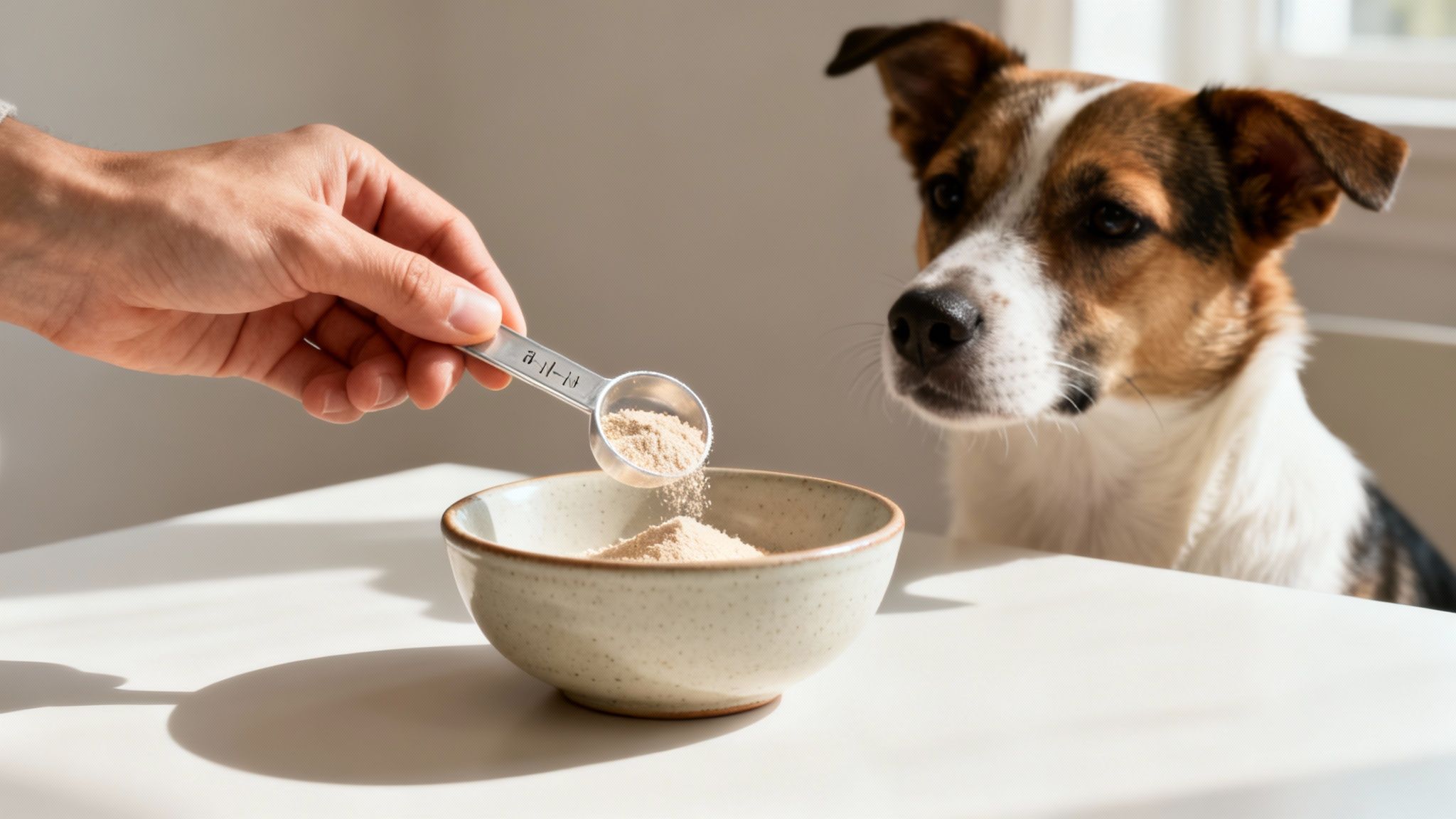
Adding a new natural supplement to your dog's daily routine is pretty straightforward, but it’s something you want to do with a bit of care. It's easy to hear the word "natural" and think that dosage guidelines are just loose suggestions. That's a common misconception, and it couldn't be further from the truth.
Sticking to the manufacturer's recommended dosage is absolutely crucial. Those guidelines aren't just random numbers; they're carefully calculated based on your dog's weight and the potency of the ingredients. Give too little, and you might not see any benefits. Give too much, and you could be dealing with an upset stomach or worse.
A Gentle Start Prevents Tummy Troubles
When it comes to introducing anything new to your dog's diet, the best mantra is "start low and go slow." A dog’s digestive system thrives on routine, and sudden changes can easily throw it out of whack.
Easing into it gives their body the time it needs to adapt, which dramatically cuts down the risk of any tummy troubles. Here’s a simple, vet-approved plan for getting started:
- Days 1-3: Begin with just one-quarter of the recommended daily dose, making sure to mix it well into their food.
- Days 4-6: If everything looks good, bump it up to one-half of the daily dose.
- Days 7-9: Time to move up to three-quarters of the full dose.
- Day 10 and beyond: You can now give the full recommended dose as instructed on the label.
Keep a close eye on your pup during this introductory phase. You're looking for any changes in their appetite, behavior, or bathroom habits. A little bit of gas isn't unusual, but if you notice anything more significant, it's best to pause and give your vet a call.
Crucial Safety Note: Never, ever give your dog supplements made for people. Our bodies are wired differently, and many ingredients that are perfectly safe for us—like the sweetener xylitol—are extremely toxic to dogs. Always stick to products specifically formulated for canines.
Finally, don't forget about proper storage. To keep the supplement safe and effective, seal the container tightly and store it in a cool, dry place away from sunlight. And, of course, make sure it’s kept well out of your curious dog’s reach
When to Talk to Your Vet
Natural supplements can be fantastic for your dog's health, but it's crucial to see them as part of a bigger picture. Think of them as helpful tools in your dog's wellness kit, not a substitute for a professional's diagnosis.
Your veterinarian is the one person who has the full blueprint of your dog's health. They know their history, their specific needs, and what might be a risk. That's why a quick chat with your vet before starting any new supplement isn't just a good idea—it's essential. They can spot potential problems, like a supplement clashing with a medication your dog already takes, or an ingredient that could aggravate a hidden issue like kidney trouble.
Red Flags: When You Absolutely Need a Vet's Advice
Some situations are non-negotiable and demand a professional opinion. You should always loop in your vet in these specific cases:
- Pre-Existing Conditions: If your dog is already managing a chronic illness, the wrong supplement could do more harm than good or interfere with their treatment.
- Current Medications: Never mix supplements and prescriptions without getting the green light from your vet first. Some combinations can be dangerous.
- Puppies, Pregnant, or Nursing Dogs: These dogs have very specific, delicate nutritional needs. What's safe for a healthy adult dog might not be safe for them.
- If Things Get Worse: If you start a supplement and your dog's symptoms don't improve—or they get worse—stop. This is a clear sign it's time for a professional medical evaluation.
Common Questions About Natural Dog Supplements
When you start looking into natural supplements for your dog, it's completely normal to have a few questions pop up. It's a big world of options, and getting clear on the basics helps you make the best choices for your furry friend.
Can I Mix and Match Different Supplements?
This is probably one of the first things people wonder about. Generally, the answer is yes, you can definitely combine supplements. Think of it like a person taking a multivitamin and also a separate fish oil capsule. It’s perfectly fine to give a joint supplement alongside a probiotic for gut health, since they’re working on completely different systems.
The one thing to watch out for is doubling up. Always scan the ingredient lists to make sure you aren't accidentally giving your dog too much of one specific vitamin or mineral.
How Long Until I See a Difference?
This is the big one, isn't it? We all want to see our dogs feeling better, fast. But natural supplements work by supporting the body's own processes, which takes a little time. Patience and consistency are your best friends here.
The timeline really depends on what you're trying to address:
- Digestive Health: With probiotics, you might see improvements like firmer stools in just a few days to a week.
- Joint Support: Ingredients like glucosamine need time to build up in the joints. You'll likely be waiting four to eight weeks before you notice your dog moving with a bit more ease.
- Skin & Coat: Omega-3s work from the inside out. It can often take up to three months to see that healthy shine and a real reduction in itchiness.
The most important thing to remember is consistency. Just like with our own health, daily support is what creates lasting, positive change for our dogs.
Are There Any Side Effects I Should Watch For?
Good-quality natural supplements for dogs are usually very safe, but just like with any new food, a little tummy upset is possible at first.
You might notice some mild gas or slightly looser stools when you first introduce something new. This is typically just their system getting used to it and often clears up on its own. A good rule of thumb is to start with a smaller dose than recommended and introduce new things one at a time. That way, if something doesn't agree with your dog, you know exactly what it is.
If any digestive upset hangs around for more than a few days or seems severe, stop the supplement and give your vet a call. The goal is to support their health, not cause them any discomfort.

Karolis is the Founder of FORMA, a pet wellness brand focused on longevity and daily nutrition for dogs. Writes about supplements, canine health, and helping pets live longer, healthier lives
Join thousands of pet parents getting science-backed health insights and natural care advice