Your Guide to Organic Dog Food for a Healthier Pet
Is organic dog food better for your dog? This guide demystifies labels, explains the health benefits, and shows you how to choose the right option.
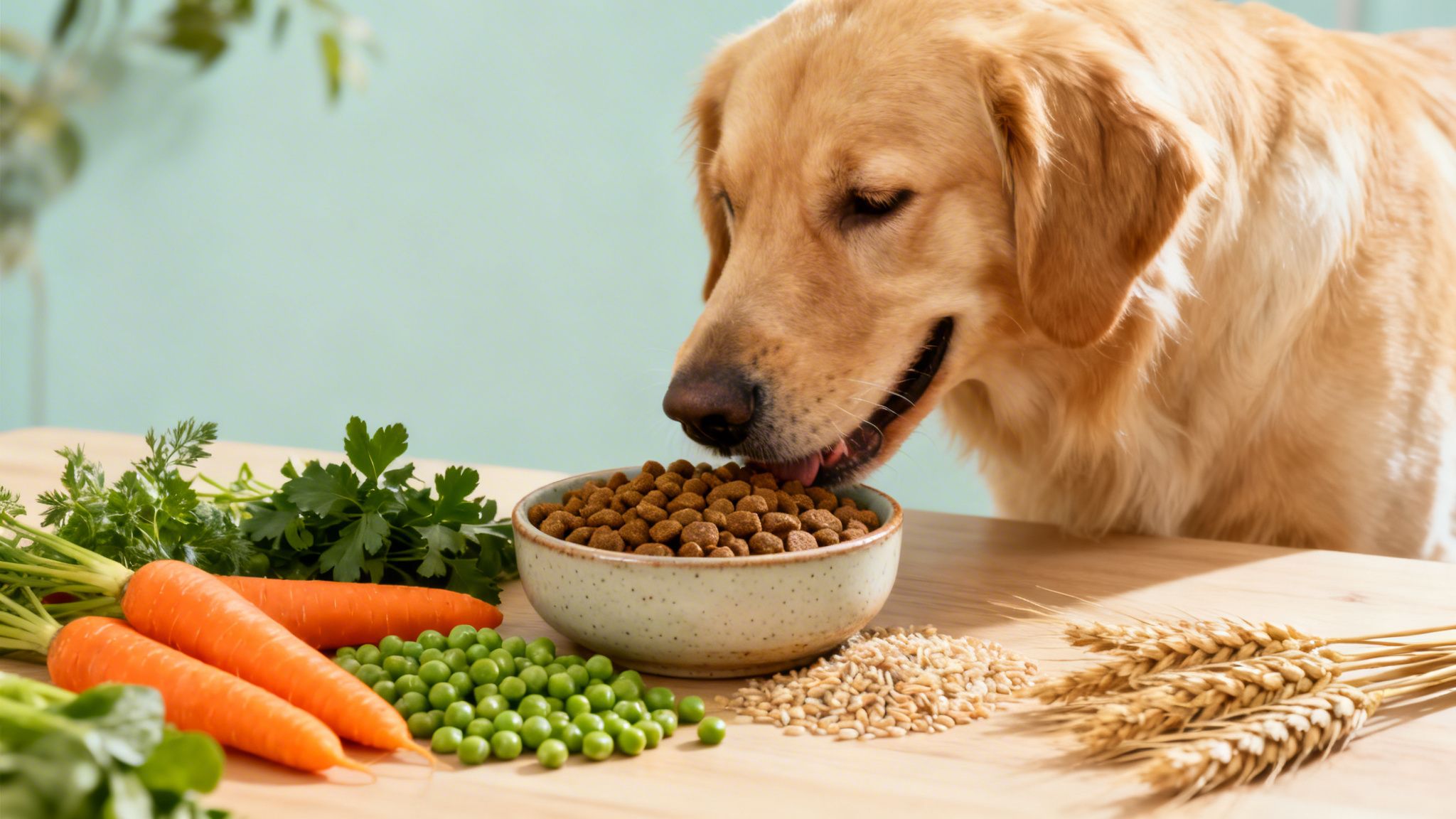
Walking down the pet food aisle can feel like navigating a minefield of marketing claims. When you reach for a bag of organic dog food, you're doing more than just picking a meal. You're making a choice to feed your dog something held to a much higher standard—often the same standard you have for the food on your own plate.
Put simply, it means the food is made with ingredients grown without the usual suspects: synthetic pesticides, genetically modified organisms (GMOs), or artificial junk. It’s a return to simpler, more natural nutrition.
Why Pet Parents Are Choosing Organic Dog Food
A new wave of dog owners are doing their homework. They're flipping over bags, ignoring the flashy pictures on the front, and actually reading the ingredient lists—just like they do with their own groceries. This isn't just some passing trend; it's a real shift in how we think about our dogs' health.
The reason behind it is straightforward: we want our dogs to live long, happy, and healthy lives. This isn't just a niche movement, either. The demand for organic options has exploded, proving that pet parents are putting their money where their values are. In fact, the organic pet food market was valued at $23.93 billion in 2025 and is expected to grow to $32.71 billion by 2030. You can read more about this market expansion and see how North America has become the biggest market for these products.
Moving Beyond Basic Nutrition
For many, choosing organic is about taking back control of their dog's health. It’s a deliberate move away from foods loaded with cheap fillers, mysterious by-products, and artificial preservatives that many people worry could be linked to health problems down the road. The goal is to fill their bowl with whole, recognizable ingredients instead.
The decision to go organic often comes from a "whole health" mindset. Pet parents see a direct line connecting their dog's diet to their energy, coat, and overall vitality. They're starting to view food as the first line of defense—as preventative medicine.
This way of thinking leads to some important questions about what's really in that bowl:
- Where did these ingredients actually come from?
- Are they free from chemical residues?
- Is this food setting my dog up for a healthy future?
The Heart of the Matter
At its core, the organic movement is fueled by how much we love our dogs. We see them as members of the family, and they deserve the same quality of nutrition we'd want for ourselves. It's about making sure every single meal is actively contributing to their well-being, from their chaotic puppy days all the way through their golden years.
This guide is here to help you cut through all the confusing labels and marketing hype. We’ll give you a clear, no-nonsense look at what "organic" really means for your dog, how to spot the real deal, and how to choose a food that truly lines up with your commitment to their health.
How to Read an Organic Dog Food Label
Standing in the pet food aisle can feel overwhelming. You’re surrounded by bags all making big promises, and it’s tough to know what’s what. So, what does that "organic" seal on a bag of dog food actually guarantee?
Think of it like this: the official USDA Organic seal on dog food follows the same strict rules as the organic food you buy for your own family.
That seal is way more than just a clever marketing ploy—it’s a promise. It’s your confirmation that the ingredients were grown and processed according to rigorous federal guidelines. This means no synthetic pesticides, no GMOs, no irradiation, and no artificial junk.
Decoding the Different Organic Labels
Here’s where it gets a little tricky. Not all organic claims are created equal. The USDA has a tiered system that tells you exactly what percentage of the ingredients are certified organic. Learning to spot the differences is key to making sure you're getting the quality you’re paying for.
You'll generally run into three main labels on dog food packaging:
- 100% Organic: Every single thing in that bag, right down to the processing aids, is certified organic. This is the gold standard.
- Organic: This is the one you’ll see most often. It means the product contains at least 95% certified organic ingredients. The other 5% has to come from a small, approved list of non-organic substances.
- Made with Organic Ingredients: This label indicates the food is made with at least 70% certified organic ingredients. You won't see the round USDA Organic seal on the front of these bags, but they can list up to three specific organic ingredients.
This simple hierarchy shows how your ingredient choices form the foundation for your dog's overall health and a long, happy life.
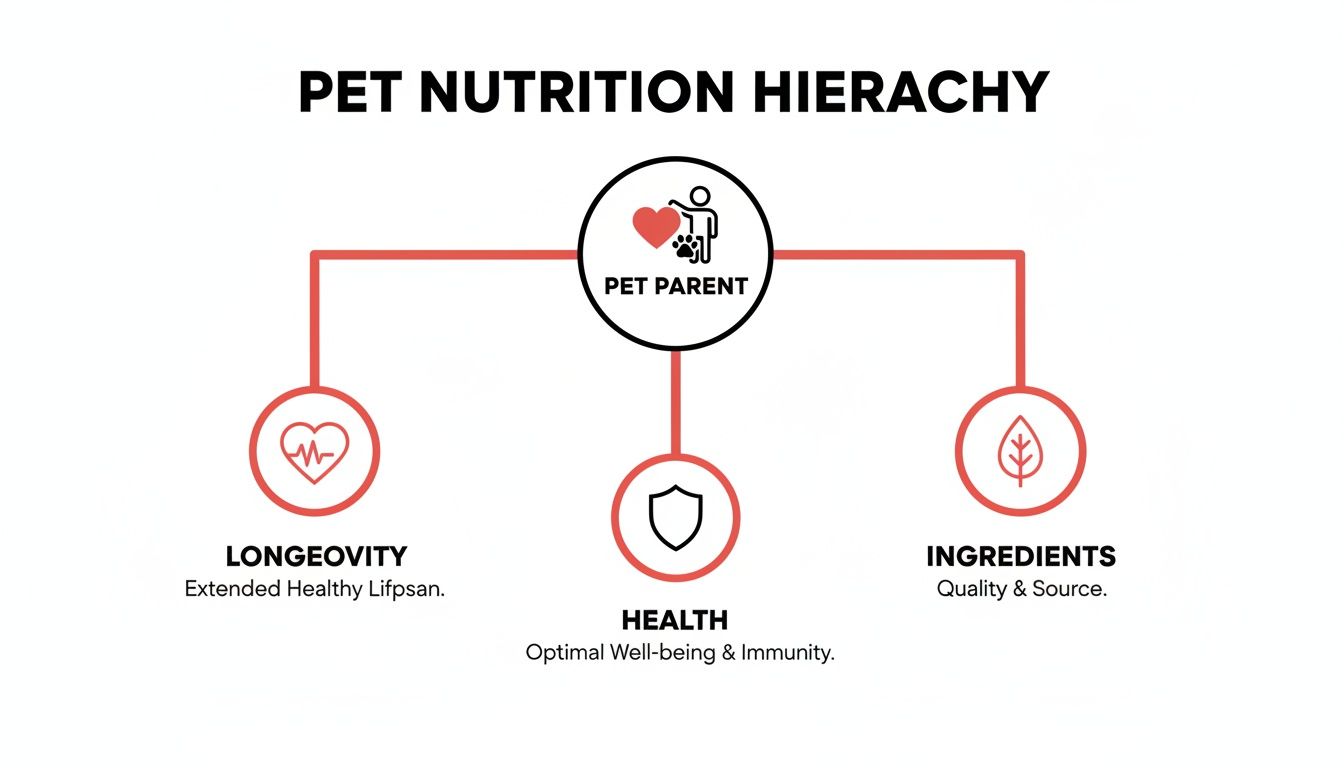
As you can see, it all starts with quality ingredients. Making conscious choices here is the first step toward better health outcomes for your best friend.
Understanding Organic Dog Food Labels
To really drive this home, let’s put these labels side-by-side. Seeing how they translate to an actual ingredient list makes it much easier to spot what you're looking for in the store. This table breaks it all down.
The main takeaway here is that the official USDA seal (found on "100% Organic" and "Organic" products) is your most reliable guide. It means a third-party inspector has verified the claims all the way from the farm to your dog's bowl.
Looking Beyond the Organic Seal
Once you’ve got the organic part figured out, your job isn't quite done. The next step is to scan the full ingredient list. An organic label doesn’t automatically mean a food is nutritionally perfect for your specific dog.
Always check the first few ingredients. Is the primary protein source what you want it to be? Are the carbohydrates a good fit for your dog's energy levels and digestion? The same principles apply here as they do for your own food—it's always smart to know the Top Food Additives to Avoid.
A truly great organic dog food will have a simple, clean ingredient panel you can actually understand, free from weird fillers or synthetic preservatives. This extra bit of label-reading ensures you're choosing a food that is both genuinely organic and nutritionally sound.
The Real Health Benefits of an Organic Diet
So, you're looking at organic dog food and wondering if it's really worth it. Is it just a fancy label, or does it actually make a difference? From my experience, choosing organic is a genuine investment in your dog’s long-term health, with benefits that go way beyond simple marketing claims.
Think of your dog's body as a high-performance engine. Over a lifetime, things like synthetic pesticides, herbicides, and chemical fertilizers from their food can start to build up. Vets and nutritionists sometimes call this the "toxic burden."
An organic diet is one of the most direct ways to lighten that load. Because certified organic ingredients are grown without all those synthetic chemicals, you're drastically cutting down your dog’s exposure. This simple switch can give their liver and kidneys—the body's natural filtration system—a much-needed break.
Boosting Immunity and Energy Levels
It's not just about what's left out of organic food, but also what's packed in. Plants grown in rich, well-managed soil, free from synthetic interference, often have higher concentrations of vitamins, minerals, and antioxidants. This means every bite of organic food can pack more of a nutritional punch.
This higher-quality fuel has a direct impact on your dog's immune system, helping them fend off illnesses more effectively. You’ll often see the difference in their behavior, too. A diet based on real, whole-food nutrition provides steady, all-day energy, not the sugar-like spikes and crashes that come from foods loaded with cheap fillers.
A key benefit of an organic diet is the proactive removal of potential irritants. By avoiding common triggers, you are creating a foundation for better health from the inside out, potentially reducing the likelihood of diet-related issues developing later in life.
This preventative mindset is catching on, as more of us demand transparency and quality in what we feed our four-legged family members.
Promoting Healthier Skin and Digestion
So many of the common issues I see—from itchy skin to upset stomachs—can be traced right back to a dog's food bowl. The usual suspects? Artificial colors, flavors, preservatives, and low-quality fillers like corn, wheat, and soy, which are notorious for triggering sensitivities.
Organic dog foods, by their very nature, can't use these artificial additives. They also tend to be built around high-quality, single-source proteins and easily digestible carbs. The result is often a night-and-day difference:
- Calmer Digestion: With fewer irritants, you'll likely notice less gut inflammation. That means more consistent poops and less unpleasant gas or bloating.
- Healthier Skin and Coat: A diet rich in essential fatty acids and free from common allergens often leads to less itching, reduced dandruff, and a coat that's noticeably shinier and softer.
- Fewer Allergic Reactions: By simply removing the triggers, you might see a dramatic drop in symptoms like chronic ear infections, constant paw licking, and painful skin hot spots.
Of course, before you switch anything, learning how to read a dog food label is a non-negotiable first step. It’s the only way to truly connect the ingredients in the bag with how your dog looks and feels.
This shift toward quality isn't just a niche trend. The market shows that dog food is leading the charge, projected to make up 37% of the entire global organic pet food revenue by 2026. This is happening because families see their dogs as true members of the household, with over 60% of owners now actively checking labels for natural and non-GMO ingredients. You can learn more about these consumer trends and how they're reshaping the pet food aisle.
Ultimately, choosing an organic diet is one of the most powerful and practical things you can do for your dog's well-being. It’s a clear strategy for reducing their chemical exposure, boosting their nutrient intake, and side-stepping common food sensitivities—all contributing to a happier, healthier life together.
Choosing the Right Food and Making the Switch
So, you’re thinking about making the move to an organic diet for your dog? That’s fantastic. It's one of the best things you can do for their long-term health, but a little planning goes a long way. The whole process really comes down to two things: picking the right food for your dog and introducing it slowly to keep their tummy happy.

This isn't just about grabbing the first bag with a USDA seal you see on the shelf. It’s about becoming a bit of a detective for your dog and finding a food that lines up perfectly with what their body actually needs.
How to Select the Best Organic Dog Food
Every dog is an individual. The "best" organic food for a lanky Great Dane puppy is going to be wildly different from what a senior Chihuahua needs to thrive. You have to look past the flashy marketing and focus on what really matters.
First, think about your dog's life stage. Puppies are growing machines and need extra calories and specific nutrients. Senior dogs, on the other hand, usually do better with fewer calories and ingredients that support their aging joints.
Next up is breed and size. This is a big one. Formulas designed for large breeds, for instance, carefully control calcium and phosphorus levels to help their bones grow at a healthy, steady pace.
Finally, consider any specific health concerns. If your pup struggles with food sensitivities, a limited-ingredient diet might be a game-changer. Many dogs with itchy skin or digestive woes do incredibly well on formulas with novel proteins like lamb or fish instead of the more common chicken or beef.
Looking Beyond the Label to Find a Trustworthy Brand
A brand's true commitment to quality goes way beyond a simple organic sticker. The really great companies are proud of how they make their food and where their ingredients come from—and they make it easy for you to find that information. Don't be shy about digging a little deeper.
Trustworthy brands don’t hide behind vague promises. They give you the specifics, telling you exactly where their meat was raised or how they ensure their food is safe. They make it easy for you to trust them.
When you're checking out a new brand, here are a few questions to ask:
- Ingredient Sourcing: Do they actually name the farms or regions where their main ingredients come from?
- Manufacturing Practices: Do they make the food in their own kitchens, or is it outsourced? Do they have any third-party quality or safety certifications?
- Customer Reviews: What are other dog parents saying? Look for consistent comments about better energy, healthier coats, or improved digestion.
Choosing a brand that’s an open book gives you peace of mind that what you’re putting in your dog’s bowl is both safe and made with integrity.
The 7-Day Plan for a Smooth Switch
One of the most common mistakes people make is switching their dog's food too quickly, which is a recipe for an upset stomach. The secret is simple: go slow. A gradual transition gives your dog’s digestive system time to get used to the new ingredients.
Just follow this easy, one-week plan. You’ll slowly mix in more of the new food while phasing out the old stuff.
Your Week-Long Transition Schedule
- Days 1-2: Serve a mix of 75% old food and 25% new food.
- Days 3-4: Move to a 50/50 mix of old and new.
- Days 5-6: Now you’ll serve 25% old food and 75% new food.
- Day 7: You're there! It's time for 100% new food.
Pay close attention to your dog during this week. Keep an eye on their energy, appetite, and especially their poop. If you see any signs of an upset stomach, like loose stool, don't worry. Just slow the transition down and stay at the current ratio for an extra day or two before moving on. By taking your time, you’re setting your dog up for a happy and successful start to their new, healthier diet.
Giving Your Dog's Diet an Extra Edge with Superfood Chews
Switching to a high-quality organic dog food is one of the best things you can do for your dog’s health. It provides a clean, nutrient-rich foundation for their entire well-being. But what if you could add an extra layer of support, targeted right where they need it most?
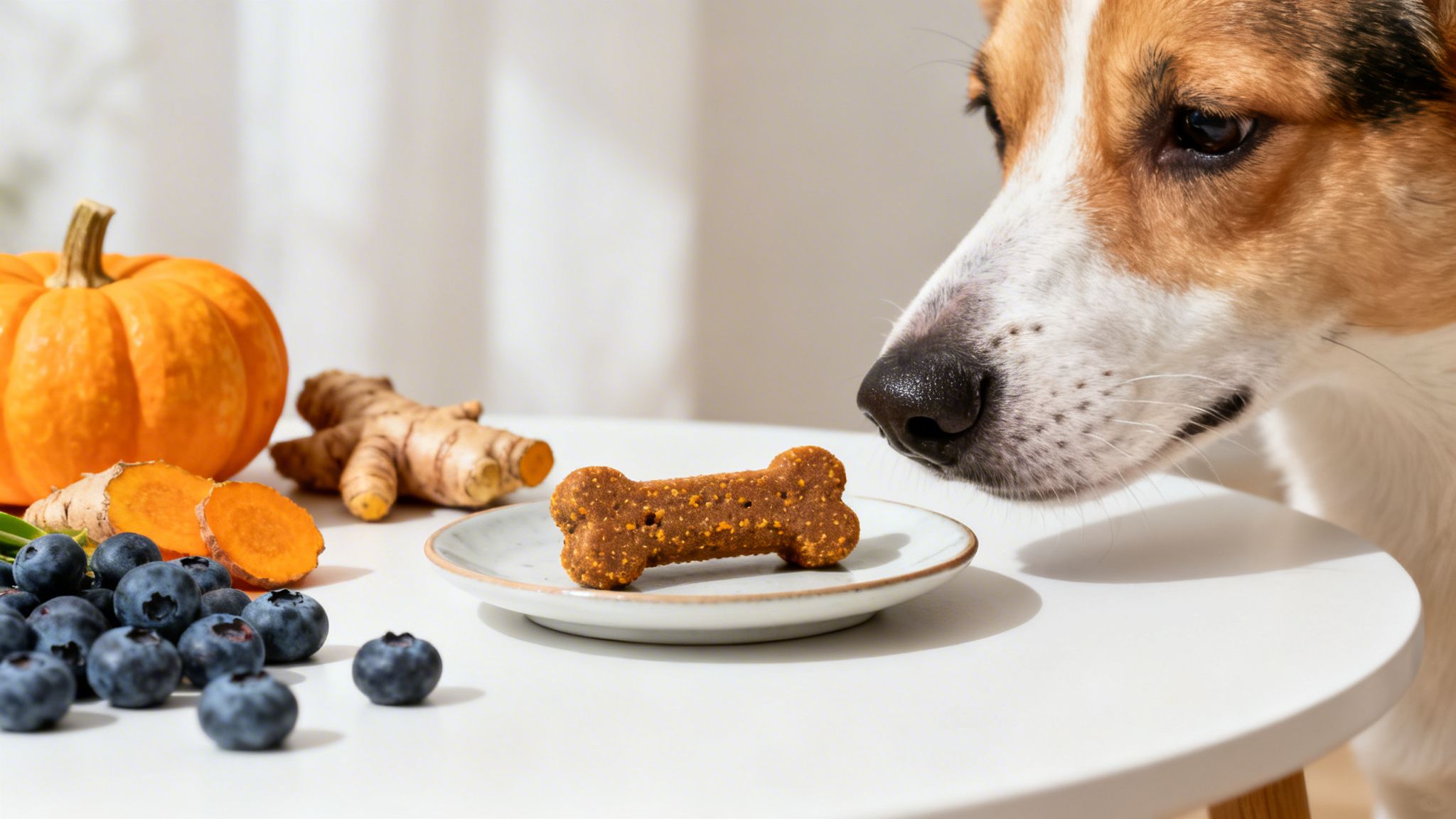
Here's a good way to think about it: even if you eat a super healthy diet, you might still take a Vitamin D supplement in the winter or some extra probiotics to support your gut. A daily superfood chew works the exact same way for your dog. It’s not meant to replace their meal; it’s designed to be a powerful partner to their already excellent diet.
Why Even the Best Organic Food Can Use a Partner
An organic dog food formula is balanced for the average dog's overall health, but it can’t be customized for every single dog's unique situation. A young, anxious rescue pup has very different needs than a senior dog dealing with stiff joints. This is where a functional chew like FORMA can make a real difference.
FORMA is made to fill in those specific gaps with concentrated, human-grade superfoods that offer focused support. These ingredients are so potent that they deliver benefits at a level that even the best kibble can't match. It’s all about shifting from great general nutrition to truly personalized wellness.
A superfood chew doesn't replace a great diet—it elevates it. It takes the solid nutritional base you’ve built and adds specialized support for key areas like gut health, joint comfort, and the immune system, helping your dog thrive at every age.
This combination of a clean diet plus targeted supplementation is really the future of proactive, modern pet care.
Targeted Support for Head-to-Tail Well-Being
A daily chew like FORMA offers a whole range of benefits that beautifully complement an organic diet. By delivering a concentrated dose of active ingredients, it helps reinforce the four pillars of a long, happy, and healthy life.
Key Areas of Support from a Daily Superfood Chew:
- Gut Health: Ingredients like probiotics and pumpkin help create a balanced gut microbiome. This not only improves digestion but also helps them absorb more nutrients from their food, making their organic diet work even harder.
- Joint Mobility: As our dogs get older, ingredients like glucosamine and turmeric become incredibly important. They help lubricate joints and reduce inflammation, keeping your dog comfortable, active, and playful.
- Strong Immunity: A smart blend of antioxidants and functional mushrooms can bolster your dog’s natural defenses, making them more resilient to everyday environmental challenges.
- A Sense of Calm: For dogs who get anxious during thunderstorms or when left alone, natural calming agents like L-theanine can help them feel more relaxed and secure without making them drowsy.
When you combine a wholesome organic diet with a daily functional chew, you’re creating a powerful partnership for your dog’s health. The food provides the clean fuel and basic building blocks, while the chew delivers specialized nutrients to help their body run optimally.
This holistic approach is completely changing the pet food world. The market for natural and organic pet products is growing at an incredible pace, projected to soar past $57 billion by 2033. The organic slice of that pie alone is set to more than double, growing from $2.54 billion in 2026 to an estimated $5.65 billion by 2033. That tells you just how much pet parents are prioritizing high-quality ingredients. You can explore more insights on this market shift to see how it’s driving new innovations.
At the end of the day, choosing an organic dog food is about giving them the best possible foundation. Adding a daily superfood chew is about building on that foundation to help your dog not just survive, but truly thrive for years to come.
Your Questions About Organic Dog Food Answered
Deciding to go organic for your dog naturally brings up a few questions. As a pet parent, you want to feel totally confident you’re making the right call for their health—and your wallet. This FAQ tackles the most common things people wonder about when they start looking into organic dog food.
Let’s get you some clear, straightforward answers so you know exactly what you’re putting in your dog’s bowl.
Is Organic Dog Food Worth the Higher Price?
This is usually the first question on everyone’s mind: is organic dog food really worth the extra money? Honestly, the higher price tag reflects a completely different standard of quality, from the moment a seed is planted to the time the food reaches your dog's bowl.
It’s like the difference between a fast-food burger and a beautiful meal made with fresh, farm-to-table ingredients. They’re both technically food, but that's where the comparison ends. The cost of organic dog food comes directly from the strict, non-negotiable rules needed to earn that certification.
These standards demand:
- No Synthetic Pesticides: The crops grow on land that has been free from prohibited chemicals for years.
- No GMOs: Every ingredient must be non-genetically modified. This often means using older, more expensive heirloom seeds.
- No Cheap Fillers: Organic formulas skip the low-cost, low-nutrition fillers like corn, wheat, and soy that often bulk up conventional dog foods.
- Humane Animal Treatment: The rules for organic meat often include specific requirements for how animals are raised, like having access to the outdoors.
A great way to think about the higher cost is as an investment in preventative care. A diet free from potential toxins and common allergens might just help you avoid some diet-related health issues down the road, potentially saving you money on vet bills for things like skin flare-ups or digestive upset.
When you look at it that way, you’re not just paying for a fancy label. You're paying for better ingredients, safer farming, and a cleaner final product. For many of us, that long-term peace of mind is easily worth the upfront cost.
Is Organic a Better Choice for a Sensitive Stomach?
If you have a dog with a perpetually upset stomach, itchy skin, or chronic gas, switching to an organic diet can be a total game-changer. So yes, for a dog with a sensitive system, organic food is often a much better choice.
It’s pretty simple, really. Organic dog food cuts out many of the usual suspects that trigger digestive problems and skin irritation in the first place.
Think about it: conventional dog foods can be loaded with potential irritants. They often contain artificial preservatives, colors, and flavors, not to mention common allergens like corn, wheat, and soy. For a sensitive dog, eating these ingredients day after day is like constantly fanning a flame, leading to inflammation and discomfort.
An organic diet offers a cleaner, simpler path.
How Organic Food Can Help Soothe a Sensitive System:
- No Artificial Additives: Certified organic foods are banned from using the synthetic preservatives, colors, and flavors known to cause reactions in some dogs.
- Higher-Quality Ingredients: These foods typically use single-source, high-quality proteins (like grass-fed lamb or free-range chicken) that are much easier for a dog’s system to break down and use.
- Cleaner Carbohydrates: Instead of cheap fillers, you'll find wholesome, gentle carbs like organic oats, barley, or sweet potatoes.
For dogs with known food sensitivities, a "limited ingredient" organic diet can be particularly helpful. These formulas are stripped down to just one protein and one carbohydrate, making it so much easier to identify and avoid whatever is causing the problem.
To give your dog’s sensitive stomach even more of a boost, pairing an organic diet with a daily probiotic supplement can work wonders. Probiotics help build a healthy gut, which in turn improves digestion and helps your dog absorb all those amazing nutrients in their new food.
Can I Just Feed My Dog Organic Human Food?
It's a thought that crosses many minds: "If I'm already buying organic chicken and carrots for myself, can't I just cook them up for my dog?" While that instinct comes from a loving place, trying to create a diet for your dog from scratch can be surprisingly risky without a veterinarian's direct supervision.
Of course, some organic human foods—like blueberries, plain pumpkin, and carrots—make fantastic, healthy treats. But a simple bowl of homemade chicken and rice just doesn't deliver the complete and balanced nutrition your dog needs to truly thrive.
Dogs have very different nutritional needs than we do. A diet that isn't properly formulated by an expert can lead to serious health deficiencies over time.
Where Homemade Diets Often Fall Short:
- Calcium and Phosphorus: A dog's diet requires a very precise ratio of calcium to phosphorus for strong bones and joints. Meat is packed with phosphorus but has very little calcium, so without the right supplement, a homemade diet can lead to skeletal problems.
- Essential Fatty Acids: Dogs need specific omega-3 and omega-6 fatty acids for a healthy coat, sharp brain function, and calm skin. It's tough to get these in the right amounts with just simple home-cooked meals.
- Vitamins and Minerals: Key nutrients like zinc, copper, and certain B vitamins have to be present in just the right amounts. It’s nearly impossible to hit these targets without a scientifically designed recipe.
A commercially prepared organic dog food is expertly formulated by veterinary nutritionists to meet the standards set by the Association of American Feed Control Officials (AAFCO). This is your guarantee that every single meal is complete and balanced. You can learn more about the complexities involved when some pet owners use human-grade ingredients in vet-approved plans.
The best approach is really a blend of both worlds. Use a high-quality, balanced organic dog food as the core of their diet, and then sprinkle in small amounts of healthy, dog-safe organic human foods as special treats. That way, you get the confidence of a complete diet and the joy of sharing healthy snacks with your best friend.

Karolis is the Founder of FORMA, a pet wellness brand focused on longevity and daily nutrition for dogs. Writes about supplements, canine health, and helping pets live longer, healthier lives
Join thousands of pet parents getting science-backed health insights and natural care advice