Spot the signs of arthritis in dogs: clues you can act on
Learn the signs of arthritis in dogs and how to ease joint pain with practical, at-home tips to boost comfort and mobility.
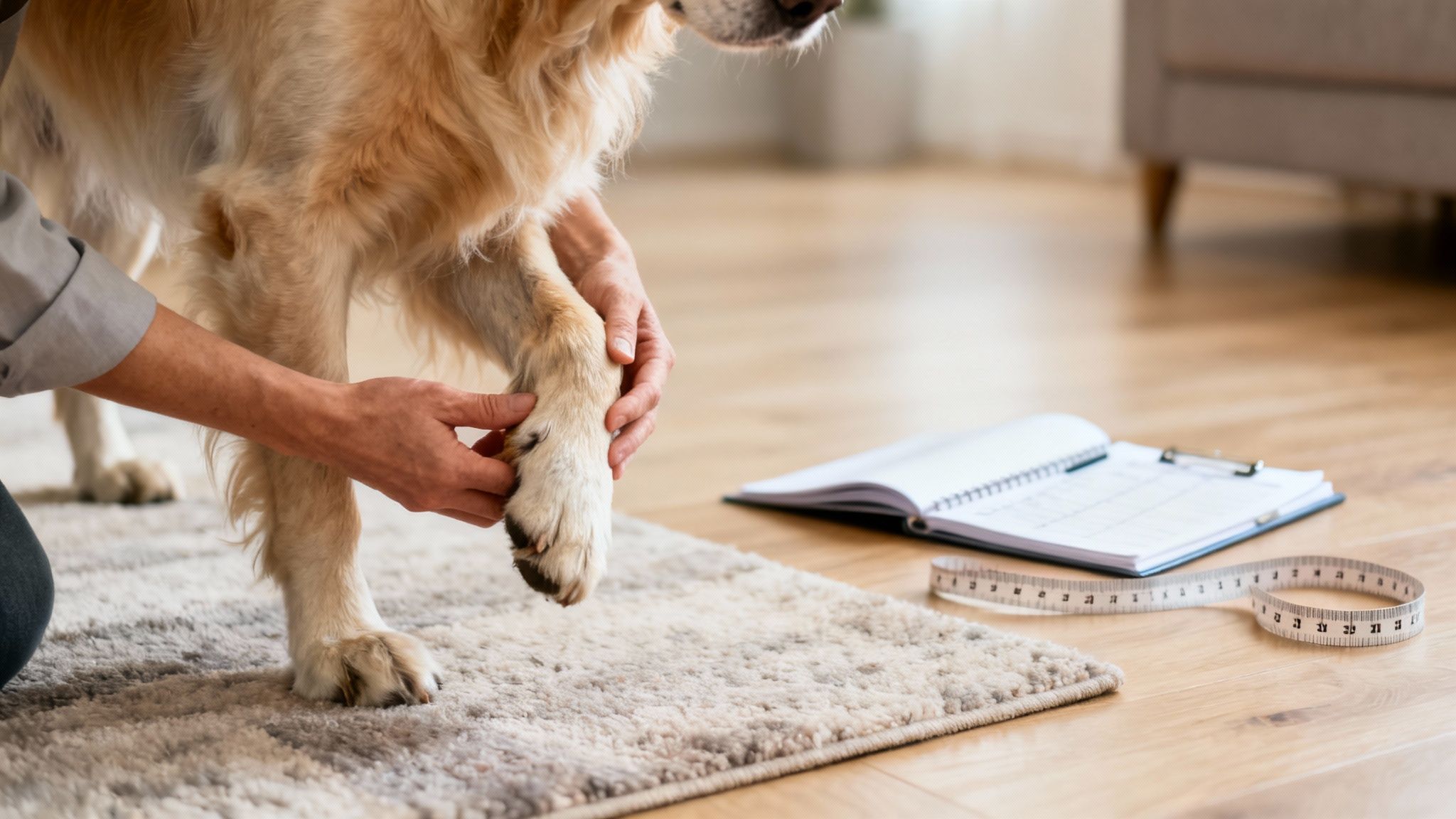
The most common signs of arthritis in dogs are often subtle at first. You might just notice a little stiffness when they get up, a slight limp, or maybe they think twice before hopping on the couch. Often, these little changes in their mood and daily habits show up long before the more obvious signs of pain do.
Is Your Dog Hiding Pain from Arthritis?

The first step in helping your dog is learning to recognize their secret language of pain. Dogs are masters at hiding discomfort—it's a survival instinct passed down from their wild ancestors. Because of this, the early signs of arthritis are incredibly easy to miss if you don’t know what you’re looking for.
Many owners chalk these signs up to their dog just "slowing down" with age. But what looks like normal aging is often the first whisper of underlying joint pain. Arthritis is a progressive disease where the cushy cartilage in their joints wears away, leading to inflammation, stiffness, and pain. It's way more common than people think.
An estimated 80% of dogs develop osteoarthritis by age eight, and around 20% show signs as early as one year old. Experts believe this number is likely even higher because the early symptoms are so subtle they often go unnoticed. You can read more about the prevalence of canine arthritis and its risk factors.
By becoming a keen observer, you can catch these small clues early on. Paying close attention to those tiny shifts in how they move and act is the key to getting them the support they need to feel their best.
Quick Guide to Common Arthritis Signs
To help you become a better pain detective, here’s a quick rundown of the most frequent signs of arthritis in dogs.
Keeping these categories in mind can make it easier to spot when something’s not quite right and start a conversation with your vet.
Physical Signs of Your Dog's Joint Pain

While the subtle behavioral shifts are telling, the most undeniable signs of arthritis often show up in how your dog moves—or, more accurately, how they try not to move. These physical clues are their body’s way of screaming that something hurts.
One of the most common red flags is limping or favoring a leg. You'll probably notice it most after they’ve been sleeping for a while or right after a good run at the park. It often seems worse in the morning or when the weather is cold and damp, simply because rest allows those inflamed joints to get stiff.
This stiffness isn't always isolated to a single limb. It can look like a general slowness or a real struggle to get up from the floor. Maybe they grunt a little, push up with their front half first, and take a few tentative steps to "walk it off" before they get going.
Noticeable Changes in Gait and Movement
Beyond a simple limp, arthritis can fundamentally change how your dog gets around. You might start to see movements that weren't there before or a new hesitation to do things that used to be second nature.
Keep an eye out for these tell-tale signs:
- Trouble with Stairs and Jumping: Does your dog who once flew onto the couch now stand there and look at you for help? Do they take the stairs one painful step at a time? The impact of jumping and landing is brutal on sore joints.
- A "Bunny Hop" Run: This is a big one. If you notice their back legs moving together in a hopping motion when they run, it's often a sign of hip or knee pain. It’s an instinctive way to minimize the painful motion in each individual joint.
- Muscle Loss (Atrophy): When a dog consistently avoids putting weight on a sore leg, the muscles in that limb start to waste away. You might visually notice that one leg looks thinner or less defined than the others.
- Popping or Cracking Sounds: Sometimes, you can actually hear the damage. A faint popping, clicking, or grating sound from their joints as they move is a clear indicator that things aren't as smooth as they should be.
Think of healthy joint cartilage like a perfectly smooth, cushiony shock absorber between bones. With arthritis, that cartilage gets worn down and ragged. Now, bone is grinding on bone. Every single step, jump, or run creates friction and pain, forcing your dog to find creative ways to move that hurt less.
Learning to spot these physical clues is the first step. It helps you shift from thinking, "He's just getting older," to recognizing specific signs of pain that you and your vet can actually do something about.
Behavioral Clues That Are Easy to Miss
Pain doesn't just make your dog's body ache; it can completely change who they are. Honestly, some of the biggest giveaways for arthritis are the small personality shifts we often write off as "just getting older" or chalk up to an "off" day. But these changes are your dog's way of telling you something's wrong.
Think about it: a dog who was always sweet and cuddly might suddenly seem grumpy, withdrawn, or even a little snappy. This isn't them being difficult—it's pure self-preservation. If their hip or lower back is screaming in pain, they might growl when you go to pet that spot. A sudden flip from seeking affection to avoiding it is a huge red flag.
Shifts in Social Life and Grooming Habits
Another major tell is when your dog loses interest in the things that used to bring them joy. Do they barely lift their head when you grab their favorite squeaky toy? Have they stopped their happy dance when you walk in the door? When a dog pulls back from play and social time, it’s often because the pain makes those activities feel like a chore.
You might also spot some new, almost obsessive grooming behaviors.
- Licking and Chewing: A dog in pain will often try to soothe a sore joint by constantly licking or chewing the skin right over it. It's their instinctual way of trying to make it feel better.
- The Telltale Stains: All that chronic licking can leave behind bald patches and irritated skin. On lighter-furred dogs, you might even see rust-colored saliva stains, which can literally point you to the source of their discomfort.
It's worth knowing just how common this is. Studies show that osteoarthritis hits about 20% of all dogs over one year of age in North America. For some breeds like Golden Retrievers and Boxers, the risk is even higher thanks to their genetics. You can dig deeper into the data on canine joint disease prevalence and risk factors.
The key is to start seeing these behavioral quirks not as random habits, but as signals. Your dog is communicating with you in the only way they can. Catching these signs of arthritis in dogs early means you can get them the help they need to start feeling like their old selves again.
What Puts a Dog at Risk for Arthritis?
It’s a tough reality, but some dogs are just more likely to develop arthritis than others. Think of it like this: healthy joint cartilage is like the brand-new tread on a set of tires. Every adventure, every walk, every zoomie session adds a little bit of natural wear. But for some dogs, certain factors act like potholes and rough roads, wearing down that tread much, much faster.
Knowing if your dog is on this fast track is the first step. If you can spot the risk factors early, you can be way more proactive about keeping them comfortable and mobile for as long as possible.
The Big Four: Key Risk Factors for Canine Arthritis
So, what are these "potholes"? While any dog can get arthritis, these four factors really up the odds.
Breed and Size: This is a big one. Large and giant breeds—think German Shepherds, Labs, Golden Retrievers, and Great Danes—are simply built in a way that puts more stress on their joints day in and day out. They’re also more prone to genetic conditions like hip dysplasia, which is a major precursor to arthritis.
Extra Weight: Carrying even a few extra pounds is one of the single biggest contributors to joint problems. That excess weight puts constant, unnecessary strain on their joints, literally grinding down the cartilage over time. It's a heavy burden for their body to bear.
Age: Time takes its toll. Just like with us, the simple act of living a long, happy, active life leads to natural wear and tear on the joints. The older a dog gets, the higher their chances of developing arthritis.
Old Injuries: A torn ligament (like an ACL) or a fracture from their younger years can come back to haunt them. Even after an injury has healed, it can leave the joint slightly unstable, causing it to wear down unevenly and much more quickly.
This isn't some rare condition. We're talking about an estimated 14 to 15 million dogs in the United States alone—that's 20% of all dogs—living with osteoarthritis. Things like obesity and a history of joint injury are huge drivers behind these staggering numbers. You can get a deeper look into the rise of canine arthritis on doggieuk9.com.
Knowing where your dog falls on this risk spectrum is powerful. It lets you be their best advocate and stay one step ahead of the pain.
When to See a Vet for Your Dog's Arthritis
https://www.youtube.com/embed/NXR3PkXzH2g
Spotting the subtle signs of arthritis is the first big step, but knowing when to move from watching and waiting to actually calling the vet is just as important.
One stiff morning probably isn't a five-alarm fire. But a consistent pattern of discomfort? That’s your signal to act. Remember, you know your dog better than anyone, and your observations are gold.
A simple daily journal can be a game-changer. Just jot down their stiffness level in the morning, how eager (or not) they are to play, and any triggers you notice, like a chilly day or an extra-long walk. This little logbook helps you tell a clear story to your vet, turning "I think he's sore" into solid evidence.
Red Flags That Need a Vet's Attention
While you're tracking those gradual changes, some signs are more urgent and mean you should call your veterinarian right away. Don’t wait if you see any of these:
- A persistent limp that sticks around for more than 24 hours.
- Vocalizing in pain, like yelping or whining when you touch them or when they try to move.
- Sudden inability or a flat-out refusal to put any weight on one of their legs.
- Obvious joint swelling, especially if the area feels warm to the touch.
- A dramatic shift in personality, such as uncharacteristic aggression or hiding away.
Trust your gut on this. Acting quickly when you see these red flags can make a huge difference in getting your dog’s pain under control and slowing down the arthritis. An early diagnosis is the key to a good management plan that can keep them happy and comfortable for years.
As you're piecing things together, it helps to remember that a few key factors often play a role in a dog's risk for arthritis. Things like their breed, weight, and any old injuries all contribute to the bigger picture.

Thinking about these elements helps you and your vet connect the dots, figure out why your dog might be struggling, and build the best possible support plan for them.
How You Can Help Manage Your Dog's Arthritis

Getting an arthritis diagnosis for your dog can feel like a gut punch, but take a deep breath. This is a very manageable condition, and the power to improve your dog's comfort and day-to-day happiness is truly in your hands.
The best approach is to build a toolkit of simple, supportive habits and home adjustments. Start with their environment. Adding non-slip runners to hardwood or tile floors can prevent painful slips and falls. A simple ramp up to the couch or bed means they can still enjoy their favorite cuddle spots without the jarring impact of jumping.
Investing in a quality orthopedic dog bed is another huge win. These beds are designed to cushion aching joints, providing the support they need for a truly restorative sleep and helping to prevent that morning stiffness.
Lifestyle and Wellness Support
Beyond making your home more joint-friendly, small tweaks to your dog's daily routine can make a world of difference in managing their pain and keeping them mobile. It’s all about finding a healthy balance between gentle movement, proper nutrition, and targeted support.
Weight Management: This is a big one. Keeping your dog at a healthy, lean weight is one of the most impactful things you can do. Every extra pound puts a massive strain on their joints, which can make the pain worse and speed up cartilage damage.
Low-Impact Exercise: Gone are the days of intense fetch sessions or long-distance runs. Instead, think about gentle, consistent movement that keeps their joints lubricated and muscles strong. Leisurely walks on grass or dirt paths are fantastic, and swimming is the ultimate low-impact workout.
Your vet will likely recommend pain medication to help manage inflammation and keep your dog comfortable. You can also boost their daily routine with targeted supplements. Ingredients like omega-3 fatty acids are amazing for supporting long-term joint health from the inside out.
By layering these simple strategies, you create a holistic, supportive environment that helps your dog thrive. It’s a multi-pronged approach that can slow the progression of arthritis and ensure your best friend continues to live a happy, full, and comfortable life right by your side.
We Get It, You Still Have Questions
Even after you've learned to spot the signs of arthritis, it's totally normal to have some questions nagging at you. Getting those answers is the best way to feel confident and ready to help your dog.
Let’s tackle a few of the big ones we hear all the time.
Can We Actually Cure Dog Arthritis?
I wish I could say yes, but the honest answer is no—arthritis is a progressive disease and there isn't a cure. But don't let that discourage you. The real goal is to slow it way down, manage any pain, and keep your dog's quality of life fantastic.
With a good vet on your team and some smart changes at home, most dogs can live happy, comfortable lives for years to come.
Isn't This Just an Old Dog Problem?
That’s a huge misconception. While it’s definitely more common in our senior pups, arthritis can show up at any age. We see it in younger dogs who have genetic issues like hip dysplasia or those who’ve had a previous injury to a joint.
The bottom line? Pay attention to the signs no matter how old your dog is, especially if they're a breed known for joint problems.
Do Joint Supplements Genuinely Work?
Yes, they can be a game-changer! Think of them as one important piece of the puzzle. Most vets will recommend supplements containing glucosamine, chondroitin, and omega-3 fatty acids as part of a bigger management plan.

Karolis is the Founder of FORMA, a pet wellness brand focused on longevity and daily nutrition for dogs. Writes about supplements, canine health, and helping pets live longer, healthier lives
Join thousands of pet parents getting science-backed health insights and natural care advice