Why Do Dogs Get Fatty Tumors and What You Can Do
Discover why do dogs get fatty tumors in dogs. Our guide covers causes, diagnosis, and proactive steps to keep your senior dog healthy and happy.
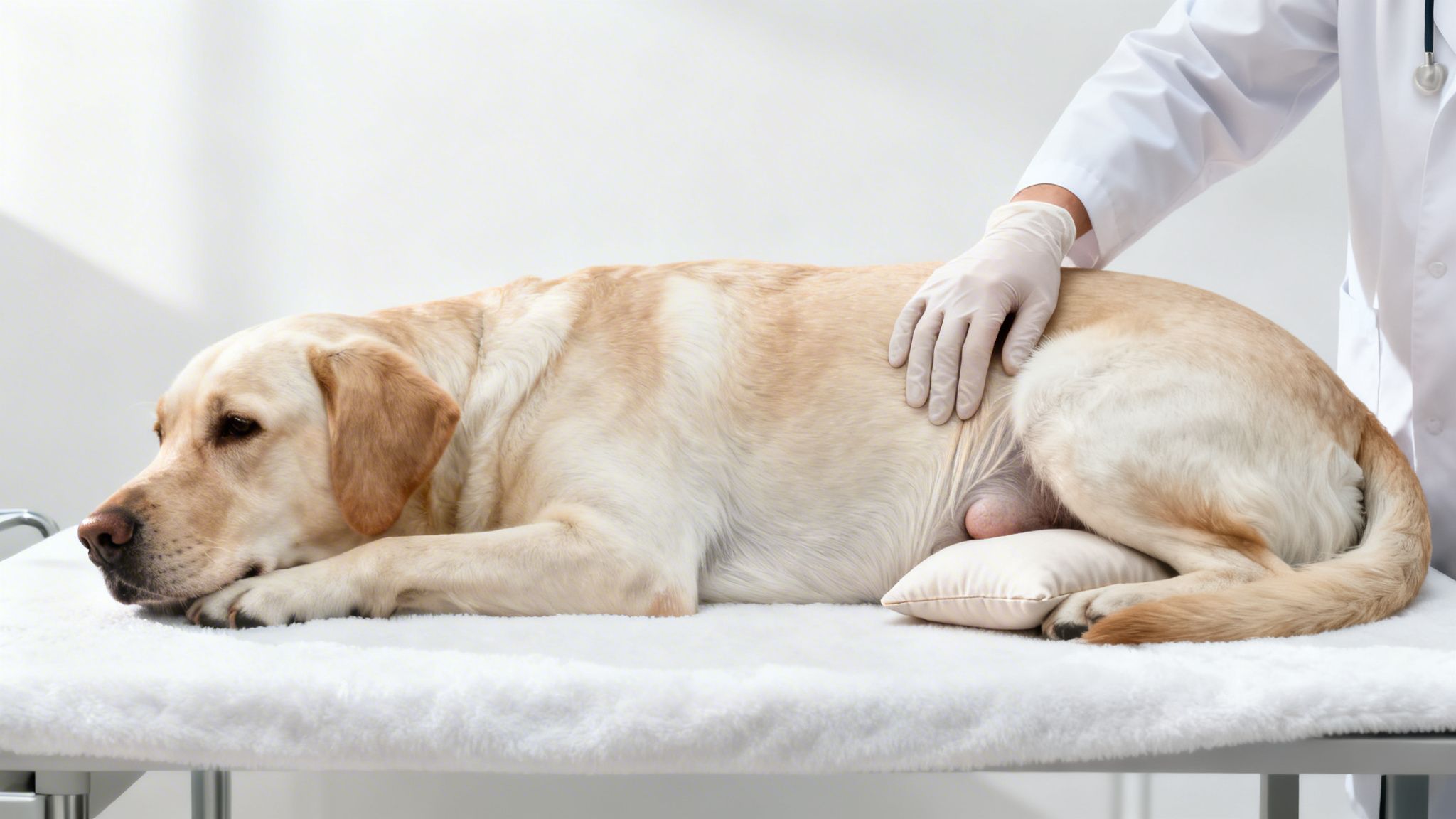
Finding a new lump on your dog is always stressful, but more often than not, it's just a harmless fatty tumor, also known as a lipoma. So, why do dogs get these fatty lumps? It's rarely one single thing. Usually, it’s a mix of factors like getting older, a naturally slowing metabolism, and even their specific genetic background.
What Are These Lumps on My Dog?
Discovering a strange lump or bump on your furry friend during a good petting session can send a jolt of panic through any dog owner. But before your mind spirals into worst-case scenarios, just take a deep breath. Most of the time, these soft, squishy masses are nothing more than a very common fatty tumor, which vets call a lipoma.
Think of a lipoma like a small, self-contained pillow stuffed with fat cells that has set up camp just beneath your dog’s skin. The most important thing to know is that these are benign growths, meaning they are not cancerous. They're simply an overgrowth of normal fat cells that have decided to clump together.
How Common Are Fatty Tumors?
You might be surprised by just how often these lumps show up. They are, in fact, one of the most common non-cancerous tumors found in dogs, especially as they cruise into their middle-aged and senior years. For many breeds, it's just a natural part of getting older.
Did you know that fatty tumors affect roughly 1 in 50 dogs every year? A major study highlighted a 1.94% one-year prevalence, making lipomas a top clinical issue for veterinarians. Age is a huge factor, as dogs aged 9-12 years were over 17 times more likely to develop a lipoma compared to younger dogs between 3-6 years old. You can learn more about the study on canine lipomas from the National Center for Biotechnology Information.
This often happens because as a dog's body ages, its metabolism naturally begins to slow down. This shift can make it easier for fat cells to multiply and gather, eventually forming these harmless lumps under the skin.
So, what does this all mean for you? It means finding a soft, moveable lump on your dog isn’t an immediate reason to panic. It is, however, a reason to become a more observant and informed pet owner.
The key is to stay calm but be proactive. While most fatty tumors are harmless and just need to be monitored, you should never assume any new lump is benign without a proper diagnosis. We'll get into the main risk factors and how vets tell the difference between a simple bump and something more serious, so you'll feel confident knowing what to look for and when it's time to call the vet.
What Puts a Dog at Risk for Fatty Tumors?

While it would be nice to point to a single cause, lipomas are a bit more complicated. Think of it less like a switch being flipped and more like a perfect storm of contributing factors. Vets have noticed clear patterns over the years, and understanding these risk factors is the first step in being proactive about your dog's health.
The biggest culprits? Age and weight. As dogs get older, their metabolism slows down, making it easier to pack on the pounds. When you combine those extra pounds with the body's natural aging process, you create the ideal environment for these fatty lumps to form.
Age and a Changing Metabolism
Just like people, dogs experience a lot of changes as they hit their golden years. That once-boundless puppy who could eat a whole pizza crust with no consequences becomes a senior whose body is more inclined to store fat than burn it for energy.
This metabolic slowdown is a key reason why dogs get fatty tumors so often as they age. The body's system for managing fat cells becomes a little less efficient. Instead of being used for fuel, these cells can start to multiply and clump together, creating those soft, squishy bumps we call lipomas. It’s not necessarily a sign that something is wrong, but rather a common part of the aging journey for many dogs.
And this isn't a small risk. One study showed a stunning connection between age and lipomas. Dogs between 9 and 12 years old were a whopping 17 times more likely to develop a fatty tumor than younger dogs. It really shows how much of a role getting older plays.
The Strong Link to Obesity
If age loads the gun, obesity often pulls the trigger. Overweight and obese dogs simply have more fat cells (adipocytes) in their bodies. This surplus of raw material provides the perfect fuel for lipomas to pop up and grow.
It's a straightforward numbers game: the more fat cells a dog has, the higher the chance that some will cluster into a tumor. This is why keeping your dog at a healthy, lean weight is one of the most powerful things you can do to lower their risk.
To give you an idea of how significant this is, a major study revealed some eye-opening statistics. Obese dogs had 5.04 times higher odds of developing fatty tumors compared to dogs at an ideal weight. Even being just a bit heavy increased the odds by 1.96 times. When you combine this with the effects of aging, it becomes crystal clear why so many older, heavier dogs have these lumps. You can dive deeper into these findings on canine lipoma risk factors in the published study.
Breed and Genetic Predisposition
Sometimes, it’s just in their genes. Certain breeds are simply more prone to developing fatty tumors, no matter their age or weight. If you have one of these dogs, it’s not a guarantee they’ll get lipomas, but it does mean you should be extra diligent about regular at-home body checks.
Some of the breeds that commonly show up on this list include:
- Labrador Retrievers
- Doberman Pinschers
- Weimaraners
- Cocker Spaniels
- Beagles
- Dachshunds
For these dogs, it seems their genetic wiring influences how their body metabolizes fat, making these benign growths more likely. This makes weight management even more critical, as obesity can pour gasoline on an already existing genetic fire.
To help you see the whole picture, here’s a quick summary of the main factors that can increase your dog’s chances of developing a lipoma.
Key Risk Factors for Canine Lipomas at a Glance
Knowing your dog's specific risk profile, from their breed to their body condition, allows you to tailor their care and stay one step ahead of potential health issues.
How Vets Figure Out What That Lump Is
Finding a new lump on your dog is always a little worrying. But your vet has a straightforward process to figure out exactly what you're dealing with, and it's designed to give you answers quickly.
It all starts with a simple physical exam. Your vet will gently feel the lump, almost like a detective gathering clues. They're checking a few key things: Is it soft or hard? Does it move around easily under the skin, or is it stuck to the muscle below? A classic fatty tumor feels soft, squishy, and mobile—like a little water balloon just under the skin.
The First Step: A Fine Needle Aspirate
While the hands-on exam gives your vet a pretty good idea, they can't be 100% sure just by feeling it. That’s why the next step is usually a Fine Needle Aspirate (FNA). This sounds much scarier than it is!
Think of it like this: your vet uses a very thin, hollow needle to pull out a tiny sample of cells from the lump. It's a quick poke that’s over in seconds, and most dogs don't even need sedation for it.
The collected cells are put onto a glass slide and looked at under a microscope. If it's a lipoma, the slide will be covered in greasy-looking fat globules. Seeing those big, clear fat cells is the tell-tale sign, and your vet can often confirm a lipoma diagnosis right there in the exam room.
An FNA is a simple test that looks at the cells to tell a harmless fatty tumor from something else. A lipoma will be made up of normal fat cells (adipocytes). On the rare chance it's a malignant liposarcoma, the cells would look abnormal and varied, signaling that more serious steps are needed.
When a Biopsy Might Be Needed
An FNA is usually all it takes to get an answer. But what if the sample isn't clear, or the lump is acting strange? If it’s growing fast, feels harder than expected, or seems attached to the underlying muscle, your vet might suggest a biopsy.
A biopsy gives a much more complete picture than an FNA. Instead of just grabbing a few cells, a biopsy involves removing a small piece of the tumor tissue itself. This sample is then sent to a special lab where a pathologist can analyze it in detail.
Vets typically use two types of biopsies for skin lumps:
- Incisional Biopsy: The vet removes a small slice of the tumor. This is usually done for very large masses where they need to know exactly what it is before planning a bigger surgery to remove it all.
- Excisional Biopsy: The vet removes the entire lump. This is a great option for smaller masses because it does two jobs at once: it gets a sample for diagnosis and removes the lump completely.
An excisional biopsy is both a diagnostic tool and a treatment. It provides a definitive answer while also taking care of the problem. This is the most certain way to rule out a rare but serious issue like a liposarcoma, giving you total peace of mind about your dog’s health.
Deciding Between Monitoring and Removal
So, your vet just confirmed that new lump on your dog is a benign fatty tumor. After breathing a huge sigh of relief, you’re probably wondering, "Okay, now what?" The great news is that for most lipomas, the answer is often wonderfully simple.
In most situations, the go-to approach is something vets call "watchful waiting." Because these fatty lumps are non-cancerous and typically don't cause any trouble, there’s usually no urgent need to do anything. The strategy is to simply keep an eye on the lump to make sure it isn’t growing or changing in a way that might cause a problem down the road.
This is a straightforward task you can handle right at home. Being a proactive monitor is the best way to manage your dog's lipomas and catch any potential issues early.
This chart shows the typical path a veterinarian follows when they find a new lump or swelling on a dog. It’s a clear, step-by-step process.
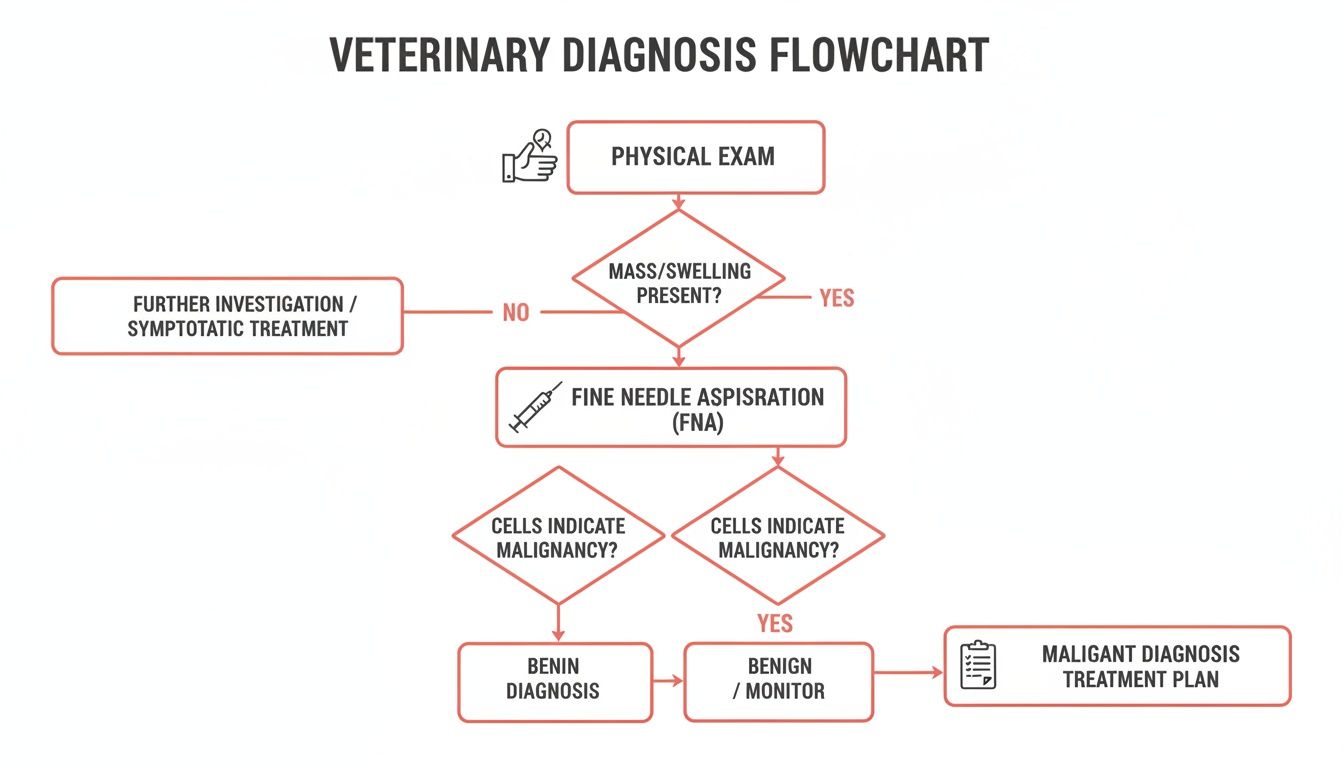
As you can see, a physical exam is the first step. This usually leads to a Fine Needle Aspirate (FNA), a quick test that tells us what the lump is made of. The results of that test are what guide the decision on whether to monitor the spot or take further action.
How to Monitor Lipomas at Home
To keep good track of a fatty tumor, I always recommend creating a "lump map" for your dog. It sounds technical, but it’s just a simple diagram where you log the location, size, and feel of any diagnosed lipomas.
Here’s an easy way to make one:
- Draw an Outline: Sketch a simple outline of your dog's body—one from the top and one from the side is perfect.
- Mark the Spot: Use an "X" or a dot on your drawing to pinpoint the exact location of the fatty tumor.
- Measure and Record: Grab a soft measuring tape (like for sewing) or calipers to measure the lump's diameter. Jot down the date and the measurement directly on your map.
- Describe Its Feel: Add a quick note. Is it soft and squishy? A little firm? Does it move easily when you push on it?
- Set a Reminder: Plan to re-measure and check in every 4-6 weeks. This simple, consistent habit makes it incredibly easy to see if the lump is growing or changing over time.
This little routine takes only a few minutes but gives you and your vet a ton of valuable information.
When Is Surgical Removal Necessary?
While most fatty tumors are perfectly fine being left alone, there are definitely times when your vet will recommend surgical removal. This decision almost always comes down to the lipoma's impact on your dog's quality of life, not because it's become dangerous.
Surgical removal is typically recommended for functional reasons, not because the lipoma has become cancerous. The primary goal is to maintain your dog's comfort and mobility, ensuring the benign growth doesn't negatively affect their day-to-day life.
Surgery might be the right call if the fatty tumor:
- Grows Rapidly or Gets Huge: A lump that's expanding quickly can become heavy, awkward, and uncomfortable. Really big tumors are also more likely to get bumped or injured.
- Restricts Movement: This is a big one. A fatty tumor in a high-motion area, like the armpit (axilla), groin, or on a leg, can get in the way of walking, running, or even just lying down comfortably.
- Causes Discomfort or Pain: This is rare, but some lipomas can push on nerves or other tissues and cause pain. If you notice your dog licking or chewing at the spot, it might be bothering them.
- Interferes with Function: Think about a lipoma near the eye that blocks vision, or one on the chest that prevents a harness from fitting correctly. These are clear cases for removal.
Once your vet confirms a lipoma, you're faced with two main paths: watchful waiting or surgical removal. This table breaks down the pros, cons, and best-case scenarios for each approach to help you understand the decision-making process.
Comparing Lipoma Management Strategies
Ultimately, choosing between these two strategies is a conversation you'll have with your veterinarian. They will help you weigh the benefits of removal against the potential risks of surgery, especially for older dogs or those with other health conditions. Together, you can make the best choice to ensure your dog remains happy, comfortable, and mobile.
Proactive Steps for Prevention and Management
While there’s nothing you can do about your dog’s age or genetic lottery, you have a surprising amount of influence over the lifestyle factors that can lead to fatty tumors. The best approach is to shift from simply reacting to new lumps to proactively managing your dog's overall wellness. It’s not about finding a magic bullet, but about creating an internal environment where their body is simply less likely to form these growths.
We know there's a strong link between excess body fat and lipomas, and that puts a lot of power right back in your hands. By focusing on a few key areas, you can actively support your dog's metabolic health, lower inflammation, and dial down the risk factors for lipoma formation. It all starts with being more mindful of their daily routine.
The Power of Maintaining a Healthy Weight
If you take only one thing away from this guide, let it be this: keep your dog at a lean, healthy body weight. This is, without a doubt, the most effective strategy you have. Since lipomas are quite literally tumors made of fat cells, an overweight dog is carrying around all the extra raw materials needed for them to form and grow.
Think of it like this: a dog at a healthy weight has just enough LEGO blocks to build what their body needs. An overweight dog, on the other hand, has a huge surplus of blocks just lying around, making it easy for unwanted structures—like lipomas—to get built.
Keeping them at that ideal weight comes down to two simple but critical habits:
- Portion Control: Even the best dog food can cause weight gain if you’re feeding too much. The guidelines on the bag are a good starting point, but always be ready to adjust based on your dog's activity level and body condition. Using a measuring cup for every single meal is non-negotiable.
- Calorie Awareness: Treats are the biggest source of hidden calories. A few "small" biscuits a day can quickly pack on the pounds. Try switching to low-calorie options like baby carrots or green beans, and don't forget to count them as part of your dog's total daily intake.
Your vet can help you figure out your dog’s ideal weight and set a daily calorie target. This small step can make a massive difference in answering why do dogs get fatty tumors and how you can help prevent them.
Fueling a Healthy Metabolism with Diet and Exercise
Beyond just counting calories, what your dog eats and how much they move are crucial for their metabolic health. A balanced diet and regular exercise are a tag team that keeps their internal systems running smoothly.
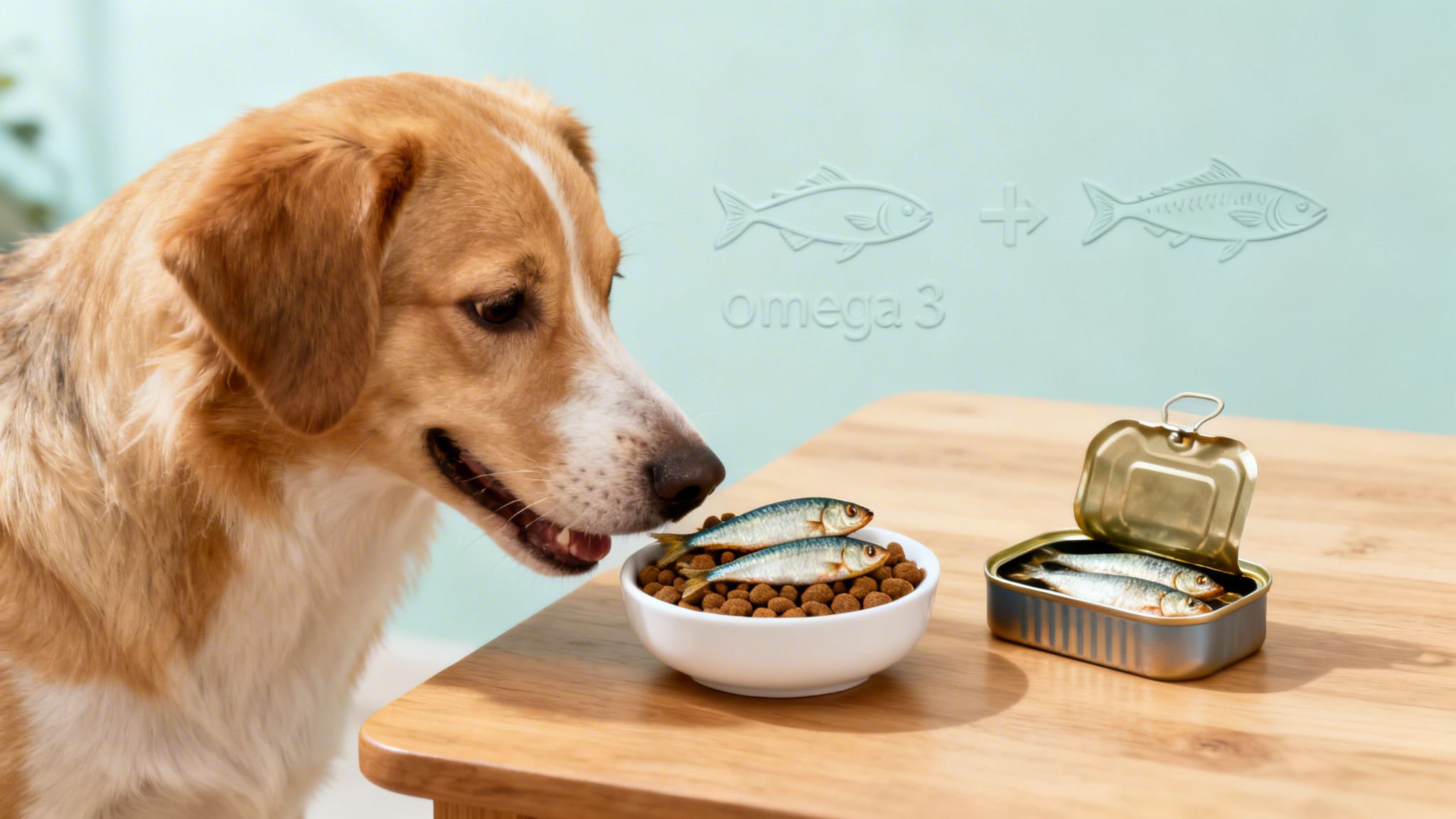
A diet rich in high-quality protein and healthy fats, with the right amount of fiber, helps build lean muscle and maintain a stable metabolism. Many holistic vets and owners also lean towards foods with anti-inflammatory ingredients, like omega-3 fatty acids, to help regulate the body's inflammatory response and promote better cellular health.
A proactive wellness plan doesn't require a complete overhaul of your life. It's about making small, consistent choices every day that support your dog's long-term health, from measuring their food to enjoying a daily walk together.
Consistent, gentle exercise is just as vital. You don’t need to train for a canine marathon; daily walks, a good game of fetch, or even swimming are perfect. This activity not only burns calories but also builds muscle and prevents their metabolism from becoming sluggish—a key factor in fat storage.
The Importance of Regular At-Home Body Checks
Finally, get into the habit of doing regular body checks at home. While this won't prevent lipomas from forming, it guarantees you’ll catch any new lumps right when they appear. Early detection is key, as it lets you get a quick diagnosis from your vet and start a monitoring plan immediately.
Once a week, while you're petting or cuddling with your dog, make a point to run your hands over their entire body. Check their neck, chest, legs, back, and belly, feeling for anything that seems new or different. By making this a regular ritual, you'll become an expert on your dog's normal landscape of bumps and spots, making it easy to notice a newcomer. This simple check gives you invaluable peace of mind and makes you a true partner in your dog's healthcare.
Common Questions About Fatty Tumors in Dogs
Even after your vet gives you the good news that your dog's lump is benign, it's totally normal to still have some nagging questions. Getting a handle on the facts can bring a lot of peace of mind while you keep an eye on your best friend's health. Let's walk through some of the most common concerns I hear from dog owners.
Can a Fatty Tumor Become Cancerous?
This is usually the first question on everyone's mind, and thankfully, the answer is a comforting one. A true lipoma, once it's been properly diagnosed, is benign and will not turn into cancer.
That said, getting that official diagnosis from your vet is non-negotiable. They'll typically perform a simple procedure called a fine needle aspirate (FNA). This test is so important because a rare, malignant cancer known as a liposarcoma can look and feel just like a harmless lipoma. An FNA allows the vet to see that the lump is just made of normal fat cells, ruling out anything more serious.
Will Fatty Tumors Go Away on Their Own?
Unfortunately, no. Lipomas don't just shrink or vanish over time. In the best-case scenario, the lump will just stay the same size and not cause any trouble.
Most of them, however, tend to grow very slowly over the years. This is precisely why your vet will recommend you monitor it regularly.
Should I Squeeze or Drain a Lump at Home?
Under no circumstances should you ever try to squeeze, pop, or drain a lump on your dog at home. It’s simply not effective, as the fat is held inside countless individual cells, not in a single pocket of fluid like a cyst.
More importantly, trying to do this yourself will be painful for your dog and can cause serious problems like infection, inflammation, or even damage to the surrounding tissue. Always leave lumps and bumps to the professionals.
While there’s no scientific evidence that herbal supplements or creams can shrink or get rid of lipomas, the best "natural" approach is prevention. Keeping your dog at a healthy weight, feeding them a balanced diet, and ensuring they get regular exercise is the most effective way to lower the risk of new fatty tumors from forming.
Beyond the medical side of things, many people find comfort in cherishing the bond with their pet. You can find beautiful ways to do this, like with personalized pet necklaces that keep them close to your heart.

Karolis is the Founder of FORMA, a pet wellness brand focused on longevity and daily nutrition for dogs. Writes about supplements, canine health, and helping pets live longer, healthier lives
Join thousands of pet parents getting science-backed health insights and natural care advice