Why is My Dog Acting Weird? why is my dog acting weird - A Practical Guide
Why is my dog acting weird? Learn why is my dog acting weird and uncover health, anxiety, and environment clues behind sudden behavior changes.
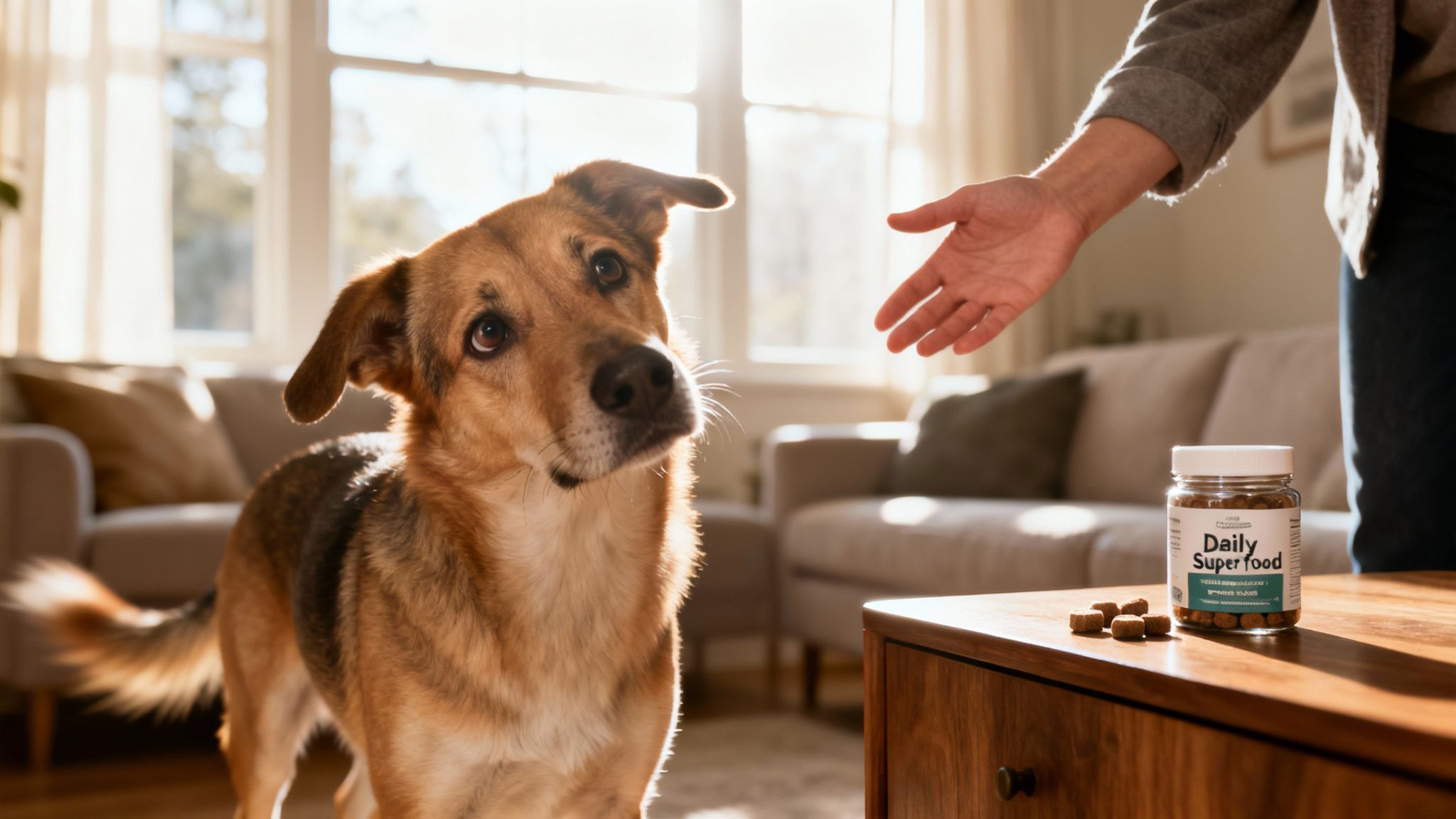
When you find yourself asking, "why is my dog acting weird?" the answer usually boils down to one of three things: a hidden medical issue, some kind of emotional distress like anxiety, or a recent change in their environment. These sudden shifts aren't random; they're your dog’s way of telling you something is off.
Decoding Your Dog's Sudden Behavior Changes
When your dog's personality seems to change overnight, it feels like trying to solve a puzzle with half the pieces missing. One day, they're their normal, happy-go-lucky self, and the next, they’re hiding under the table, glued to your leg, or even growling unexpectedly. Figuring out the "why" is the first real step to helping them feel better.
It helps to think of the strange behavior as a symptom, not the actual problem. Just like a cough in a person could mean anything from a simple cold to something more serious, your dog acting weird is their way of waving a red flag. Your job, as their best friend and guardian, is to play detective and figure out what that flag is trying to tell you.
The Three Main Reasons for Behavior Shifts
Most of these odd behaviors can be traced back to one of three core areas. The first and most important thing to rule out is always physical pain or illness. Once you're confident they aren't hurting, you can start looking at emotional or environmental triggers that could be causing them stress.
This visual gives a great breakdown of the most common reasons your dog might be acting strange.
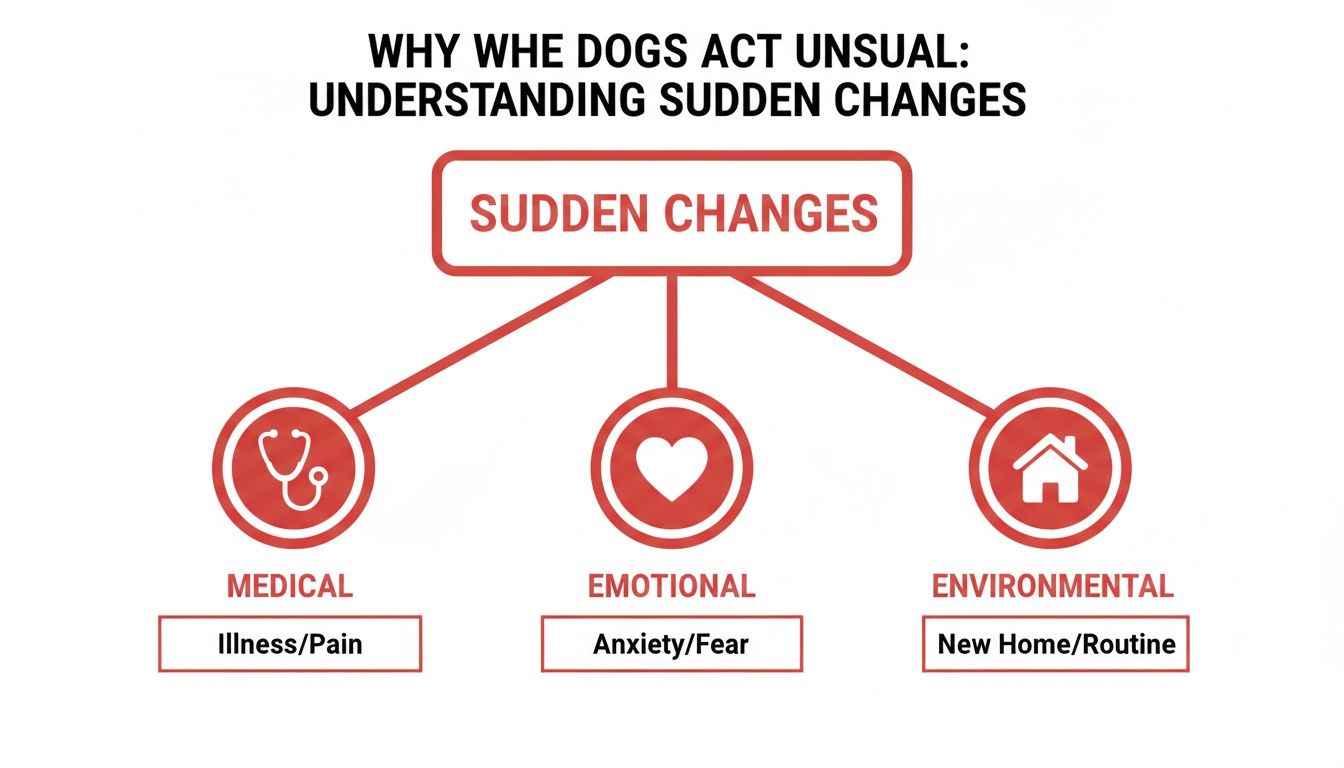
As you can see, organizing your thoughts into these categories—Medical, Emotional, and Environmental—makes it much easier to figure out what to do next.
Quick Guide to Common Behavioral Changes
To help you connect the dots, this table quickly links common strange behaviors to their potential causes and what you should be looking for.
This is just a starting point, of course, but it can help you narrow down the possibilities before you decide on your next step.
Learning to Read the Signs
Getting good at interpreting these signals is one of the most important things we can do for our dogs. A dog that suddenly starts snapping when you touch their back could have a painful spine issue. A potty-trained dog that starts having accidents might be dealing with a UTI, not just being "bad."
A sudden shift in behavior is your dog's most direct form of communication. It's an invitation to investigate their physical health, emotional state, and daily surroundings to find the underlying cause.
Once you start seeing it this way, you can stop worrying and start taking productive action. This guide will walk you through each of these areas, giving you the clarity you need to know when to call the vet and when a simple change at home might be all it takes to get your happy, healthy companion back.
Spotting the Hidden Signs of Pain or Sickness
Before you write off a new behavior as just a "bad habit," it's absolutely crucial to rule out a health problem first. Pain is often the invisible reason your dog is acting out, and they are masters at hiding it. It's an evolutionary instinct—showing weakness in the wild is a big no-no.
Think about it like this: a person with a killer headache might snap at a family member or cancel plans. A dog in pain does the same, just in their own canine language. They might get grumpy out of nowhere, start avoiding cuddles, or become withdrawn.
Learning to Read the Physical Clues
Playing health detective starts with closely observing your dog's body. The biggest clues are often quiet shifts in their posture and energy that are easy to overlook if you aren’t paying close attention.
Here are some key physical red flags to watch for:
- Changes in Posture or Movement: Is your dog suddenly carrying their head low? Is their back arched? Maybe they're sitting or lying in a new, odd position. Limping is obvious, of course, but so is a slight hesitation before hopping on the couch.
- Sudden Lethargy: If your usually playful pup seems tired all the time and loses interest in walks or their favorite squeaky toy, that's a huge sign. It's not just laziness; their body is likely fighting something off or dealing with discomfort.
- Loss of Appetite or Thirst: A dog who turns their nose up at dinner is sending a pretty clear message. Keep an eye on their water bowl, too. A sudden refusal to drink or, conversely, excessive thirst can both point to underlying health issues.
- Obsessive Licking or Chewing: When a dog won't stop licking or chewing a single spot, they're often trying to soothe pain. It could be an aching joint, an itchy allergy, or a skin infection that's bothering them.
Common Problems and What They Look Like
Different health issues show up in different ways. Knowing what to look for can help you give your vet the best possible information. For instance, if your dog is suddenly dropping their hard kibble or avoiding it altogether, it could easily be dental pain from a bad tooth or sore gums.
Pain is a powerful driver of behavioral change. A dog who suddenly growls when you try to pet them isn't being "mean"—they might be protecting a painful ear infection or a sore hip.
Likewise, a dog who can't seem to settle down—pacing, whining, and constantly shifting positions—might be dealing with an upset stomach. These specific details are gold when you talk to your vet. Jotting down what you see, when it happens, and how often can make all the difference in getting a fast, accurate diagnosis and helping your best friend feel like themselves again.
So, What If It's Not Pain? Let’s Talk About Anxiety

Once you’ve ruled out a physical issue, the next place to look is your dog’s emotional state. When a dog starts acting weird, anxiety is often the culprit. It's a powerful driver behind behaviors that can leave us scratching our heads, from chewing up the couch to suddenly being terrified of the vacuum cleaner.
Anxiety in dogs usually boils down to two main types. The first is separation anxiety, which is all about the panic they feel when you’re not around. The other is environmental anxiety, which is a fear of specific things in their surroundings. Figuring out which one you're seeing is the first step toward helping them feel safe again.
The Panic of Being Left Alone
Separation anxiety is probably one of the most common reasons owners come to me completely baffled. For a dog with this condition, you are their entire world, their safety net. When you walk out the door, it’s not just that they miss you—it can feel like their whole world is crumbling.
Think of it like a child getting lost in a crowded store. It’s pure, unadulterated panic. So, when they chew the doorframe or bark for hours, it isn't them being "bad" or trying to get revenge. They're terrified and trying to cope, often by trying to escape and find you.
And this isn't a rare problem. A recent dog behavior study showed just how common it is, finding that an incredible 85.9% of dogs in the U.S. show at least moderate signs of separation anxiety. It's the number one behavioral issue vets and trainers see.
When the World Feels Threatening
Environmental anxiety, on the other hand, is tied to specific triggers. The stress is just as real, but it’s sparked by something tangible—a sound, a person, or a change in their space.
Some of the most common triggers include:
- Loud Noises: This is a big one. Thunder, fireworks, or even the garbage truck can send a sensitive dog into a tailspin.
- New People or Pets: A guest staying for the weekend or a new puppy joining the family can completely upset your dog's sense of security.
- Changes at Home: It doesn't have to be a big move. Sometimes, just rearranging the living room furniture is enough to make a dog feel like their safe space has been invaded.
A dog dealing with this kind of fear might hide, shake, pace, or even growl. It's easy to misinterpret this as aggression, but it’s almost always a dog trying to make the scary thing go away.
Your dog’s sudden weird behavior is often a window into their emotional world. By recognizing the signs of anxiety, you shift from being a confused owner to an empathetic helper, ready to provide the security they need to feel safe again.
How Environment and Routine Impact Behavior
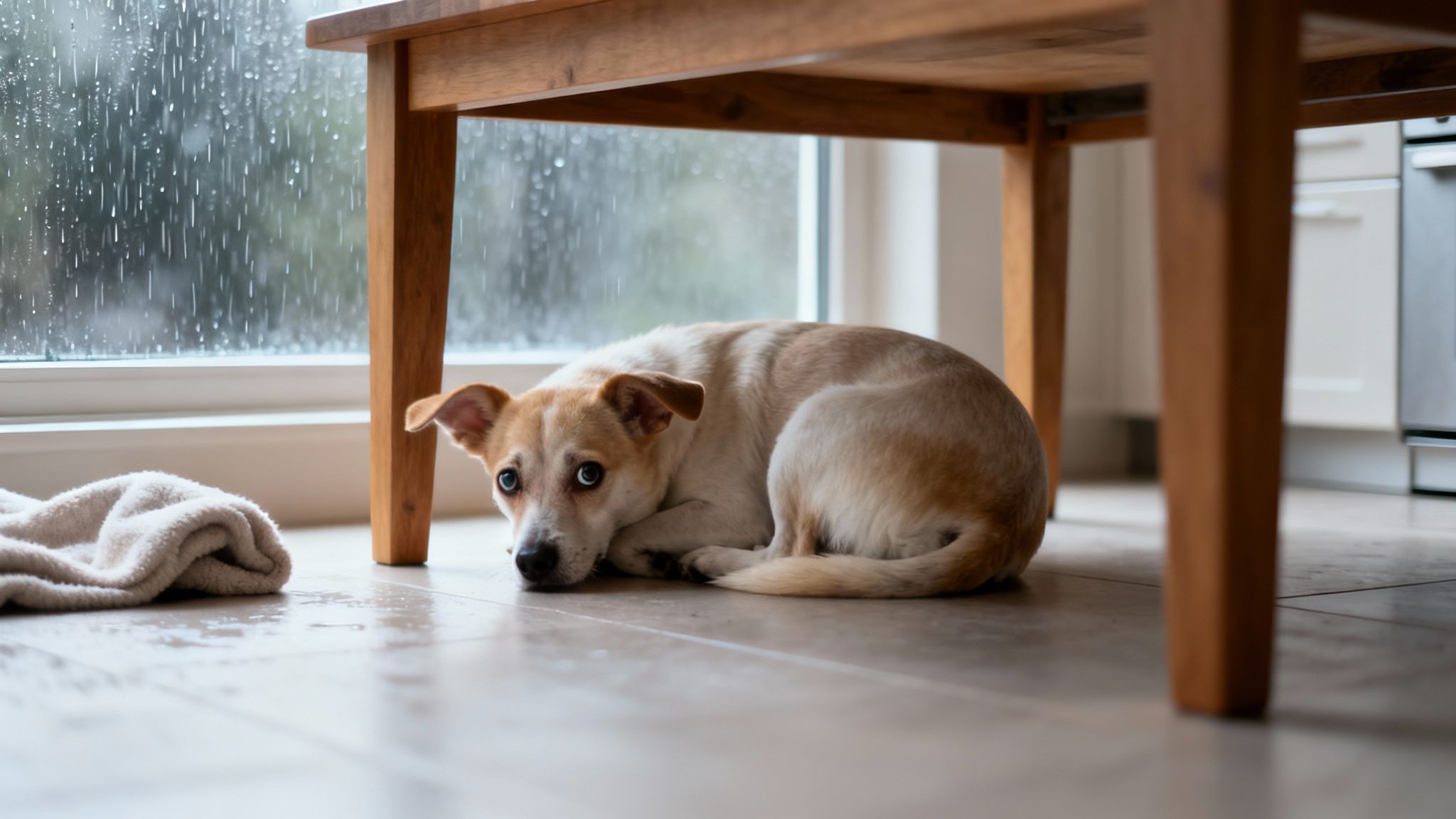
So, you've checked for pain and you're pretty sure it isn't fear or anxiety. What's next? It's time to take a hard look at your dog's world. Dogs are creatures of habit, and they find immense comfort in knowing what to expect. When their environment or daily schedule gets scrambled, it's a huge reason why your dog is acting weird.
I like to think of a dog's daily routine as their comfort blanket. It tells them when to eat, when you'll be home, and when it’s time for a walk. Take that away, and they can feel completely unmoored and stressed out. It doesn't have to be a cross-country move, either. Sometimes, even tiny shifts are enough to throw them off balance.
When Their World Gets Turned Upside Down
Big life changes are usually the most obvious culprits. Bringing home a new baby or puppy, a family member moving out, or even just you starting a new job with a different schedule can shake up their entire reality. Your dog doesn't get the memo; all they know is that life suddenly feels unpredictable and a little chaotic.
This kind of stress can bubble up in behaviors you've never seen before, like:
- Counter-surfing: Suddenly snatching food off the counter when they've always had perfect manners.
- Destructive chewing: Taking out their unease on your favorite pair of shoes.
- Hiding: Finding a quiet closet or corner to escape all the new commotion.
- Training regression: Seemingly "forgetting" house rules they’ve known for years.
These aren't signs of your dog being disobedient or "bad." They're cries for help. The rules they learned in one predictable setting don't always carry over when everything feels new and different. You might have to go back to basics for a bit, using lots of patience and positive reinforcement.
Just like us, dogs need time to adjust. Their home is wherever you are, of course, but that doesn't mean they don't miss the familiar smells and sounds of their old life. A stable routine is the fastest way to help them feel secure again.
The Dangers of a Bored Brain
Beyond major life changes, don't underestimate the power of sheer boredom. A bored dog will almost always find a way to get into trouble. If you don't give their brain a job to do, they'll invent their own—and you probably won't like their career choice.
A dog who spends all day digging up your prize-winning roses or barking at every squirrel isn't necessarily sick or anxious. They might just be incredibly under-stimulated. Their "weird" behavior is just them trying to make their own fun and burn off mental energy.
Creating a Secure and Engaging Space
The good news is, you have a ton of control over your dog's environment. The key is to create a world for them that feels both predictable and interesting.
Start by doubling down on their daily schedule. Try to keep meals, walks, and bedtime as consistent as possible. This predictability is like an anchor in a storm, reassuring them that their world is safe and stable even when other things are changing.
Then, find ways to enrich their environment. This sounds fancy, but it can be really simple. Introduce a few puzzle toys, play scent games by hiding treats around the house, or let your daily walk become a "sniffari," where they get to lead the way and investigate every fascinating smell. These activities provide vital mental exercise that can stop destructive habits before they even start.
Finally, make sure they have a designated "safe space"—a crate with a comfy bed or a cozy corner in a quiet room—where they know they can go to retreat and decompress when they feel overwhelmed.
Building a Foundation for a Calm and Healthy Dog
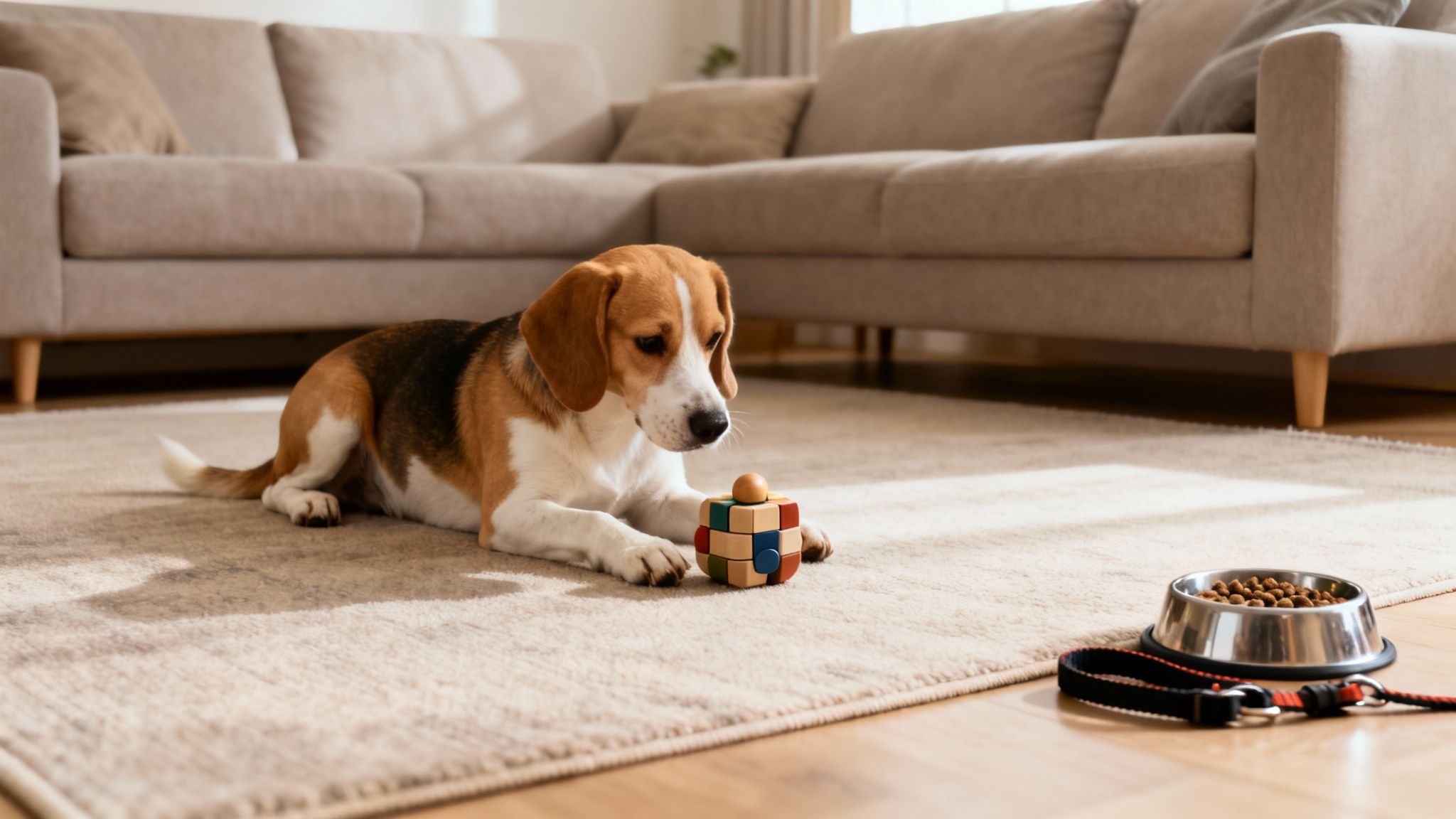
Knowing why your dog is acting weird is one thing, but what if you could prevent those odd behaviors from cropping up in the first place? That’s where a solid foundation comes in. Instead of just putting out fires, you’re actively building a more resilient, well-balanced dog from the ground up.
Think of it like this: a happy, relaxed dog is a product of their inner world. Just like with us, a dog's mental state is deeply connected to their physical health. It all boils down to a few key pillars—like a consistent daily routine and, most crucially, the right nutrition.
The Gut-Brain Connection in Dogs
One of the biggest game-changers for a dog's mood is nutrition that supports the gut-brain axis. This isn't just some fancy term; it's the real communication network linking your dog's digestive system directly to their brain. When their gut is out of whack, it can send stress signals straight to their head, which can show up as anxiety, jumpiness, or other odd behaviors.
On the flip side, a healthy gut nourished with the right stuff helps produce "feel-good" chemicals like serotonin. That's why a daily superfood chew isn't just a treat—it's a proactive way to invest in your dog's emotional stability every single day.
By looking after their gut health, you're helping their body manage stress from the inside. This builds a dog who is naturally better prepared to handle whatever life throws at them, whether it’s a sudden thunderstorm or just a change in your work schedule.
A balanced body supports a stable mind. Focusing on proactive wellness through targeted nutrition helps build a dog’s resilience from the inside out, making them better equipped to handle life's stressors.
Creating a Proactive Wellness Routine
A proactive wellness routine is all about giving your dog the physical and mental tools they need to thrive. It’s about building a lifestyle that keeps stress low and health high, making it much less likely for those weird behaviors to ever surface.
Here are the key pieces of a strong wellness foundation:
- A Consistent Daily Structure: Dogs feel safest when they know what to expect. Predictable meal times, walks, and playtime create a sense of security and dial down the background anxiety that can lead to problems.
- Targeted Nutritional Support: Adding a high-quality daily chew like FORMA to their routine provides steady support for calmness, gut health, and immunity. It makes sure their body always has what it needs to stay in balance.
- Regular Mental Engagement: A bored dog is a dog looking for trouble. Daily puzzle toys, short training sessions, or "sniffari" walks (where they get to lead with their nose) give them a healthy way to use their brainpower.
This simple mix of routine, nutrition, and mental exercise creates a powerful buffer against the very things that cause a dog to act weird. It’s a small daily commitment that pays off big in their long-term happiness and health.
It’s one of the worst feelings as a dog owner: is this weird behavior something to worry about, or just a quirky phase? Trying to decide whether to "wait and see" or rush to the emergency vet can be absolutely agonizing.
Let's cut through that uncertainty. Having a clear mental checklist helps you ditch the guesswork and act fast when it really matters.
Red Alerts: Call Your Vet Immediately
Some signs are just not up for debate. Think of these as the absolute, non-negotiable red flags that scream "get to a vet now." If you see any of the following, don't hesitate for a second.
- Trouble Breathing: This isn't just a little panting. We're talking labored, shallow breaths, choking sounds, or constant, harsh coughing and gagging.
- Seizures or Sudden Collapse: Any kind of seizure, or your dog suddenly being unable to stand or walk, is a clear emergency.
- Obvious, Severe Pain: This can look like non-stop whining, uncontrollable shaking, or even snapping or growling when you try to touch a specific spot.
- Refusing All Food and Water: A dog who won’t eat or drink anything for more than 24 hours is heading into dangerous territory with dehydration.
- Non-stop Vomiting or Diarrhea: This is especially urgent if you see any blood, or if your dog can't even keep a little bit of water down.
- A Swollen, Hard Belly: A tight, distended abdomen can be a symptom of bloat (GDV), a condition that is always life-threatening.
When in doubt, trust your gut. You know your dog better than anyone. If something just feels deeply wrong to you, it's always better to make the call and be told it’s nothing than to wait and regret it.
Yellow Flags: Schedule a Vet Visit Soon
Okay, so what about the less dramatic stuff? Some changes might not be a five-alarm fire, but they still signal that something is off and needs a professional opinion.
These are the slower, more persistent issues that you shouldn't just ignore. If you notice things like gradual but steady weight loss, a limp that just won't go away, new or strange urination habits, or a shift in their personality—like more anxiety or lethargy that doesn’t seem to have a clear cause—it’s time to book an appointment.
Coming prepared with specific notes on what you've seen and when it started will give your vet the best clues to figure out what's going on and get your best friend feeling like themselves again.
Frequently Asked Questions
Even when you start to get a handle on why your dog does what they do, specific questions always seem to pop up. Here are some of the most common things we hear from fellow dog owners, along with some clear, practical answers.
Can a Change in Dog Food Make My Dog Act Weird?
Yes, it absolutely can. Think about how you feel when you eat something that doesn't agree with you—it's the same for our dogs. A sudden change in their diet can easily cause an upset stomach, and that discomfort often shows up as strange behavior. Your pup might seem grumpy, tired, or just plain off because their tummy hurts.
Beyond that, some ingredients in a new food might trigger an allergy you weren't aware of. This can lead to constant itching and scratching, which can look a lot like anxiety or restlessness. To prevent this, always transition to a new food gradually over 7-10 days. Just mix a little of the new stuff in with the old, slowly increasing the amount, to give their system time to adjust.
Is It Just Old Age If My Senior Dog Is Acting Weird?
It's tempting to chalk up every new quirk to your dog just getting older, but you should be careful about dismissing new behaviors. While some changes are a normal part of aging, many "weird" actions can signal underlying medical issues that are treatable and could dramatically improve their quality of life.
For instance, things like confusion, pacing in circles, or getting stuck in corners might be signs of Canine Cognitive Dysfunction (what many call "doggie dementia"). A sudden reluctance to jump on the couch or climb stairs could point to painful arthritis. A trip to the vet is the only way to tell the difference between normal aging and a genuine health problem.
How Do I Know If It Is Boredom or Anxiety?
Telling these two apart can be tough, but the secret usually lies in the context. Behaviors driven by boredom—like chewing on your shoe or digging a hole in the backyard—tend to stop the second you give them something better to do. Hand them a puzzle toy or start a game of fetch, and the problem often vanishes. They were simply looking for a job to do.
Anxiety is different. Anxious behaviors are usually tied to a specific trigger, like the sound of you grabbing your keys to leave. These actions come with clear signs of distress, such as panting, whining, or frantic pacing. It's a stress response, not a hunt for something fun.

Karolis is the Founder of FORMA, a pet wellness brand focused on longevity and daily nutrition for dogs. Writes about supplements, canine health, and helping pets live longer, healthier lives
Join thousands of pet parents getting science-backed health insights and natural care advice